Centre Allocates Rs 17.77 Bn to Modernise City’s Suburban Rail Network
RAILWAYS & METRO RAIL

Centre Allocates Rs 17.77 Bn to Modernise City’s Suburban Rail Network

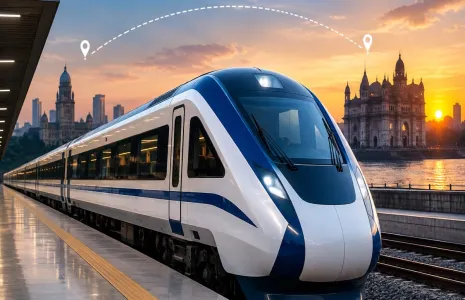
More than two months after the general budget announcement, Indian Railways finally disclosed the funding allocated for the improvement of Mumbai’s suburban rail network for the year 2025-26. A total amount of Rs 17.77 billion has been earmarked for ongoing and proposed projects on the Central and Western Railway lines, marking a significant 125 per cent increase compared to the previous year’s budget allocation of Rs 7.89 billion.

These projects are part of various phases of the Mumbai Urban Transport Project (MUTP), a major initiative designed to expand and enhance the capacity of Mumbai’s suburban railway system. The state government is expected to contribute an equal amount, ensuring substantial funding to accelerate the progress of important rail projects focused on easing congestion, improving connectivity, and enhancing passenger convenience.

Officials from the Mumbai Rail Vikas Corporation (MRVC), the implementing agency for the MUTP projects, stated that despite the large scale of ongoing projects, there is no shortage of funds. Vilas Wadekar, chairman and managing director of MRVC, conveyed that with this strong financial support, key MUTP projects—such as new corridors, station upgrades, and infrastructure improvements—are advancing steadily. He emphasized that these efforts are bringing Mumbai’s commuters closer to a faster, safer, and more efficient suburban railway network.

The Rs 17.77 billion allocation announced by the railway ministry includes Rs 1 billion for MUTP-II, Rs 8 billion for MUTP-III, and Rs 8.77 billion for MUTP-IIIA. Planned works include additional rail lines, extension of existing corridors, introduction of air-conditioned local trains, and improvement of railway stations.

Under the Amrit Bharat Station Scheme (ABSS), Central Railway has already initiated station improvement works and upgraded suburban stations such as Parel, Chinchpokli, Matunga, and Wadala. Authorities from Central Railway have identified 16 stations across the state for major upgradation.

The ABSS policy was formulated by the railways to modernize stations by providing facilities such as enhanced station buildings with architectural landscaping, modular sewage treatment plants, resurfaced platforms, and improved passenger amenities including better seating, drinking water facilities, lighting, and ventilation. The plan also includes the installation of modernized train indicators and passenger-friendly signage.

More than two months after the general budget announcement, Indian Railways finally disclosed the funding allocated for the improvement of Mumbai’s suburban rail network for the year 2025-26. A total amount of Rs 17.77 billion has been earmarked for ongoing and proposed projects on the Central and Western Railway lines, marking a significant 125 per cent increase compared to the previous year’s budget allocation of Rs 7.89 billion.These projects are part of various phases of the Mumbai Urban Transport Project (MUTP), a major initiative designed to expand and enhance the capacity of Mumbai’s suburban railway system. The state government is expected to contribute an equal amount, ensuring substantial funding to accelerate the progress of important rail projects focused on easing congestion, improving connectivity, and enhancing passenger convenience.Officials from the Mumbai Rail Vikas Corporation (MRVC), the implementing agency for the MUTP projects, stated that despite the large scale of ongoing projects, there is no shortage of funds. Vilas Wadekar, chairman and managing director of MRVC, conveyed that with this strong financial support, key MUTP projects—such as new corridors, station upgrades, and infrastructure improvements—are advancing steadily. He emphasized that these efforts are bringing Mumbai’s commuters closer to a faster, safer, and more efficient suburban railway network.The Rs 17.77 billion allocation announced by the railway ministry includes Rs 1 billion for MUTP-II, Rs 8 billion for MUTP-III, and Rs 8.77 billion for MUTP-IIIA. Planned works include additional rail lines, extension of existing corridors, introduction of air-conditioned local trains, and improvement of railway stations.Under the Amrit Bharat Station Scheme (ABSS), Central Railway has already initiated station improvement works and upgraded suburban stations such as Parel, Chinchpokli, Matunga, and Wadala. Authorities from Central Railway have identified 16 stations across the state for major upgradation.The ABSS policy was formulated by the railways to modernize stations by providing facilities such as enhanced station buildings with architectural landscaping, modular sewage treatment plants, resurfaced platforms, and improved passenger amenities including better seating, drinking water facilities, lighting, and ventilation. The plan also includes the installation of modernized train indicators and passenger-friendly signage.

Next Story
Infrastructure Energy

Vedanta Aluminium Uses 1.57 bn Units of Green Energy in FY25

Vedanta Aluminium, India’s largest aluminium producer, recently reported consumption of 1.57 billion units of renewable energy in FY25, marking a significant milestone in its 2030 decarbonisation roadmap. The company also achieved an 8.96 per cent reduction in greenhouse gas (GHG) emissions intensity compared to FY21, reinforcing its leadership in India’s low-carbon manufacturing transition. During FY25, Vedanta Aluminium expanded its renewable energy portfolio through long-term power purchase agreements, strengthening its strategy to source nearly 1,500 MW of renewable power over the lon..

Next Story
Real Estate

Oberoi Group to Develop Luxury Resort at Makaibari Tea Estate

EIH Limited, the flagship company of The Oberoi Group, has announced the signing of a management agreement to develop an Oberoi luxury resort at the iconic Makaibari Tea Estate in Darjeeling. The project marks a key milestone in the Group’s long-term strategy of creating distinctive hospitality experiences in rare and environmentally significant locations. Established in 1859, Makaibari is one of the world’s oldest tea estates and is globally recognised for its Himalayan landscape, primary forests and exceptional biodiversity. Spread across 1,236 acres, the estate houses one of the world..

Next Story
Real Estate

GHV Infra Secures Rs 1.09 Bn EPC Order in Jamshedpur

GHV Infra Projects Ltd, a fast-growing EPC company in India’s infrastructure and construction sector, has recently secured a Rs 1.09 billion work order in Jamshedpur, Jharkhand. Awarded by a reputed group entity, the contract covers end-to-end civil construction, mechanical, electrical and plumbing (MEP) systems, along with high-quality finishing works for a large building development. The project will be executed over a 30-month period, with defined benchmarks for quality, safety and timely delivery. The order strengthens GHV Infra’s footprint in Jamshedpur, a key industrial hub known fo..

Advertisement

Subscribe to Our Newsletter

Get daily newsletters around different themes from Construction world.

STAY CONNECTED

Advertisement

Advertisement

Advertisement

Advertisement

Open In App