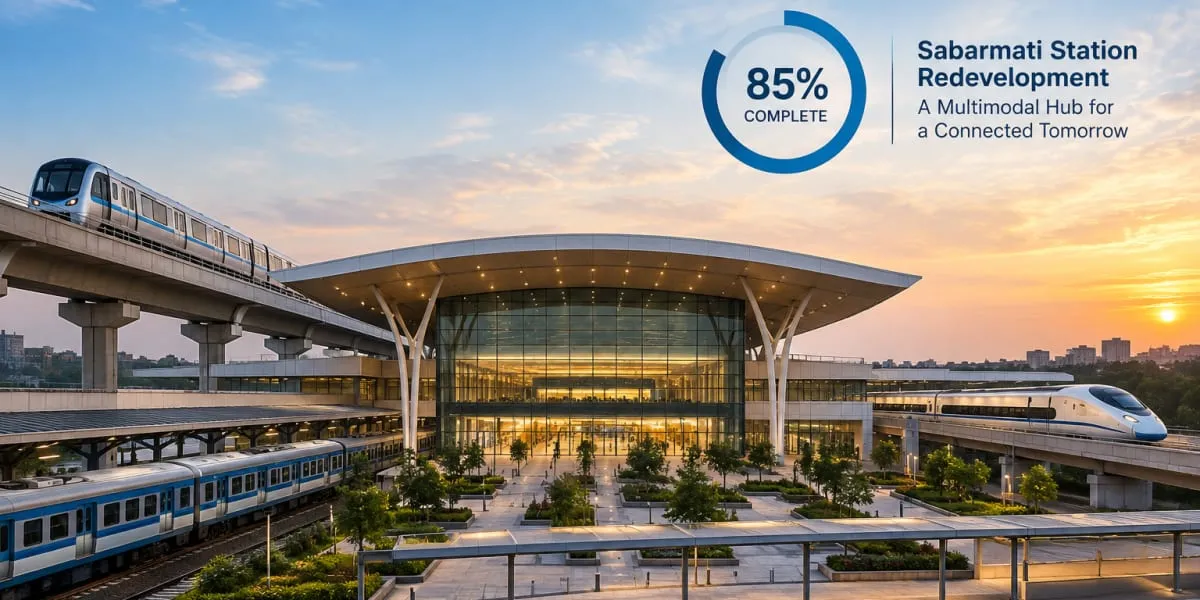
Sabarmati Station Redevelopment Reaches 85 Per Cent Completion
ECONOMY & POLICY

Sabarmati Station Redevelopment Reaches 85 Per Cent Completion

The redevelopment of Sabarmati Railway Station in Ahmedabad is around 85 per cent complete, with the Rs. 3.35 bn project intended to transform it into a multimodal transport hub connected to the metro network and the high-speed rail station. Western Railway is implementing the project to improve passenger movement, accessibility and facilities.

The redeveloped station will feature an integrated smart-building system with Supervisory Control and Data Acquisition and a Building Management System. It will also include CCTV surveillance, public address systems, access control, IT networking and a Passenger Information System providing real-time details on train timings, arrivals and departures.

Passenger infrastructure will include 28 lifts and 28 escalators, with Braille facilities, guide and warning tiles and directional signage. Disability-friendly ticket counters, Automatic Ticket Vending Machines and drinking water facilities are also being provided. Separate arrival and departure zones, parking for two-wheelers, cars, autos and buses, and electric vehicle charging facilities are part of the plan.

The concourse will have waiting areas, toilets, baby-care rooms, commercial facilities and cafeterias, while lifts, stairs and escalators will connect it with the platforms. Three foot-over-bridges are being provided at Sabarmati BG station and three at Sabarmati SBT station. The redevelopment covers seven platforms at Sabarmati BG and three at Sabarmati SBT, with through-roof covering and proposed skylights.

Currently, 19 trains originate from the station and 22 pass through it, serving more than 35,000 passengers daily. A two-storey holding area spanning around 86,000 square feet will accommodate 10,000 passengers during peak periods, including festivals, and will provide seating, water, refreshments and separate toilets. The station premises cover more than 3.2 mn square feet, while a 1,300 kW solar plant and IGBC Gold-rated green-building certification are planned. The east wing, including UTS, PRS and ticket counters, is largely operational, with its waiting area, lifts and escalators in use.

The redevelopment of Sabarmati Railway Station in Ahmedabad is around 85 per cent complete, with the Rs. 3.35 bn project intended to transform it into a multimodal transport hub connected to the metro network and the high-speed rail station. Western Railway is implementing the project to improve passenger movement, accessibility and facilities. The redeveloped station will feature an integrated smart-building system with Supervisory Control and Data Acquisition and a Building Management System. It will also include CCTV surveillance, public address systems, access control, IT networking and a Passenger Information System providing real-time details on train timings, arrivals and departures. Passenger infrastructure will include 28 lifts and 28 escalators, with Braille facilities, guide and warning tiles and directional signage. Disability-friendly ticket counters, Automatic Ticket Vending Machines and drinking water facilities are also being provided. Separate arrival and departure zones, parking for two-wheelers, cars, autos and buses, and electric vehicle charging facilities are part of the plan. The concourse will have waiting areas, toilets, baby-care rooms, commercial facilities and cafeterias, while lifts, stairs and escalators will connect it with the platforms. Three foot-over-bridges are being provided at Sabarmati BG station and three at Sabarmati SBT station. The redevelopment covers seven platforms at Sabarmati BG and three at Sabarmati SBT, with through-roof covering and proposed skylights. Currently, 19 trains originate from the station and 22 pass through it, serving more than 35,000 passengers daily. A two-storey holding area spanning around 86,000 square feet will accommodate 10,000 passengers during peak periods, including festivals, and will provide seating, water, refreshments and separate toilets. The station premises cover more than 3.2 mn square feet, while a 1,300 kW solar plant and IGBC Gold-rated green-building certification are planned. The east wing, including UTS, PRS and ticket counters, is largely operational, with its waiting area, lifts and escalators in use.

Related Stories

Gold Stories

Next Story
Equipment

Terex to Acquire Keestrack, Expanding Crushing Portfolio

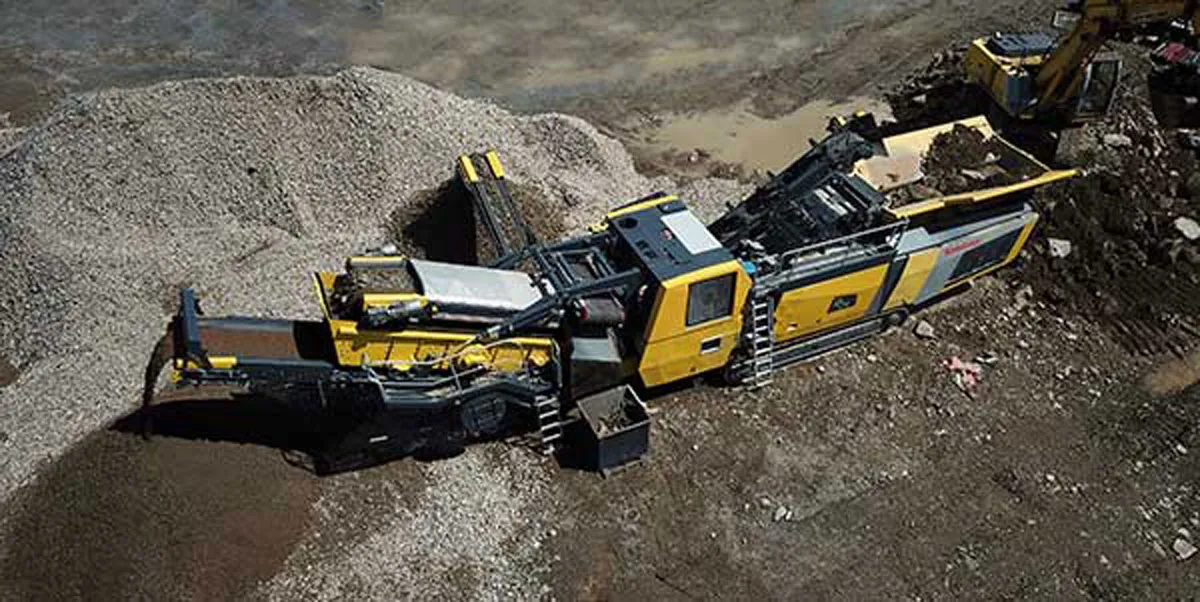
Terex Corporation has signed a definitive agreement to acquire Keestrack, a manufacturer of mobile crushing, screening and related equipment for the aggregates, recycling, construction and demolition industries. Financial terms were not disclosed.Founded in Belgium in 1988, Keestrack serves customers in more than 65 countries through a network of over 70 distributors. The acquisition will expand Terex Materials Processing’s crushing and screening portfolio and add manufacturing and distribution capabilities.After completion, Keestrack will continue as an independent brand within the Terex Ma..
Next Story
Infrastructure Energy

IES Taskforce Reviews Final Report on Power-Sector Digital Platform

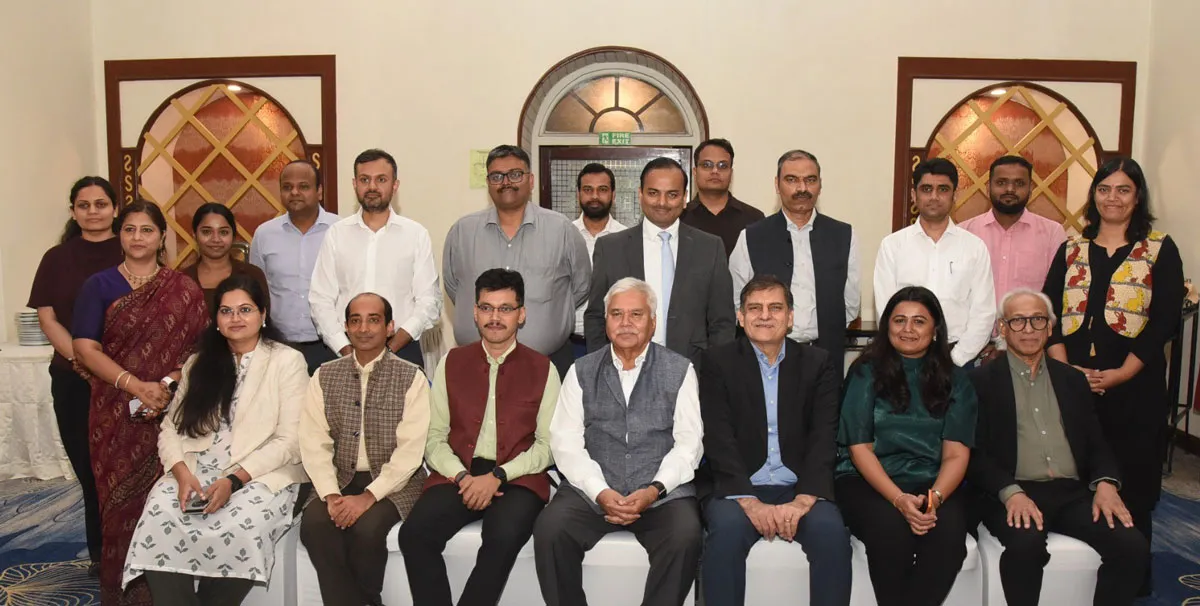
The India Energy Stack (IES) Taskforce has reviewed its Final Report in New Delhi. The document sets out a strategy, architecture, governance framework and pathway to scale IES as digital public infrastructure for India’s power sector. The Ministry of Power constituted the Taskforce in June 2025.The report was presented by Prince Dhawan, Executive Director, REC Limited, and Swetha Ravi Kumar, Executive Director, FSR Global. Dr Ram Sewak Sharma, Chairperson of the Taskforce, outlined the way forward.IES is a common set of open standards and protocols designed to let utilities, regulators, mar..
Next Story
Infrastructure Urban

LANXESS, HINCOL Partner on Road Construction Technologies

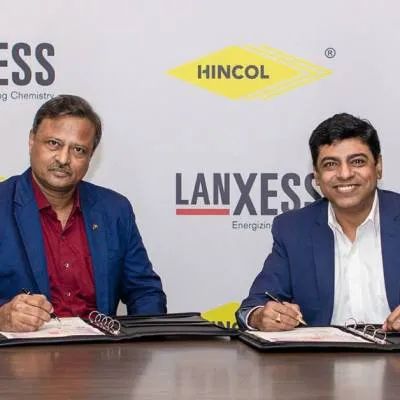
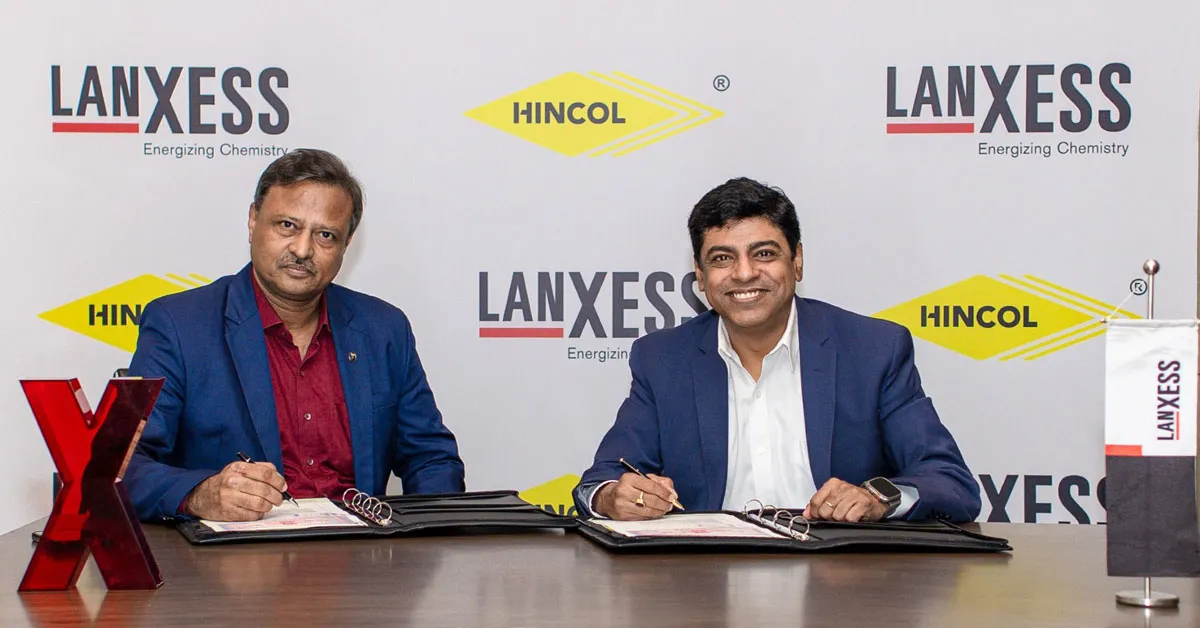
LANXESS India and Hindustan Colas Private Limited (HINCOL) have signed a Memorandum of Understanding to assess technical and commercial opportunities in bitumen and asphalt modification for India’s infrastructure market.The companies will conduct laboratory and commercial-scale evaluations of Addipave CR 36, LANXESS’ cross-linking technology for polymer-modified bitumen (PMB). LANXESS will provide the product, technical expertise and trial support, while HINCOL will contribute testing facilities, operational support and performance assessments under local conditions. The trials will examin..

Advertisement

Subscribe to Our Newsletter

Get daily newsletters around different themes from Construction world.

STAY CONNECTED

Advertisement

SPECIAL OFFER
QR Code