

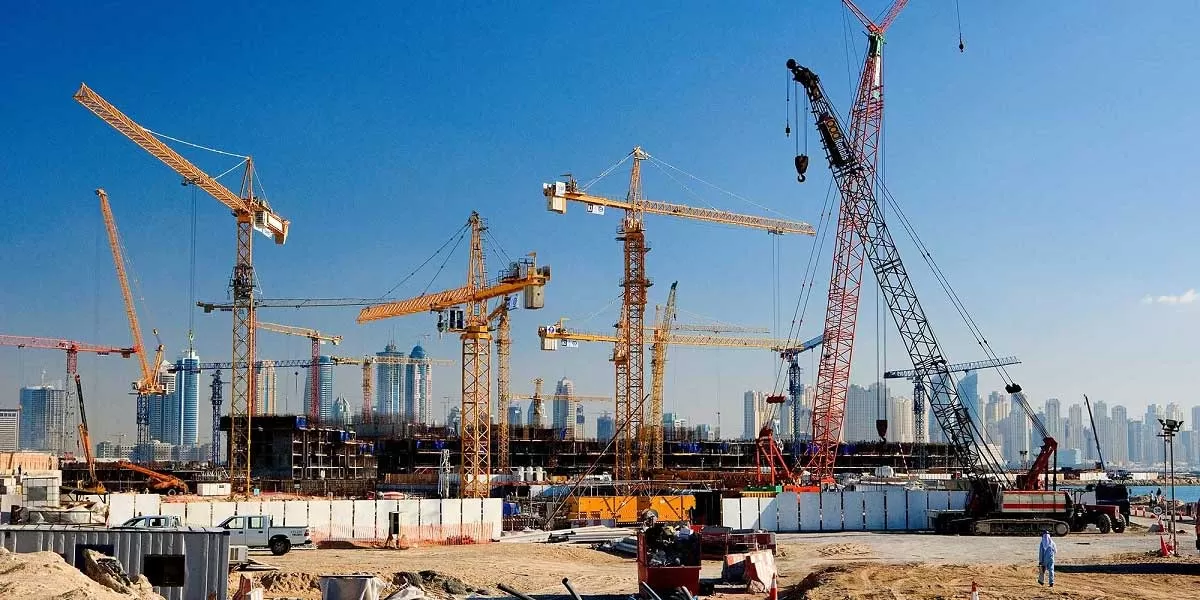





Saudi Arabia Leads Construction Market
ECONOMY & POLICY

Saudi Arabia Leads Construction Market

Saudi Arabia is set to become the world's largest construction market by 2028, driven by Vision 2030 and significant investment inflows. The kingdom's construction output is projected to reach $181.5 billion, a substantial 30% increase from 2023. This growth is largely attributed to the ambitious Vision 2030 initiative led by Crown Prince Mohammed bin Salman. Vision 2030 aims to diversify the Saudi economy, reducing its reliance on oil revenues and transforming it into a global investment powerhouse. The plan includes over $1.25 trillion worth of projects, focusing on infrastructure, tourism, and entertainment sectors.

A significant portion of these investments is directed towards developing new residential properties and large-scale infrastructure projects, known as "giga projects." These include the futuristic city of NEOM, the Red Sea Project, Qiddiya, and the Amaala luxury tourism destination. NEOM alone is a $500 billion project envisioned as a high-tech urban area featuring smart city technologies, renewable energy sources, and advanced robotics.

Riyadh, the capital city, is also undergoing a massive transformation in preparation for the 2030 World Expo, which the city is bidding to host. This includes extensive infrastructure developments such as new transportation networks, residential complexes, and commercial hubs. The city is also positioning itself as a contender to host the 2034 World Cup, further accelerating the pace of construction activities.

The Saudi government is focusing on public-private partnerships to fund and execute these projects, attracting foreign direct investment and expertise. This strategic move is expected to create numerous job opportunities and stimulate economic growth, making Saudi Arabia a leading hub for construction and development.

In conclusion, Saudi Arabia's ambitious Vision 2030, coupled with substantial financial inflows and strategic investments, is positioning the kingdom as the world's largest construction market by 2028. This transformation is set to reshape the country's economic landscape, attracting global attention and investment.

Saudi Arabia is set to become the world's largest construction market by 2028, driven by Vision 2030 and significant investment inflows. The kingdom's construction output is projected to reach $181.5 billion, a substantial 30% increase from 2023. This growth is largely attributed to the ambitious Vision 2030 initiative led by Crown Prince Mohammed bin Salman. Vision 2030 aims to diversify the Saudi economy, reducing its reliance on oil revenues and transforming it into a global investment powerhouse. The plan includes over $1.25 trillion worth of projects, focusing on infrastructure, tourism, and entertainment sectors. A significant portion of these investments is directed towards developing new residential properties and large-scale infrastructure projects, known as giga projects. These include the futuristic city of NEOM, the Red Sea Project, Qiddiya, and the Amaala luxury tourism destination. NEOM alone is a $500 billion project envisioned as a high-tech urban area featuring smart city technologies, renewable energy sources, and advanced robotics. Riyadh, the capital city, is also undergoing a massive transformation in preparation for the 2030 World Expo, which the city is bidding to host. This includes extensive infrastructure developments such as new transportation networks, residential complexes, and commercial hubs. The city is also positioning itself as a contender to host the 2034 World Cup, further accelerating the pace of construction activities. The Saudi government is focusing on public-private partnerships to fund and execute these projects, attracting foreign direct investment and expertise. This strategic move is expected to create numerous job opportunities and stimulate economic growth, making Saudi Arabia a leading hub for construction and development. In conclusion, Saudi Arabia's ambitious Vision 2030, coupled with substantial financial inflows and strategic investments, is positioning the kingdom as the world's largest construction market by 2028. This transformation is set to reshape the country's economic landscape, attracting global attention and investment.

Next Story
Resources

ULCCS Showcases Cooperative Model at UN Symposium

Uralungal Labour Contract Co-operative Society (ULCCS) showcased its community-led development model at the United Nations Headquarters in New York, where it participated as a panellist at the International Symposium on Cooperative Financial Institutions held on 28–29 May 2026.Jointly organised by the United Nations Department of Economic and Social Affairs (UN DESA), the International Cooperative Banking Association (ICBA), and the International Cooperative Alliance (ICA), the symposium was held under the theme ‘Fuelling Inclusive and Equitable Growth’ and brought together policymakers,..

Next Story
Infrastructure Transport

Delhi Airport to Finalise 20-Year Master Plan

Delhi International Airport Ltd (DIAL) is finalising a 20-year master plan to guide long term infrastructure and operational development at Indira Gandhi International Airport, an official said. The operator expects the plan to reflect changes in the airline industry, shifts in the competitive landscape and evolving infrastructure requirements across terminals, airside and support services. The official said the document is likely to be ready in the next two to two-and-a-half months as the operator moves through planning stages. The plan will be prepared after consultations with airport users ..

Next Story
Real Estate

Aadhar Housing Finance Targets Rs 500 bn AUM By FY29

Aadhar Housing Finance has set a target to raise its asset under management to Rs 500 billion (bn) by the end of FY29, aiming to achieve this over the next three financial years through an 18-20 per cent loan growth trajectory. The firm focuses on the low-income segment with a ticket size of less than Rs 1.5 million (mn) and has relied on that segment to drive expansion. The company closed FY26 with an AUM of Rs 305.71 bn, reflecting the expansion in recent years, and it reported a net profit rise of 22 per cent to Rs 11.08 bn. Management indicated that gross non-performing assets stood at 1.0..

Advertisement

Subscribe to Our Newsletter

Get daily newsletters around different themes from Construction world.

STAY CONNECTED

Advertisement

Advertisement

Advertisement















