
Tata Electronics Expands Semiconductor Manufacturing in India
ECONOMY & POLICY

Tata Electronics Expands Semiconductor Manufacturing in India
Tata Electronics is set to build two additional semiconductor fabrication plants (fabs) in Dholera, Gujarat, enhancing its strategy to establish a domestic chip manufacturing ecosystem. This initiative aims to meet rising international demand and solidify Tata's position in the global semiconductor industry.

The first fab, currently under construction in the Dholera Special Investment Region, is expected to open in 2026. It will produce chips for power management circuits, display drivers, microcontrollers, and high-performance computing logic, vital for sectors like automotive, data storage, wireless communication, and artificial intelligence (AI). At peak capacity, the fab will manufacture up to 50,000 wafers monthly.

Valued at ?91,000 crore, the first phase is being developed in collaboration with Taiwan's Powerchip Semiconductor Manufacturing Corporation (PSMC). Plans for the second and third fabs, also on a similar scale, are anticipated to begin construction within five to seven years, although future partnerships with PSMC remain uncertain.

Tata Electronics is in discussions with potential chip buyers, primarily within the Tata Group, including Tata Motors and Tata Teleservices. The company is also developing a robust supply chain ecosystem and constructing a residential facility for 4,000-5,000 workers at the Dholera site.

In parallel, Tata is advancing a ?27,000 crore assembly and testing unit in Jagiroad, Assam, which aims to start high-volume production by mid-2025. This facility will focus on core technologies like wire bond and flip chip, with a daily output capacity of 48 million chips.

Tata Electronics is set to build two additional semiconductor fabrication plants (fabs) in Dholera, Gujarat, enhancing its strategy to establish a domestic chip manufacturing ecosystem. This initiative aims to meet rising international demand and solidify Tata's position in the global semiconductor industry. The first fab, currently under construction in the Dholera Special Investment Region, is expected to open in 2026. It will produce chips for power management circuits, display drivers, microcontrollers, and high-performance computing logic, vital for sectors like automotive, data storage, wireless communication, and artificial intelligence (AI). At peak capacity, the fab will manufacture up to 50,000 wafers monthly. Valued at ?91,000 crore, the first phase is being developed in collaboration with Taiwan's Powerchip Semiconductor Manufacturing Corporation (PSMC). Plans for the second and third fabs, also on a similar scale, are anticipated to begin construction within five to seven years, although future partnerships with PSMC remain uncertain. Tata Electronics is in discussions with potential chip buyers, primarily within the Tata Group, including Tata Motors and Tata Teleservices. The company is also developing a robust supply chain ecosystem and constructing a residential facility for 4,000-5,000 workers at the Dholera site. In parallel, Tata is advancing a ?27,000 crore assembly and testing unit in Jagiroad, Assam, which aims to start high-volume production by mid-2025. This facility will focus on core technologies like wire bond and flip chip, with a daily output capacity of 48 million chips.

Next Story
Infrastructure Transport

MMRDA advances 250 m on Orange Gate–Marine Drive tunnel

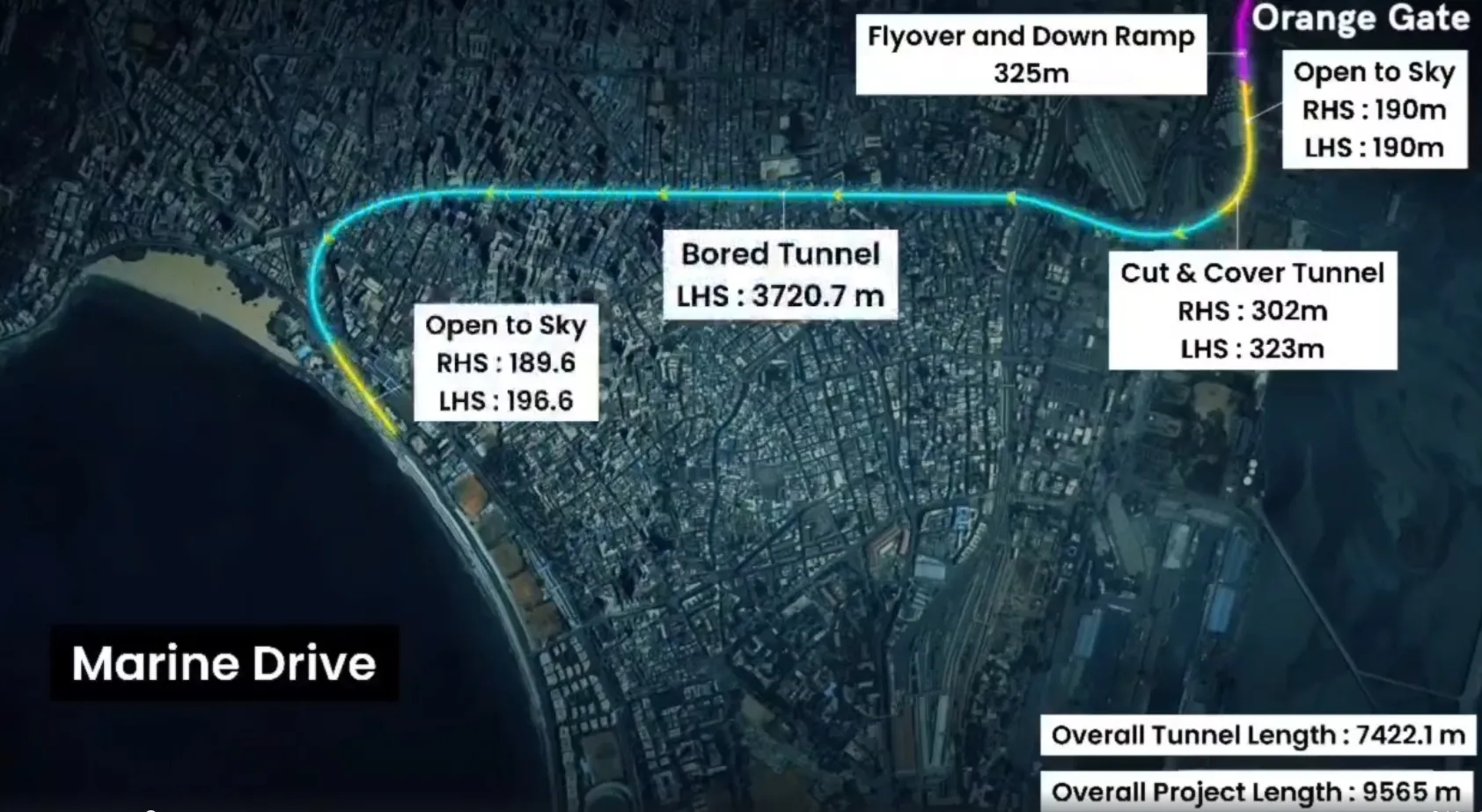
The Mumbai Metropolitan Region Development Authority (MMRDA) has completed 250 m of underground tunnelling for the Orange Gate–Marine Drive Urban Road Tunnel using India’s largest slurry shield tunnel boring machine (TBM) deployed for an urban road project.The project involves twin tunnels extending over 7 km beneath critical transport corridors, including Central Railway, Western Railway and Metro Line 3. The work requires high-precision engineering to navigate densely developed urban infrastructure.Once completed, the tunnel is expected to reduce travel time between Orange Gate and Marin..

Next Story
Infrastructure Urban

Hindustan Zinc Pays Rs 188.46 Billion in FY26

Hindustan Zinc contributed Rs 188.46 billion to the public exchequer in FY 2025-26, according to its 9th Tax Transparency Report. The contribution, equivalent to 46 per cent of the company’s revenue, included direct and indirect taxes, government royalties, dividends to the Government of India, withholding taxes and other statutory levies.The company’s five-year cumulative contribution to the exchequer stood at Rs 915.72 billion. In FY26, Hindustan Zinc reported revenue of Rs 408.44 billion, EBITDA of Rs 221.62 billion and profit after tax of Rs 138.32 billion. It also achieved its highest..

Next Story
Infrastructure Urban

World of Concrete India 2026 Opens in Mumbai

Informa Markets in India will host the 12th edition of World of Concrete India 2026 from 3–5 June 2026 at the Bombay Exhibition Centre, Mumbai. The specialised B2B exhibition will bring together manufacturers, suppliers, contractors, developers, architects, consultants, infrastructure companies, project leaders and government stakeholders.The event is expected to feature over 350 brands and more than 18,000 trade professionals. It will cover concrete and cement, dry mortar, precast technologies, formwork, construction chemicals, industrial and commercial flooring, scaffolding, safety solutio..

Advertisement

Subscribe to Our Newsletter

Get daily newsletters around different themes from Construction world.

STAY CONNECTED

Advertisement

Advertisement

Advertisement

-->