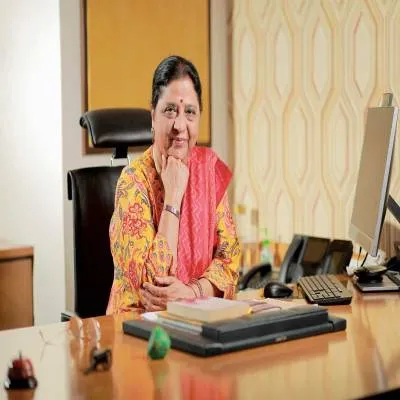
With project timelines becoming increasingly demanding, EPC execution requires tighter control across design, approvals, procurement and site execution. For Enviro Infra Engineers, this has meant strengthening inhouse capabilities, using semi-automated project monitoring and adapting its workforce and machinery deployment to changing site conditions. Manish Jain, Managing Director, discusses project execution, technology adoption, vendor selection and the company’s approach to delivering water and wastewater projects, in conversation with KAVITA PARAB.Large infrastructure projects often face pressure on timelines. How do you scale project management, engineering, procurement and site execution without compromising delivery?The first priority when a project is awarded is to understand the timeline available for execution. While we are generally conversant with the normal timelines required, there are instances where the Government requires accelerated execution. In such cases, the first step is to revisit the planning. Design and approvals are critical because delays can occur at multiple stages. The design has to be completed and approved by the client; the PMC may then vet the technical documents, followed in some cases by review by an engineering college. These are three potential points of delay.If acceleration is required, we work to shorten these timelines while keeping the client engaged. If the project has to be accelerated, the client also has to come forward as part of the team and ensure that approvals are provided quickly. The objective is to obtain the first drawing and commence substantial physical work at site at the earliest. We then break the project into smaller components – design, engineering, procurement, site execution, erection, trial and commissioning – and plan each activity independently. Where multiple structures or work fronts are available, we deploy the required teams, machinery and manpower simultaneously.What are the biggest challenges in scaling execution, particularly in water and wastewater projects?The first challenge is having the right design and engineering team with the required skill sets for the number of projects being executed. The organisation’s structure and deployment of the right people become very important. Labour availability is another factor. Monsoons, festive periods and sowing seasons can affect labour availability and productivity. Therefore, manpower planning cannot simply be based on a fixed number. We have to assess the actual requirement at different stages of the project. We also try to mechanise systems to the maximum possible extent to reduce labour intervention. The right balance between manpower, machinery and processes is essential because any fallback in one area can affect the entire project.How much of your project management process is automated?To an extent, we have automated the planning and monitoring process. Projects are measured on a daily, weekly and monthly basis against defined timelines, with different checkpoints built into the system. However, I would not say that the process can be 100 per cent automated. It is essentially semi-automated. There has to be human intervention to visualise what is happening on the ground and identify gaps. Planning is only one part. The next is maintaining control and taking mitigation measures. During our journey, we have faced challenges and understood where the pitfalls were. We have, therefore, strengthened compliance, continuous follow-up and monitoring so that corrective action can be taken while the project is in progress.Enviro has traditionally operated in the B2G segment. How is the portfolio evolving?Our primary water and wastewater business is in the B2G segment in India. In renewables, we have a B2B presence. We recently acquired a company, Soyo Mujer, which is involved in wind EPC and we are undertaking wind EPC projects in that segment. So, water and wastewater remain predominantly B2G, while the renewable business provides us with a B2B opportunity.How are advances in treatment technology changing the way your plants are designed and executed?Treatment technologies continue to evolve. There is a continuous development of processes, and our team keeps itself updated. Process engineering has always been a core strength of the company. Our chairman, Sanjay Jain, comes from a chemical engineering background, as do I. This gives us a strong understanding of the treatment processes and helps us adapt to technological advancements.The industry has moved from ASP to diffuser and diffuse aeration systems, followed by MBBR and IFAS. Today, we are using technologies including IFAS reactors, sequential batch reactors (SBR) and membrane bioreactors (MBR). We are conversant with these technologies and have the design capability and experience to work with them. Equipment technology is also advancing. Whenever there is an improvement in equipment efficiency, we try to adopt it at the earliest possible stage. As our projects are predominantly B2G, these changes have to go through an approval process with government clients. We also engage through industry forums and communicate technological developments so that these can potentially be incorporated into future projects.How do you select equipment and technology partners?Every project involves several categories of equipment – mechanical, electrical, instrumentation and automation. The starting point is the design and the approval process. The basic engineering package has to be approved first. For equipment, mechanical and electrical datasheets are prepared and approved based on the tender specifications. Tender documents generally contain an approved vendor list. For a particular application, such as a submersible pump, we have identified vendors with whom we work continuously. If they are on the approved list, enquiries can be routed to them. At the same time, new vendors can be added if they meet the requirements and receive the necessary approvals. We have to adhere to the approved makes specified in the bid documents. If an equivalent product or manufacturer is required, we can take it through the approval process with the government client.What do you retain inhouse and where do you rely on external partners?Subcontracting for execution is almost nil. We execute projects inhouse because this gives us greater control over quality and timelines. Over time, we have developed our own design and execution capabilities rather than depending entirely on external agencies. Process design remains a core inhouse capability. We also have structural designers within the organisation although if there is a bunching of structures, we may outsource some structural design work.Procurement is also handled inhouse because it is price-sensitive. Erection was an area where we learned from experience. Between around 2012 and 2016-17, we used to outsource erection but we faced challenges related to consumables, smaller components, wastage, availability, timelines and quality. We eventually built our own erection team. This has given us much greater control. At present, around 30 projects are ongoing and we have the capability to undertake erection simultaneously at five to six projects, depending on their respective construction stages.Which projects have been particularly significant for Enviro?We are currently executing a project in Saharanpur, which is a HEM project and the largest-capacity HEM project being executed by Enviro. It is, therefore, one of our prestigious projects.Another important project was our first HEM project in Bareilly, comprising three plants with a combined capacity of 63 mld. At that time, the company was much smaller and achieving financial closure was challenging. It took around eight months. Despite this, we completed the project two months ahead of schedule. That project significantly improved our scalability and banking relationships. Lenders gained confidence in our execution capabilities and our ability to deliver HEM projects. Today, when a HEM project is awarded to Enviro, lenders are already lined up and financial closure can happen within days. The proposition has changed considerably.-KAVITA PARAB