


+
 A Solution to Control Waste in Construction
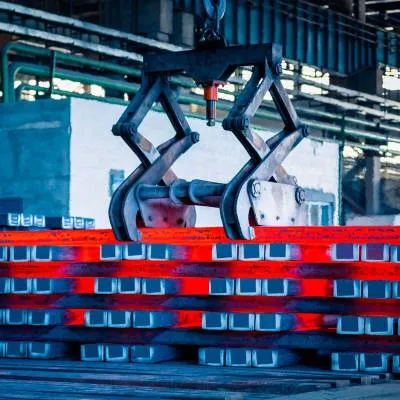
Steel

A Solution to Control Waste in Construction

With Lean thinking and techniques, there are cost savings by control of waste. Here, Prakash Patil, Secretary General, Institute for Lean Construction Excellence (ILCE), and Vice President-Projects, Tata Realty and Infrastructure, cites an example: “Suppose you are using a tower crane, you can track the amount of time it is in use, and accordingly use it for other purposes to optimise. Similarly, when you buy steel and other materials or equipment, they, at times, lie on site for months. But if properly tracked, you call for the steel just in time and save huge on cost of money as well as storage space. Stakeholders of any project lose in the range of 20 per cent on cost due to such wastes, which can be avoided.”

In agreement, Kamal Hadker, Chairman and Managing Director, Sterling Engineering Consultancy Services, points out that Lean helps save storage space at site. In India, machinery lies idle half the time but the cost gets loaded onto the project. As an example, he says, “If I need 2,400 tonne of cement at an interval of a month, I would keep replenishing it rather than storing it. Then, I don’t need a large storage godown at site.” He recalls the time, when designing a hotel building, that he questioned the client whether they were sure the hotel rooms would be required by the time the project was complete. “We then designed the building such that it could be used for a hotel and also converted into an office building. So, it is important that these things are embodied in the design itself.” 

- SERAPHINA D’SOUZA

With Lean thinking and techniques, there are cost savings by control of waste. Here, Prakash Patil, Secretary General, Institute for Lean Construction Excellence (ILCE), and Vice President-Projects, Tata Realty and Infrastructure, cites an example: “Suppose you are using a tower crane, you can track the amount of time it is in use, and accordingly use it for other purposes to optimise. Similarly, when you buy steel and other materials or equipment, they, at times, lie on site for months. But if properly tracked, you call for the steel just in time and save huge on cost of money as well as storage space. Stakeholders of any project lose in the range of 20 per cent on cost due to such wastes, which can be avoided.”In agreement, Kamal Hadker, Chairman and Managing Director, Sterling Engineering Consultancy Services, points out that Lean helps save storage space at site. In India, machinery lies idle half the time but the cost gets loaded onto the project. As an example, he says, “If I need 2,400 tonne of cement at an interval of a month, I would keep replenishing it rather than storing it. Then, I don’t need a large storage godown at site.” He recalls the time, when designing a hotel building, that he questioned the client whether they were sure the hotel rooms would be required by the time the project was complete. “We then designed the building such that it could be used for a hotel and also converted into an office building. So, it is important that these things are embodied in the design itself.” - SERAPHINA D’SOUZA

Next Story
Infrastructure Urban

Implementation Status of Jal Jeevan Mission

Since August 2019 the Government has implemented Jal Jeevan Mission to provide assured potable water through household tap connections in rural India. At the start of the mission only 32.3 million (mn) rural households, representing 16.7 per cent, were reported to have tap water connections. States and union territories have reported that 125.8 mn additional rural households have since been provided with tap connections. As a result, of about 193.6 mn rural households roughly 158.2 mn, or 81.71 per cent, are reported to have tap water supply at home.\n\nThe State, district and village level st..

Next Story
Infrastructure Urban

Jal Jeevan Mission Reaches Eighty One Per Cent Rural Coverage

The Government reported substantial progress under the Jal Jeevan Mission, launched in August 2019 to provide tap water to every rural household. At launch only 32.3 million (mn) rural households had tap connections and states and Union territories reported provision of 125.8 mn additional households by March 2026. Consequently, out of about 193.6 mn rural households around 158.2 mn, or 81.71 per cent, are reported to have tap water at home. The Finance Minister announced extension of the mission until 2028 in the 2025-26 budget speech. The Swachh Bharat Mission Grameen, launched in October 20..

Next Story
Infrastructure Urban

Empowering Local Governance for Sustainable Rural Water Supply

The Ministry of Jal Shakti has aligned the Jal Jeevan Mission (JJM) with the 73rd Amendment to strengthen village level planning and community ownership of water supply. Gram Panchayats, village water and sanitation committees and Pani Samitis are to plan, implement, manage and maintain piped water systems, with gram sabha processes formalising handover and oversight. Implementation support agencies including non government organisations, community based organisations and self help groups have been empanelled to train local committees and promote women participation. Under JJM, the department ..

Advertisement

Subscribe to Our Newsletter

Get daily newsletters around different themes from Construction world.

STAY CONNECTED

Advertisement

Advertisement

Advertisement