

SAIL Powers INS Taragiri With Indigenous Special Steel
Steel

SAIL Powers INS Taragiri With Indigenous Special Steel

The Steel Authority of India Limited (SAIL), a Maharatna central public sector enterprise under the Ministry of Steel, played a significant role in the commissioning of INS Taragiri, the fourth ship of the Nilgiri-class, Project 17A stealth frigates, which was inducted into the Indian Navy on April third, 2026. The contribution formed part of a coordinated defence manufacturing effort to enhance indigenous maritime capability. The induction is expected to bolster operational readiness of the navy in the relevant maritime theatre.

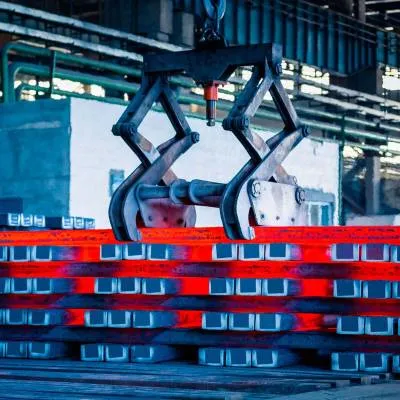
Mazagon Dock Shipbuilders Limited constructed the warship using the full requirement of approximately 4,000 tonnes (t) of special grade steel plates supplied by SAIL, with the specialised steel produced at SAIL's integrated steel plants at Bokaro, Bhilai and Rourkela. The supply chain and production processes were presented as evidence of the company’s advanced metallurgical capabilities and consistent quality standards. The coordination between shipbuilder and supplier demonstrated logistical planning and quality assurance measures during production and delivery.

SAIL has been identified as a key contributor to India’s defence indigenisation initiatives and continues to support the Government’s flagship programmes of Atmanirbhar Bharat and Make in India through material and technical inputs. The company previously supplied special steel for several critical naval platforms, including the indigenous aircraft carrier INS Vikrant and the first three ships of the Project 17A class, INS Nilgiri, INS Himgiri and INS Udaygiri, reinforcing a track record of collaboration with naval shipbuilding agencies. This pattern of supply has supported major naval construction programmes over recent years.

The successful induction of INS Taragiri was described as another milestone in the journey towards self-reliance in defence manufacturing and underlined the critical role played by domestic steel producers in strengthening the country’s maritime capabilities. Future shipbuilding programmes are expected to continue drawing on domestic specialised steel production to meet strategic requirements. Continued reliance on domestic supply chains is likely to reduce dependence on imports and support strategic autonomy.

The Steel Authority of India Limited (SAIL), a Maharatna central public sector enterprise under the Ministry of Steel, played a significant role in the commissioning of INS Taragiri, the fourth ship of the Nilgiri-class, Project 17A stealth frigates, which was inducted into the Indian Navy on April third, 2026. The contribution formed part of a coordinated defence manufacturing effort to enhance indigenous maritime capability. The induction is expected to bolster operational readiness of the navy in the relevant maritime theatre. Mazagon Dock Shipbuilders Limited constructed the warship using the full requirement of approximately 4,000 tonnes (t) of special grade steel plates supplied by SAIL, with the specialised steel produced at SAIL's integrated steel plants at Bokaro, Bhilai and Rourkela. The supply chain and production processes were presented as evidence of the company’s advanced metallurgical capabilities and consistent quality standards. The coordination between shipbuilder and supplier demonstrated logistical planning and quality assurance measures during production and delivery. SAIL has been identified as a key contributor to India’s defence indigenisation initiatives and continues to support the Government’s flagship programmes of Atmanirbhar Bharat and Make in India through material and technical inputs. The company previously supplied special steel for several critical naval platforms, including the indigenous aircraft carrier INS Vikrant and the first three ships of the Project 17A class, INS Nilgiri, INS Himgiri and INS Udaygiri, reinforcing a track record of collaboration with naval shipbuilding agencies. This pattern of supply has supported major naval construction programmes over recent years. The successful induction of INS Taragiri was described as another milestone in the journey towards self-reliance in defence manufacturing and underlined the critical role played by domestic steel producers in strengthening the country’s maritime capabilities. Future shipbuilding programmes are expected to continue drawing on domestic specialised steel production to meet strategic requirements. Continued reliance on domestic supply chains is likely to reduce dependence on imports and support strategic autonomy.

Related Stories

Gold Stories

Next Story
Resources

Schindler named among Forbes’ World’s Best Employers 2026

Schindler has been named among Forbes’ World’s Best Employers 2026, a global ranking recognising companies for their workplace environments.Compiled by Forbes in partnership with Statista, the ranking is based on independent employee feedback, including whether employees would recommend their organisation to friends and family.The company said the recognition reflected its focus on creating a workplace where employees can develop their expertise and build careers. ..

Next Story
Infrastructure Urban

India needs an export-execution mindset: Vishesh Jain

Interview with Vishesh Jain, Founder & CEO, EximpleWhat gaps in India’s global trade ecosystem led you to build Eximple, and what problem did you see businesses struggling with most?Eximple came out of a problem that all three founders had seen from different choke points in the trade ecosystem. India has millions of MSMEs and manufacturers, and many of them can make products that are genuinely competitive on quality. Yet only a small fraction is able to build meaningful international businesses. In our experience, the gap is usually not manufacturing capability; it is the ability to exe..

Next Story
Building Material

Nuvoco reports 13.5% revenue growth in Q2 FY27

Nuvoco Vistas Corp. Ltd. reported consolidated revenue of Rs 27.9 billion for Q2 FY27, up 13.5% year on year. Cement sales volume rose 9% to 4.7 million tonnes (MMT), while EBITDA increased 11% to Rs 4.11 billion.The company said it began its cement operations in 2014 with a 2.3 MMT per annum (MMTPA) operation at Nimbol. It now aims to reach 35 MMTPA of cement capacity by FY28, nearly 15 times its initial capacity. Its portfolio spans cement, ready-mix concrete and modern building materials.On sustainability and cost efficiency, Nuvoco partnered with CleanMax for a 46.4 MW wind-solar hybrid re..

Advertisement

Subscribe to Our Newsletter

Get daily newsletters around different themes from Construction world.

STAY CONNECTED

Advertisement

SPECIAL OFFER
QR Code