+
BLR Airport To Cross 400 Million Cumulative Passengers
AVIATION & AIRPORTS

BLR Airport To Cross 400 Million Cumulative Passengers

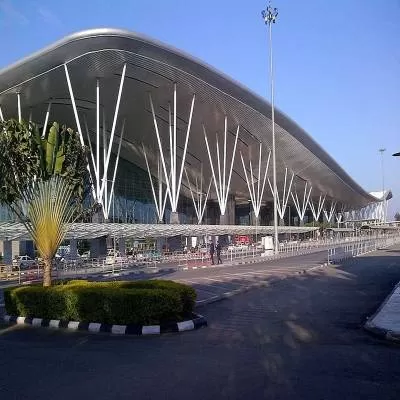
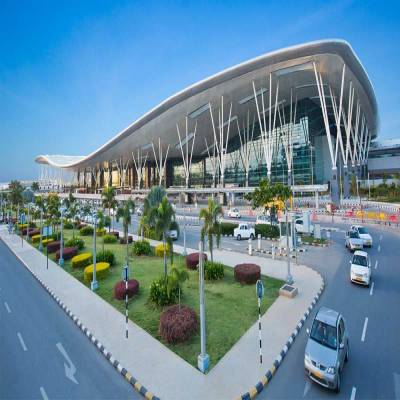
The chief operating officer (COO) said Bengaluru airport (BLR) is set to cross 400 million (mn) cumulative passengers by mid-2026 as passenger demand continues to rise. The official attributed the projected milestone to a steady increase in domestic and international travel and to greater airline capacity on key routes. The airport has experienced sustained traffic growth over recent years and is positioning itself to handle higher volumes. Stakeholders are coordinating to ensure operational readiness ahead of the anticipated surge.

Capacity enhancements have involved terminal modernisation, optimisation of passenger flows and upgrades to airside infrastructure. Investments have focused on improving processing times, expanding retail and enhancing baggage handling while maintaining safety and regulatory compliance. Ground transport links have been strengthened to improve access and reduce surface congestion for arriving and departing passengers. Cargo operations have been scaled to support logistics demand without compromising passenger services.

The expected milestone is likely to reinforce Bengaluru's role as a regional aviation hub and to support wider economic activity in technology, tourism and trade. Airlines are reported to be augmenting schedules and introducing new connections to meet demand, which in turn is attracting further commercial interest. The airport authority is working with carriers and regulatory bodies to align slot allocations and to manage peak period operations. Local businesses and service providers are preparing for increased passenger footfall and related commercial opportunities.

Looking ahead, emphasis will remain on sustainable growth through efficiency measures, energy conservation and waste reduction initiatives while enhancing the passenger experience. The operator intends to pursue digital solutions to streamline processes and to deploy resource planning to handle traffic spikes. Continued collaboration among government agencies, airlines and ground handlers will be critical to achieving the projected cumulative figure by mid-2026. The authority has indicated preparedness to adapt plans as conditions evolve.

The chief operating officer (COO) said Bengaluru airport (BLR) is set to cross 400 million (mn) cumulative passengers by mid-2026 as passenger demand continues to rise. The official attributed the projected milestone to a steady increase in domestic and international travel and to greater airline capacity on key routes. The airport has experienced sustained traffic growth over recent years and is positioning itself to handle higher volumes. Stakeholders are coordinating to ensure operational readiness ahead of the anticipated surge. Capacity enhancements have involved terminal modernisation, optimisation of passenger flows and upgrades to airside infrastructure. Investments have focused on improving processing times, expanding retail and enhancing baggage handling while maintaining safety and regulatory compliance. Ground transport links have been strengthened to improve access and reduce surface congestion for arriving and departing passengers. Cargo operations have been scaled to support logistics demand without compromising passenger services. The expected milestone is likely to reinforce Bengaluru's role as a regional aviation hub and to support wider economic activity in technology, tourism and trade. Airlines are reported to be augmenting schedules and introducing new connections to meet demand, which in turn is attracting further commercial interest. The airport authority is working with carriers and regulatory bodies to align slot allocations and to manage peak period operations. Local businesses and service providers are preparing for increased passenger footfall and related commercial opportunities. Looking ahead, emphasis will remain on sustainable growth through efficiency measures, energy conservation and waste reduction initiatives while enhancing the passenger experience. The operator intends to pursue digital solutions to streamline processes and to deploy resource planning to handle traffic spikes. Continued collaboration among government agencies, airlines and ground handlers will be critical to achieving the projected cumulative figure by mid-2026. The authority has indicated preparedness to adapt plans as conditions evolve.

Next Story
Infrastructure Transport

Kavach 4.0 Commissioned on Delhi–Mumbai and Delhi–Howrah

"Kavach version four has been commissioned on 1,452 route km, covering the high density Delhi–Mumbai and Delhi–Howrah corridors. The rollout included laying 8,570 km of optical fibre, installation of 1,100 telecom towers, deployment of trackside equipment over 6,776 RKm and establishment of 767 station data centres. Trackside implementation has been taken up on 24,427 RKm covering Golden Quadrilateral, Golden Diagonal and High Density Network sections. The programme aims to strengthen signalling and train protection on key routes.Kavach is an indigenously developed automatic train protecti..

Next Story
Infrastructure Transport

Railways Advance Kalyan–Murbad Line And Mumbai Capacity Expansion

"Indian Railways is advancing multiple rail infrastructure projects in Maharashtra, including the sanctioned Kalyan–Murbad new line and sizable investments under the Mumbai Urban Transport Project and the Mumbai–Ahmedabad High Speed Rail project. The Kalyan–Murbad 28 km new line has been sanctioned at Rs 8.36 billion (bn) on a 50:50 cost-sharing basis with the Government of Maharashtra and has been declared a Special Railway Project for land acquisition; proposals covering 214 hectares are at various stages of acquisition. Budgetary outlay for projects falling fully or partly in Maharash..

Next Story
Infrastructure Urban

Parliamentary Panel Flags Funding Gaps in Heavy Industries

"The Department-Related Parliamentary Standing Committee on Industry (Rajya Sabha) presented its 332nd report on the Demands for Grants 2026-27 of the Ministry of Heavy Industries (MHI). Figures converted from crore and lakh are expressed in million (mn). The Budget Estimates 2026-27 for the Ministry stand at Rs 79,399 mn against a projected requirement of Rs 94,843.2 mn, a shortfall of about 16 per cent, with revenue at Rs 79,370.8 mn and capital compressed to Rs 28.2 mn from Rs 5,020 mn.The committee flagged recurring BE-to-RE compression and declining revised estimate utilisation, and calle..

Advertisement

Subscribe to Our Newsletter

Get daily newsletters around different themes from Construction world.

STAY CONNECTED

Advertisement

Advertisement

Advertisement