Home Minister inaugurates faster immigration clearance plans
AVIATION & AIRPORTS

Home Minister inaugurates faster immigration clearance plans

Soon, pre-verified Indian nationals and holders of overseas citizen of India (OCI) cards will be able to enter the country more quickly and easily through automated border gates, or e-gates, which will be installed at eight major international airports and eventually 13 more airports throughout the nation.

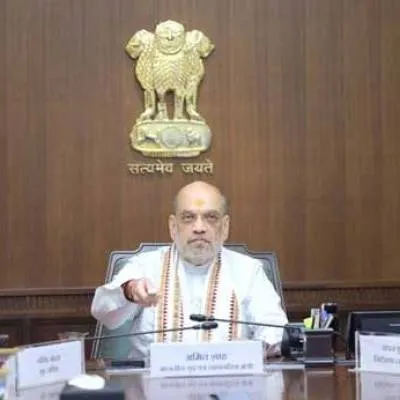
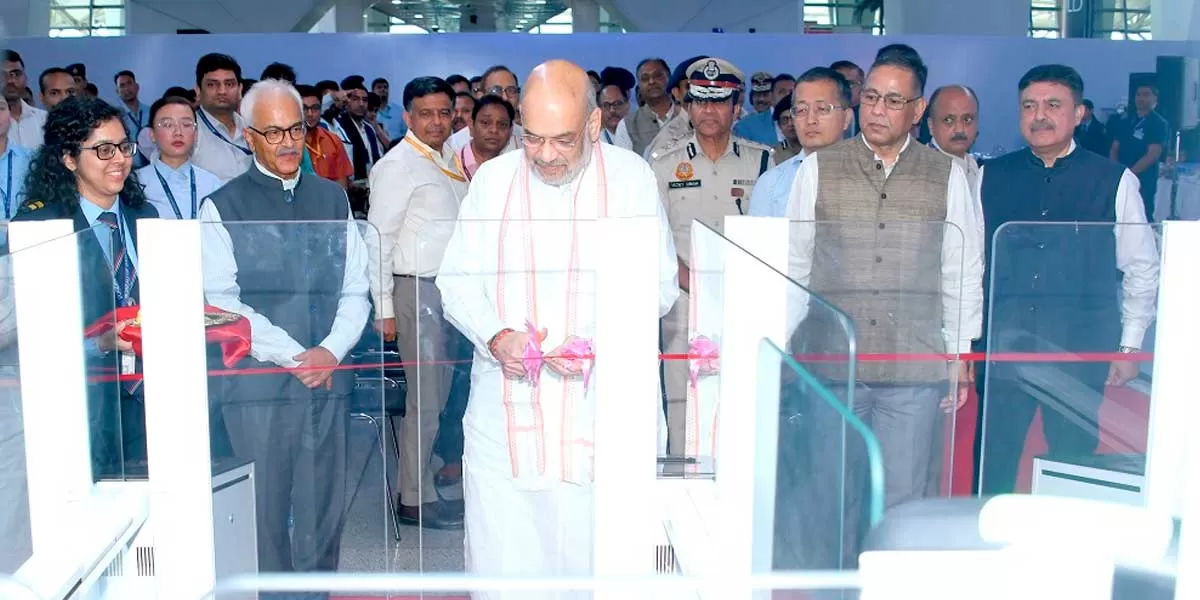
The 'Fast Track Immigration 'Trusted Traveller Programme' (FTI-TTP) was launched at Terminal 3 of the Indira Gandhi International Airport by Union Home Minister Amit Shah. The scheme is anticipated to provide travellers with a quicker, easier, and more enjoyable journey while also reducing traffic and shortening immigration clearance queues at crowded international airports.

FTI-TTP will be implemented in two stages at 21 airports, with the first phase involving the airports in Delhi, Mumbai, Chennai, Kolkata, Bengaluru, Hyderabad, Kochi, and Ahmedabad. Only Indian nationals and OCIs will be eligible to sign up for now. In the second phase, 13 more international airports will be added to the programme, and foreign nationals will be covered as well.

Shah described FTI-TTP as a "visionary" government programme that satisfies a major goal for "Viksit Bharat @ 2047" and that demonstrates the Modi government's commitment to improving travel efficiency and ease for all. He said that all travellers will get free access to the speedier, more convenient, and more secure immigration processing process.

E-gates, or automated border gates, will be used by the plan to decrease the need for human intervention in the immigration clearance procedure. "The objective is to make international travel easy and secure by developing world-class immigration facilities through an accelerated immigration pathway for international travellers screened through automated gates (e-gates)," according to a statement from the home ministry. Currently, nations like Japan operate such initiatives that provide e-gates for quicker entry for foreign visitors.

The Bureau of Immigration will serve as the nodal agency for the fast-track immigration of different traveller categories under the FTI-TTP, which will be executed through an online site. The candidate must register online on the site with his information and the necessary paperwork in order to be eligible for the programme. A 'white list' of 'trusted passengers' will be created following the required verification and supplied for use with e-gates. The biometrics of the "trusted traveller" who uses the e-gates will be taken at the FRRO office or when the registered passenger enters the airport. The TTP registration will be active for five years or until the passport expires, whichever comes first, and will then be renewed.

Soon, pre-verified Indian nationals and holders of overseas citizen of India (OCI) cards will be able to enter the country more quickly and easily through automated border gates, or e-gates, which will be installed at eight major international airports and eventually 13 more airports throughout the nation. The 'Fast Track Immigration 'Trusted Traveller Programme' (FTI-TTP) was launched at Terminal 3 of the Indira Gandhi International Airport by Union Home Minister Amit Shah. The scheme is anticipated to provide travellers with a quicker, easier, and more enjoyable journey while also reducing traffic and shortening immigration clearance queues at crowded international airports. FTI-TTP will be implemented in two stages at 21 airports, with the first phase involving the airports in Delhi, Mumbai, Chennai, Kolkata, Bengaluru, Hyderabad, Kochi, and Ahmedabad. Only Indian nationals and OCIs will be eligible to sign up for now. In the second phase, 13 more international airports will be added to the programme, and foreign nationals will be covered as well. Shah described FTI-TTP as a visionary government programme that satisfies a major goal for Viksit Bharat @ 2047 and that demonstrates the Modi government's commitment to improving travel efficiency and ease for all. He said that all travellers will get free access to the speedier, more convenient, and more secure immigration processing process. E-gates, or automated border gates, will be used by the plan to decrease the need for human intervention in the immigration clearance procedure. The objective is to make international travel easy and secure by developing world-class immigration facilities through an accelerated immigration pathway for international travellers screened through automated gates (e-gates), according to a statement from the home ministry. Currently, nations like Japan operate such initiatives that provide e-gates for quicker entry for foreign visitors. The Bureau of Immigration will serve as the nodal agency for the fast-track immigration of different traveller categories under the FTI-TTP, which will be executed through an online site. The candidate must register online on the site with his information and the necessary paperwork in order to be eligible for the programme. A 'white list' of 'trusted passengers' will be created following the required verification and supplied for use with e-gates. The biometrics of the trusted traveller who uses the e-gates will be taken at the FRRO office or when the registered passenger enters the airport. The TTP registration will be active for five years or until the passport expires, whichever comes first, and will then be renewed.

Next Story
Infrastructure Urban

Implementation Status of Jal Jeevan Mission

Since August 2019 the Government has implemented Jal Jeevan Mission to provide assured potable water through household tap connections in rural India. At the start of the mission only 32.3 million (mn) rural households, representing 16.7 per cent, were reported to have tap water connections. States and union territories have reported that 125.8 mn additional rural households have since been provided with tap connections. As a result, of about 193.6 mn rural households roughly 158.2 mn, or 81.71 per cent, are reported to have tap water supply at home.\n\nThe State, district and village level st..

Next Story
Infrastructure Urban

Jal Jeevan Mission Reaches Eighty One Per Cent Rural Coverage

The Government reported substantial progress under the Jal Jeevan Mission, launched in August 2019 to provide tap water to every rural household. At launch only 32.3 million (mn) rural households had tap connections and states and Union territories reported provision of 125.8 mn additional households by March 2026. Consequently, out of about 193.6 mn rural households around 158.2 mn, or 81.71 per cent, are reported to have tap water at home. The Finance Minister announced extension of the mission until 2028 in the 2025-26 budget speech. The Swachh Bharat Mission Grameen, launched in October 20..

Next Story
Infrastructure Urban

Empowering Local Governance for Sustainable Rural Water Supply

The Ministry of Jal Shakti has aligned the Jal Jeevan Mission (JJM) with the 73rd Amendment to strengthen village level planning and community ownership of water supply. Gram Panchayats, village water and sanitation committees and Pani Samitis are to plan, implement, manage and maintain piped water systems, with gram sabha processes formalising handover and oversight. Implementation support agencies including non government organisations, community based organisations and self help groups have been empanelled to train local committees and promote women participation. Under JJM, the department ..

Advertisement

Subscribe to Our Newsletter

Get daily newsletters around different themes from Construction world.

STAY CONNECTED

Advertisement

Advertisement

Advertisement