New Push to Cut India’s Air Pollution through Power Sector Reforms
POWER & RENEWABLE ENERGY

New Push to Cut India’s Air Pollution through Power Sector Reforms

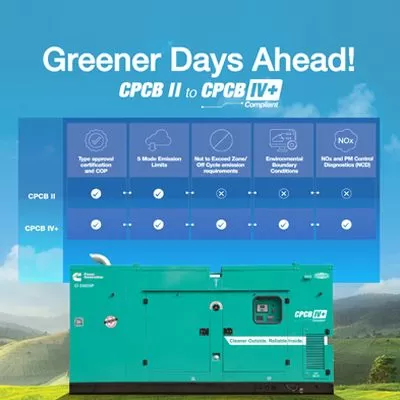
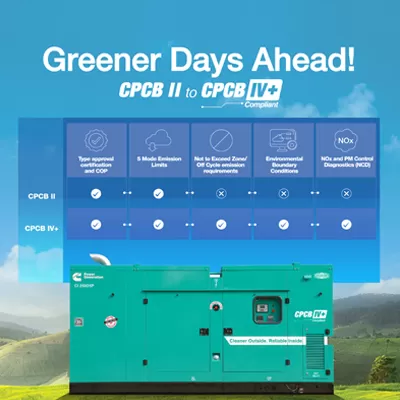
In a significant stride toward environmental sustainability, Cummins India introduced CPCB IV+ compliant gensets to India on July 5, 2023, marking a paradigm shift in the power generation industry. These generators are engineered to adhere to the progressive emission norms set by the Ministry of Environment, Forest, and Climate Change. Being the first sets in the field, they have garnered praise for their remarkable achievements in emissions reduction and cutting-edge technology. Powerica, with its four-decade-long partnership with Cummins India Limited, is dedicated to consistently deliver the highest standards of quality and reliability to customers across all market segments. From the small load requirement of power tools, to the great demands of data centers - Powerica assures the best in class standby power supply. 

The CPCB IV+ emission standards, aimed at controlling air pollution, apply to all stationary generators with a capacity of up to 800 kW. These standards not only streamline energy compliances for manufacturers, but also align with the broader environmental objectives of reducing harmful emissions and better fuel consumption. 


Cummins India Limited CPCB IV+ Gensets are equipped with the most advanced electronic technologies, intelligent control systems, and real-time monitoring capabilities. They can achieve an impressive 90 per cent reduction in particulate matter (PM) and nitrogen oxide (NOx) emissions when compared to the previous CPCB II compliant gensets.


The closed-loop system with real-time monitoring is a key feature that enhances the performance of these gensets. By constantly evaluating operational parameters and emission standards, this system ensures optimal efficiency and prompts immediate corrective measures in case of any deviations. Notifying users of irregularities through SMS and email further minimizes downtime, allowing generators to consistently operate at peak performance levels, ultimately extending their lifespan.

These gensets employ advanced after-treatment systems, including Diesel Oxidation Catalyst (DOC) and Selective Catalytic Reduction (SCR), meticulously designed to improve fuel efficiency, enhance pollutant control, and meet progressive emission norms.

Remote monitoring and control capabilities enable users to manage generator operations from any location, improving efficiency and responsiveness. Swift deployment of generators in urgent situations becomes possible, and users can access real-time system status, detect faults, and receive essential notifications, leading to lower operational and maintenance expenses.

Fuel and Diesel Exhaust Fluid (DEF) sensors play a crucial role in ensuring optimal efficiency. Real-time monitoring of diesel consumption and precise control of DEF injection contribute to performance improvements, operational cost reduction, and compliance with environmental regulations.

Cummins India and Powerica emphasise their commitment to innovation and environmental responsibility, by continuing to harness advanced digital tools in order to steadily address climate change. The CPCB IV+ Compliant Generators exemplify this dedication by offering clean and efficient power solutions. The integration of these engine technologies ensures superior performance, improved fuel efficiency, and equipment reliability, establishing Cummins India as a leader in emissions compliance and environmental stewardship.

In a significant stride toward environmental sustainability, Cummins India introduced CPCB IV+ compliant gensets to India on July 5, 2023, marking a paradigm shift in the power generation industry. These generators are engineered to adhere to the progressive emission norms set by the Ministry of Environment, Forest, and Climate Change. Being the first sets in the field, they have garnered praise for their remarkable achievements in emissions reduction and cutting-edge technology. Powerica, with its four-decade-long partnership with Cummins India Limited, is dedicated to consistently deliver the highest standards of quality and reliability to customers across all market segments. From the small load requirement of power tools, to the great demands of data centers - Powerica assures the best in class standby power supply. The CPCB IV+ emission standards, aimed at controlling air pollution, apply to all stationary generators with a capacity of up to 800 kW. These standards not only streamline energy compliances for manufacturers, but also align with the broader environmental objectives of reducing harmful emissions and better fuel consumption. Cummins India Limited CPCB IV+ Gensets are equipped with the most advanced electronic technologies, intelligent control systems, and real-time monitoring capabilities. They can achieve an impressive 90 per cent reduction in particulate matter (PM) and nitrogen oxide (NOx) emissions when compared to the previous CPCB II compliant gensets.The closed-loop system with real-time monitoring is a key feature that enhances the performance of these gensets. By constantly evaluating operational parameters and emission standards, this system ensures optimal efficiency and prompts immediate corrective measures in case of any deviations. Notifying users of irregularities through SMS and email further minimizes downtime, allowing generators to consistently operate at peak performance levels, ultimately extending their lifespan.These gensets employ advanced after-treatment systems, including Diesel Oxidation Catalyst (DOC) and Selective Catalytic Reduction (SCR), meticulously designed to improve fuel efficiency, enhance pollutant control, and meet progressive emission norms.Remote monitoring and control capabilities enable users to manage generator operations from any location, improving efficiency and responsiveness. Swift deployment of generators in urgent situations becomes possible, and users can access real-time system status, detect faults, and receive essential notifications, leading to lower operational and maintenance expenses.Fuel and Diesel Exhaust Fluid (DEF) sensors play a crucial role in ensuring optimal efficiency. Real-time monitoring of diesel consumption and precise control of DEF injection contribute to performance improvements, operational cost reduction, and compliance with environmental regulations.Cummins India and Powerica emphasise their commitment to innovation and environmental responsibility, by continuing to harness advanced digital tools in order to steadily address climate change. The CPCB IV+ Compliant Generators exemplify this dedication by offering clean and efficient power solutions. The integration of these engine technologies ensures superior performance, improved fuel efficiency, and equipment reliability, establishing Cummins India as a leader in emissions compliance and environmental stewardship.

Next Story
Infrastructure Urban

Teknovace, Remmers Forge Rs 3 Bn Deal for Global Coatings Hub

Teknovace has entered into a strategic global partnership with Germany-based Remmers Gruppe SE to build a large-scale, export-oriented wood coatings manufacturing platform in India. As part of the alliance, Remmers will make a strategic equity investment of Rs 3 billion to acquire a 50.01 per cent stake in Teknovace in two tranches, marking one of the largest foreign strategic investments in India’s wood coatings sector.The partnership comes at a time when India’s wood coatings market, valued at around $1.3 billion (Rs 100 billion), is growing at an estimated 11% annually, driven by demand..

Next Story
Infrastructure Urban

Jyoti Structures Commissions Galvanisation at Second Nashik Unit

Jyoti Structures has commissioned galvanisation operations at its second tower manufacturing unit in Nashik, strengthening its in-house capabilities across critical stages of power transmission infrastructure production. The listed Engineering, Procurement and Construction (EPC) company operates globally and has delivered projects for customers across more than 50 countries.The second Nashik unit, with an annual manufacturing capacity of 36,000 metric tonnes, has become operational following the completion of installation, testing and readiness of the new galvanising facilities. With this deve..

Next Story
Infrastructure Energy

Rosatom Connects First Kursk NPP-2 Unit to National Grid

Rosatom has launched the first power unit of the Kursk Nuclear Power Plant-2 (Kursk NPP-2) into Russia’s Unified Energy System, marking a key milestone in the country’s nuclear energy programme. The initial grid connection took place at the end of the year, bringing a new source of low-carbon electricity online for the Kursk region and the broader Central Energy System.The newly commissioned unit is the first implementation of the VVER-TOI reactor design, which incorporates advanced safety and performance features. With an installed capacity of 1,250 MW, it is the most powerful nuclear pow..

Advertisement

Subscribe to Our Newsletter

Get daily newsletters around different themes from Construction world.

STAY CONNECTED

Advertisement

Advertisement

Advertisement

Advertisement

Open In App