Israeli firm to fund construction of Peripheral Ring Road
ROADS & HIGHWAYS

Israeli firm to fund construction of Peripheral Ring Road

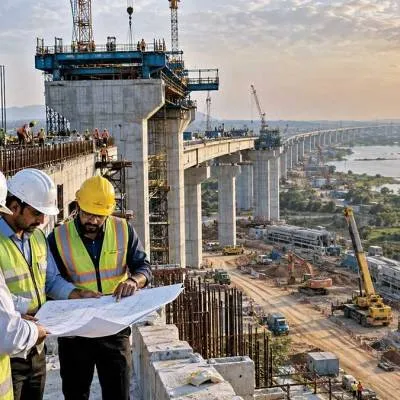
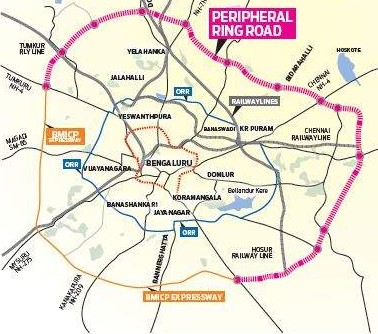
Bengaluru's Peripheral Ring Road (PRR) project aimed at decongesting the city's traffic will be ready in three years if the fresh move to implement it through an Israeli infrastructure-cum-funding agency comes through.

A senior official of the Bangalore Development Authority (BDA), which is implementing the project, said a specialised technology would be used for road laying to ensure that the project is completed by August 2024.

Israeli private concern Symba Maz has come forward to fund the 73 km PRR with eight lanes plus four service lanes, which has now escalated to cost Rs 21,250 crore.


Make in Steel 2021

24 February 

Click for event info


4th Indian Cement Review Conference 2021

17-18 March 

Click for event info


An Indian joint venture (JV) based in Bengaluru, APIC Freeway Pvt Ltd, has submitted its Expression of Interest (EoI) for implementing the project. It comprises of construction firms AFCONS, Symba Maz and STUPS Ltd.

The CM recently mentioned that an Israeli firm had shown interest in funding the project without specifying details.

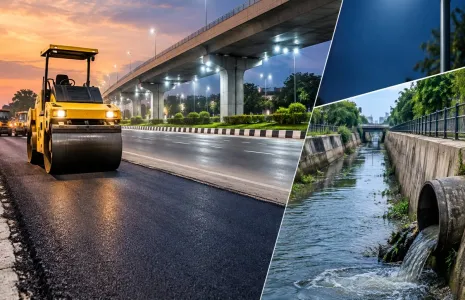
The big innovation that the JV plans to bring in is the “StabiRoad” model of laying of road.

StabiRoad method of laying roads:

By using the StabiRoad cement additive in a corresponding amount with the amount of cement, there is no significant risk of cracking. This is due to its ability to change the parameters of the concrete's bending strength.

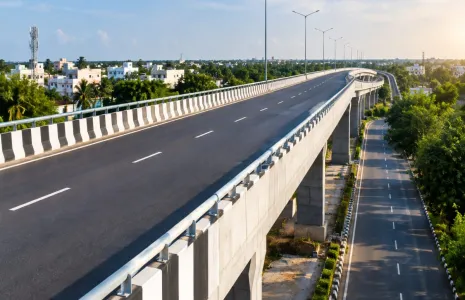
Image: The PRR was originally estimated to be completed only in 2025, but has been opposed because of the large-scale tree-felling that is required.


Also read: Bengaluru’s transit infra projects to boost realty

Bengaluru's Peripheral Ring Road (PRR) project aimed at decongesting the city's traffic will be ready in three years if the fresh move to implement it through an Israeli infrastructure-cum-funding agency comes through. A senior official of the Bangalore Development Authority (BDA), which is implementing the project, said a specialised technology would be used for road laying to ensure that the project is completed by August 2024. Israeli private concern Symba Maz has come forward to fund the 73 km PRR with eight lanes plus four service lanes, which has now escalated to cost Rs 21,250 crore.Make in Steel 202124 February Click for event info4th Indian Cement Review Conference 202117-18 March Click for event info An Indian joint venture (JV) based in Bengaluru, APIC Freeway Pvt Ltd, has submitted its Expression of Interest (EoI) for implementing the project. It comprises of construction firms AFCONS, Symba Maz and STUPS Ltd. The CM recently mentioned that an Israeli firm had shown interest in funding the project without specifying details. The big innovation that the JV plans to bring in is the “StabiRoad” model of laying of road. StabiRoad method of laying roads: By using the StabiRoad cement additive in a corresponding amount with the amount of cement, there is no significant risk of cracking. This is due to its ability to change the parameters of the concrete's bending strength.Image: The PRR was originally estimated to be completed only in 2025, but has been opposed because of the large-scale tree-felling that is required. Also read: Bengaluru’s transit infra projects to boost realty

Next Story
Infrastructure Transport

India Becomes First to Produce Bio-Bitumen for Roads

India has become the first country in the world to commercially produce bio-bitumen for use in road construction, according to Road, Transport and Highways Minister Nitin Gadkari. Bitumen, a black and viscous hydrocarbon derived from crude oil, is a key binding material in road building, and the bio-based alternative is expected to significantly improve the sector’s environmental footprint.Addressing the CSIR Technology Transfer Ceremony in New Delhi, Mr Gadkari congratulated Council of Scientific and Industrial Research on achieving the milestone, noting that the initiative would help curb ..

Next Story
Infrastructure Urban

HILT Policy Seen Boosting Telangana Revenue Sharply

The Hyderabad Industrial Land Transformation (HILT) Policy is expected to generate around Rs 1.08 billion in revenue for the Telangana state exchequer, according to Deputy Chief Minister Bhatti Vikramarka Mallu. Speaking in the Telangana Legislative Assembly, he said the policy would be implemented within a six-month timeframe in a transparent manner, with uniform rules applicable to all stakeholders. Mr Vikramarka noted that without the HILT Policy, the state would have earned only about Rs 1.2 million per acre. Under the new framework, however, revenue is projected to rise sharply to Rs 70 ..

Next Story
Infrastructure Urban

India Post, MoRD Tie Up to Boost Rural Inclusion

The Department of Posts and the Ministry of Rural Development have signed a Memorandum of Understanding to accelerate rural transformation and expand financial, digital and logistics services for Self-Help Groups (SHGs) and rural households across India. The agreement was signed in the presence of Union Minister of Communications and Development of North Eastern Region Jyotiraditya M. Scindia and Union Minister of Rural Development and Agriculture and Farmers’ Welfare Shivraj Singh Chouhan. The collaboration aligns with the government’s “Dak Sewa, Jan Sewa” vision and seeks to repositi..

Advertisement

Subscribe to Our Newsletter

Get daily newsletters around different themes from Construction world.

STAY CONNECTED

Advertisement

Advertisement

Advertisement

Advertisement

Open In App