85 National Highway Projects Delayed By Over Three Years
ROADS & HIGHWAYS

85 National Highway Projects Delayed By Over Three Years

85 under-construction national highway projects are delayed by more than three years, the government informed Parliament. The delays are attributable to multiple factors including bottlenecks in land acquisition, statutory clearances and permissions, utility shifting and encroachment removal. The information was provided in a written reply to the Rajya Sabha by Road, Transport and Highways Minister Nitin Gadkari. The minister said law and order issues had also contributed to time overruns.

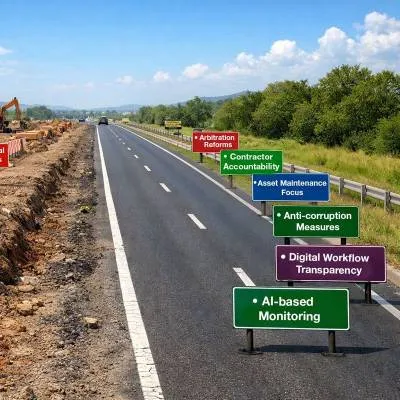
The government has undertaken various initiatives to prevent recurrence of delays and cost escalations and to strengthen project delivery mechanisms. It has sought to enhance coordination between agencies and to streamline clearance processes, the reply added. Contractors have been urged to accelerate work where feasible and administrative measures have been introduced to monitor progress. The ministry emphasised the need for early resolution of land and utility disputes to reduce further slippages.

Delays of this magnitude have implications for project costs, regional connectivity and planned economic benefits, and they can affect investor confidence in infrastructure delivery. The ministry indicated that enhanced project monitoring and periodic review panels have been employed to identify bottlenecks and impose corrective steps. There was recognition that complex statutory and social issues require time consuming remedial action and that a balance must be struck between fair compensation and timely acquisition. Officials also noted that addressing encroachment and legal challenges remained a priority.

The reply in the Upper House did not provide project specific timelines for completion but reaffirmed a commitment to reduce pendency and cost overruns through administrative reforms. Continued focus on inter agency coordination and stronger dispute resolution mechanisms were presented as means to accelerate blocked projects. The minister highlighted that persistent monitoring, contractual enforcement and community engagement were central to reducing future delays. Parliament was informed that the ministry will continue to report progress and take corrective measures as required.

85 under-construction national highway projects are delayed by more than three years, the government informed Parliament. The delays are attributable to multiple factors including bottlenecks in land acquisition, statutory clearances and permissions, utility shifting and encroachment removal. The information was provided in a written reply to the Rajya Sabha by Road, Transport and Highways Minister Nitin Gadkari. The minister said law and order issues had also contributed to time overruns. The government has undertaken various initiatives to prevent recurrence of delays and cost escalations and to strengthen project delivery mechanisms. It has sought to enhance coordination between agencies and to streamline clearance processes, the reply added. Contractors have been urged to accelerate work where feasible and administrative measures have been introduced to monitor progress. The ministry emphasised the need for early resolution of land and utility disputes to reduce further slippages. Delays of this magnitude have implications for project costs, regional connectivity and planned economic benefits, and they can affect investor confidence in infrastructure delivery. The ministry indicated that enhanced project monitoring and periodic review panels have been employed to identify bottlenecks and impose corrective steps. There was recognition that complex statutory and social issues require time consuming remedial action and that a balance must be struck between fair compensation and timely acquisition. Officials also noted that addressing encroachment and legal challenges remained a priority. The reply in the Upper House did not provide project specific timelines for completion but reaffirmed a commitment to reduce pendency and cost overruns through administrative reforms. Continued focus on inter agency coordination and stronger dispute resolution mechanisms were presented as means to accelerate blocked projects. The minister highlighted that persistent monitoring, contractual enforcement and community engagement were central to reducing future delays. Parliament was informed that the ministry will continue to report progress and take corrective measures as required.

Related Stories

Gold Stories

Next Story
Infrastructure Urban

KONE Opens India's First Digital Experience Centre in Pune

KONE, a global elevator and escalator manufacturer, has inaugurated its first Digital Experience Centre (DEC) in India, located in Pune. The facility aims to showcase how artificial intelligence (AI), connectivity and data-driven technologies can enhance customer experiences and improve building operations.The centre was inaugurated by Jussi Herlin, Executive Vice Chair, KONE Corporation; Philippe Delorme, President and CEO, KONE; and Nandan Nilekani, Co-founder and Chairman of the Board, Infosys.Designed as an interactive customer environment, the facility demonstrates digital solutions cover..

Next Story
Infrastructure Urban

CII GreenCo Launches Circularity Guidelines for Indian Industry

The Confederation of Indian Industry (CII) GreenCo Council has launched the CII GreenCo Circularity Guidelines – Pilot Version at the 17th CII GreenCo Waste & Resource Management Summit 2026 in Chennai. The initiative aims to strengthen resource efficiency, waste reduction and circular economy practices across Indian manufacturing and process industries.The guidelines introduce a structured framework with circularity indices covering raw materials, consumables, packaging and other resource inputs. These indicators will help industries assess existing practices, identify opportunities to ..

Next Story
Infrastructure Energy

Global Electronics Association Launches IPC-1783-CO2E Standard

The Global Electronics Association has introduced IPC-1783-CO2E, a new international standard aimed at improving consistency, transparency and comparability in product carbon footprint reporting across the electronics manufacturing industry.The standard, titled International Standard for Data Collection and Reporting of CO2 Equivalent (CO2e) Emissions for the Electronics Manufacturing Supply Chain, provides industry-specific guidance for collecting, estimating and reporting carbon emissions data.With increasing regulatory requirements and customer expectations, electronics manufacturers face c..

Advertisement

Subscribe to Our Newsletter

Get daily newsletters around different themes from Construction world.

STAY CONNECTED

Advertisement

SPECIAL OFFER
QR Code