Amarnath road widening & 10.8-km tunnel to reduce travel time
ROADS & HIGHWAYS

Amarnath road widening & 10.8-km tunnel to reduce travel time

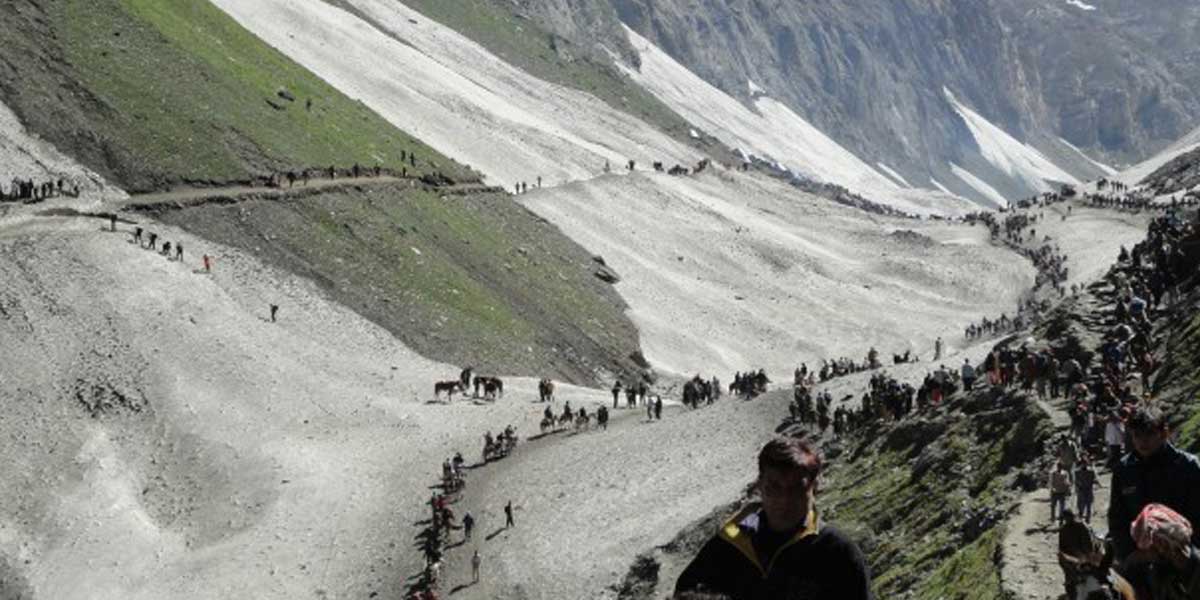
The 110 km long national highway between Khannabal and Chandwanwari will be widened into a four-lane road as part of a project announced by Union Minister for Road Transport and National Highways Nitin Gadkari. Additionally, uphill tracks and a tunnel will be built to reach the Amarnath cave shrine hidden among the Himalayas.

When the project is finished, it is anticipated that it will reduce the distance between Srinagar and the Amarnath cave shrine's travel time to 7 to 8 hours. Currently, travelling the distance by Chandanwari's historic path takes three days. “I am happy to announce that government has given its consent to Rs 53 billion project for construction of 73-km long four lane road from Khannabal to Chandanwari at a cost of Rs 18 billion (including tracks and a 10.8 km long tunnel) to the Amarnath cave shrine,” said the union minister.

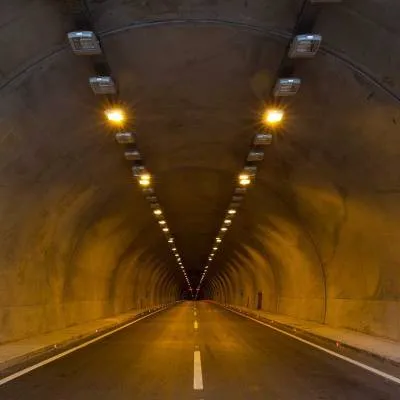
Gadkari added that the project will also include a 10.8-km tunnel from Sheshanag to Panchtarni and a 34 km two-lane track from Chandwari to Panchtarni to Baltal, both of which would be built at a cost of Rs 35 billion. He continued, “A 5.5-m wide concrete pedestrian track with barricades on either side will also be built for the 5-km distance from Panchtarni to the holy cave shrine.” It was also revealed that a 9-km long ropeway would be built at a cost of Rs 7.5 billion over the shorter path from Baltal to the cave temple. The project tenders will be released in November and December.

The 110 km long national highway between Khannabal and Chandwanwari will be widened into a four-lane road as part of a project announced by Union Minister for Road Transport and National Highways Nitin Gadkari. Additionally, uphill tracks and a tunnel will be built to reach the Amarnath cave shrine hidden among the Himalayas. When the project is finished, it is anticipated that it will reduce the distance between Srinagar and the Amarnath cave shrine's travel time to 7 to 8 hours. Currently, travelling the distance by Chandanwari's historic path takes three days. “I am happy to announce that government has given its consent to Rs 53 billion project for construction of 73-km long four lane road from Khannabal to Chandanwari at a cost of Rs 18 billion (including tracks and a 10.8 km long tunnel) to the Amarnath cave shrine,” said the union minister. Gadkari added that the project will also include a 10.8-km tunnel from Sheshanag to Panchtarni and a 34 km two-lane track from Chandwari to Panchtarni to Baltal, both of which would be built at a cost of Rs 35 billion. He continued, “A 5.5-m wide concrete pedestrian track with barricades on either side will also be built for the 5-km distance from Panchtarni to the holy cave shrine.” It was also revealed that a 9-km long ropeway would be built at a cost of Rs 7.5 billion over the shorter path from Baltal to the cave temple. The project tenders will be released in November and December.

Next Story
Infrastructure Urban

Mount Expands Tumkur Facility with New Automated Panel, PEB Lines

Mount Roofing & Structures Private Limited, one of India's fastest-growing manufacturers in PUF and a leading solutions provider across pre-engineered building (PEB) and polycarbonate sheets, simultaneously inaugurated its second fully automated continuous sandwich panel manufacturing line and a new PEB manufacturing plant at its integrated campus in Tumkur.The milestone expansion, part of a total investment of Rs 250 crore, marks a significant advancement in the company's commitment to engineered performance, manufacturing scale, and industrial growth. The integrated facility spans approx..

Next Story
Infrastructure Transport

India Becomes First to Produce Bio-Bitumen for Roads

India has become the first country in the world to commercially produce bio-bitumen for use in road construction, according to Road, Transport and Highways Minister Nitin Gadkari. Bitumen, a black and viscous hydrocarbon derived from crude oil, is a key binding material in road building, and the bio-based alternative is expected to significantly improve the sector’s environmental footprint.Addressing the CSIR Technology Transfer Ceremony in New Delhi, Mr Gadkari congratulated Council of Scientific and Industrial Research on achieving the milestone, noting that the initiative would help curb ..

Next Story
Infrastructure Urban

HILT Policy Seen Boosting Telangana Revenue Sharply

The Hyderabad Industrial Land Transformation (HILT) Policy is expected to generate around Rs 1.08 billion in revenue for the Telangana state exchequer, according to Deputy Chief Minister Bhatti Vikramarka Mallu. Speaking in the Telangana Legislative Assembly, he said the policy would be implemented within a six-month timeframe in a transparent manner, with uniform rules applicable to all stakeholders. Mr Vikramarka noted that without the HILT Policy, the state would have earned only about Rs 1.2 million per acre. Under the new framework, however, revenue is projected to rise sharply to Rs 70 ..

Advertisement

Subscribe to Our Newsletter

Get daily newsletters around different themes from Construction world.

STAY CONNECTED

Advertisement

Advertisement

Advertisement

Advertisement

Open In App