+
Barrier-free Tolling System Expected by March 2027: Nitin Gadkari
ROADS & HIGHWAYS

Barrier-free Tolling System Expected by March 2027: Nitin Gadkari

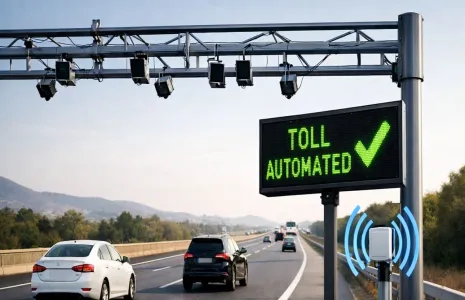
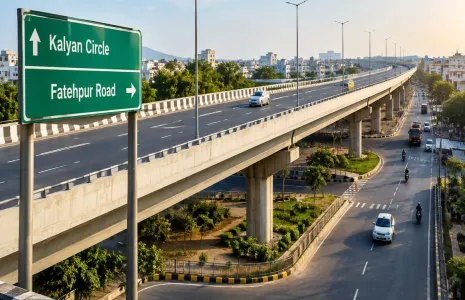
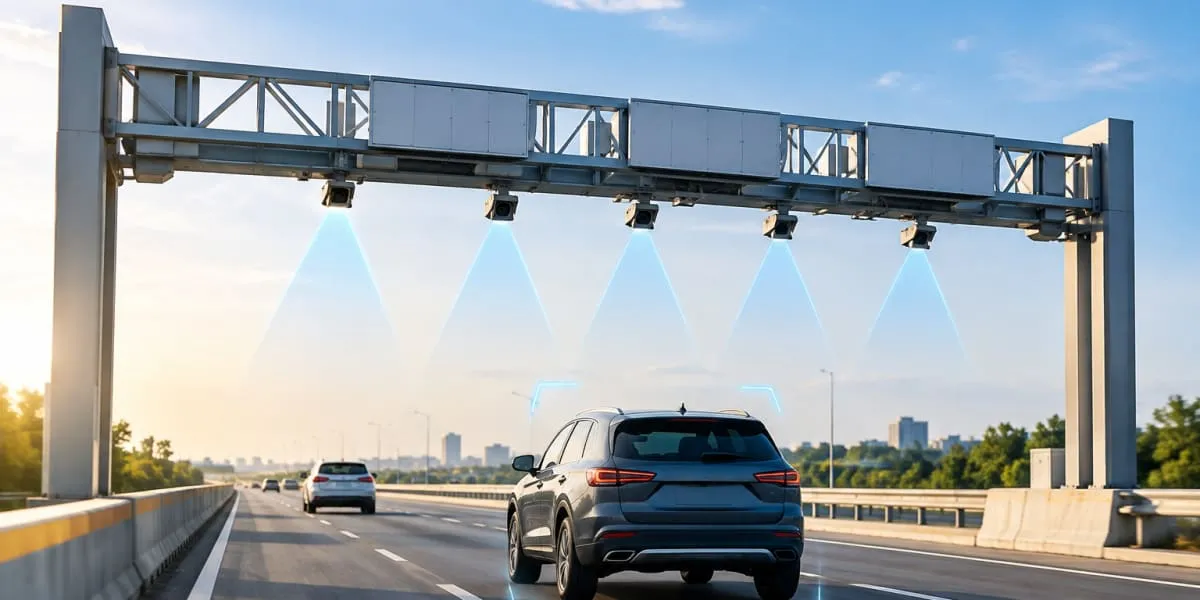
India is moving towards a fully digital, barrier-free toll collection system that is expected to become operational nationwide by February or March 2027, Union road transport and highways minister Nitin Gadkari said. The system will use the Multi-Lane Free Flow (MLFF) model, allowing vehicles to pass through toll points without stopping.

MLFF tolling uses overhead gantries to identify vehicles and collect charges electronically as they travel at normal speeds. Gadkari said the government aims to eliminate stoppages, reducing fuel consumption and the operational costs associated with toll plazas. He has directed officials to complete most of the work by December 2026.

Gadkari said the operating cost of toll plazas currently ranges between 12 per cent and 15 per cent. This is expected to fall to between 2 per cent and 4 per cent after the barrier-free model is implemented nationwide, generating annual savings of Rs. 60 to 70 bn.

The minister said India’s electronic toll collection system, FASTag, had already reduced waiting times and removed the need for cash payments at toll plazas. Waiting time, which was previously about 12 minutes and reached 30 minutes at some locations, has improved by 80 per cent to 90 per cent, though Gadkari said further reductions were needed.

Reduced waiting times are estimated to save about 710 mn hours and 560 mn litres of fuel annually, with fuel savings valued at approximately Rs. 52.5 bn. The economic value of commuters’ saved time is estimated at Rs. 685 bn a year. Gadkari also said wider FASTag adoption and digital tolling had generated an estimated annual benefit of Rs. 200 to 250 bn for the government.

India is moving towards a fully digital, barrier-free toll collection system that is expected to become operational nationwide by February or March 2027, Union road transport and highways minister Nitin Gadkari said. The system will use the Multi-Lane Free Flow (MLFF) model, allowing vehicles to pass through toll points without stopping. MLFF tolling uses overhead gantries to identify vehicles and collect charges electronically as they travel at normal speeds. Gadkari said the government aims to eliminate stoppages, reducing fuel consumption and the operational costs associated with toll plazas. He has directed officials to complete most of the work by December 2026. Gadkari said the operating cost of toll plazas currently ranges between 12 per cent and 15 per cent. This is expected to fall to between 2 per cent and 4 per cent after the barrier-free model is implemented nationwide, generating annual savings of Rs. 60 to 70 bn. The minister said India’s electronic toll collection system, FASTag, had already reduced waiting times and removed the need for cash payments at toll plazas. Waiting time, which was previously about 12 minutes and reached 30 minutes at some locations, has improved by 80 per cent to 90 per cent, though Gadkari said further reductions were needed. Reduced waiting times are estimated to save about 710 mn hours and 560 mn litres of fuel annually, with fuel savings valued at approximately Rs. 52.5 bn. The economic value of commuters’ saved time is estimated at Rs. 685 bn a year. Gadkari also said wider FASTag adoption and digital tolling had generated an estimated annual benefit of Rs. 200 to 250 bn for the government.

Related Stories

Gold Stories
Next Story
Real Estate

BMC OC Amnesty Scheme Requires Key Approvals from Mumbai Societies

The Brihanmumbai Municipal Corporation (BMC) has clarified that housing societies applying under its Occupation Certificate (OC) amnesty scheme must possess key approvals linked to the original construction. The requirements include a valid Intimation of Disapproval (IOD), an approved building plan and a Commencement Certificate (CC), along with a No Objection Certificate (NOC) from the developer or original construction applicant. The Standard Operating Procedure (SOP) makes clear that the absence of an OC alone will not qualify a building for relief. Societies must establish that their build..

Next Story
Real Estate

Gurugram Emerges as Luxury Senior Living Hub

Gurugram is emerging as a potential hub for luxury senior living, supported by available land, healthcare infrastructure, connectivity and a concentration of affluent professionals, high-net-worth individuals and non-resident Indians. These factors could give the city an advantage over land-constrained metros such as Mumbai. A report by the Association of Senior Living India (ASLI) and JLL estimates that India’s organised senior living market could represent a $10.1 bn opportunity by 2030. The sector had about 25,050 organised units as of June 2026, while penetration stood at only 1.5 per ce..

Next Story
Real Estate

Corrosion Costs India’s Infrastructure Rs. 142 bn Annually

Corrosion costs India an estimated Rs. 1.42 tn annually, equivalent to 4.3 per cent of gross domestic product, according to a report by the Confederation of Indian Industry and the National Research Institute. Infrastructure accounts for Rs. 142 bn of the annual burden, making it the sector with the largest absolute cost among those examined. The report, presented at the CII Annual Infrastructure Summit 2026, said the infrastructure-sector cost equals about 2.9 per cent of the sector’s gross domestic product. It estimated that effective measures could generate maximum savings of Rs. 495.8 bn..

Advertisement

Subscribe to Our Newsletter

Get daily newsletters around different themes from Construction world.

STAY CONNECTED

Advertisement

SPECIAL OFFER
QR Code