Barrierless Tolling To Transform Highways And Reduce Pollution
ROADS & HIGHWAYS

Barrierless Tolling To Transform Highways And Reduce Pollution

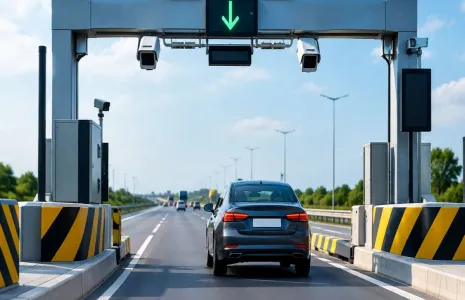
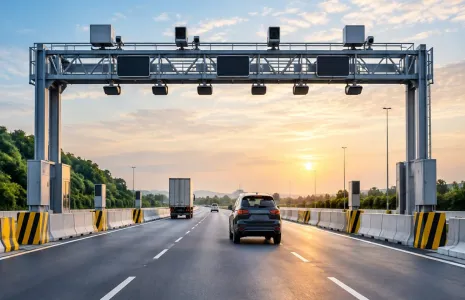
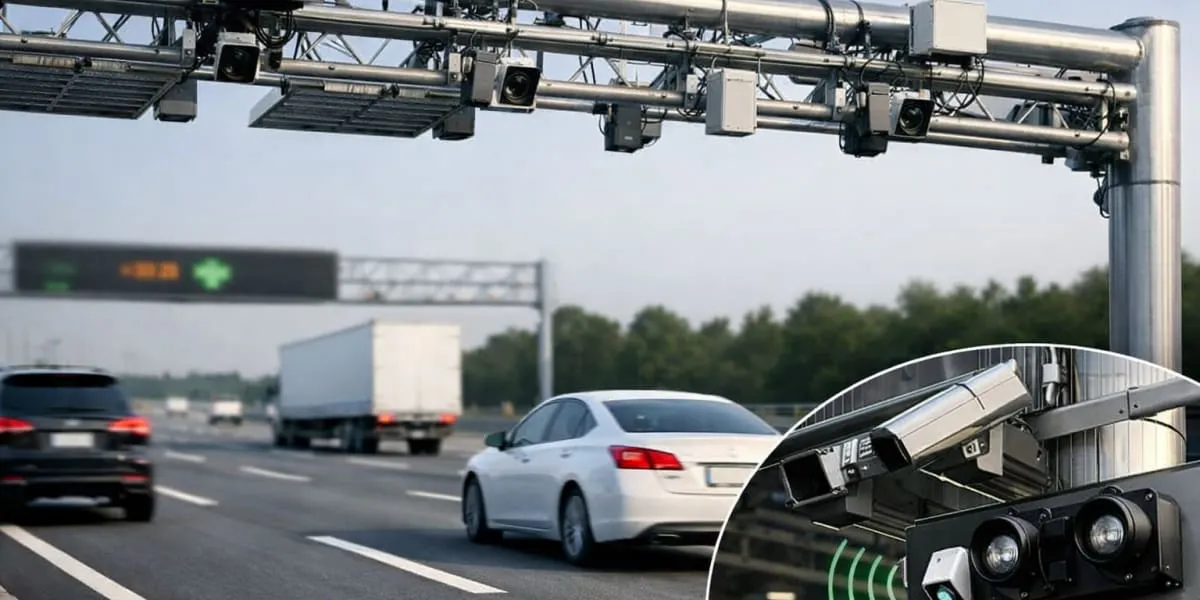
The Union government has introduced the Multi-Lane Free Flow (MLFF) tolling system with a first-of-its-kind barrierless plaza at Mundka–Bakkarwala on the Urban Extension Road II in the National Capital Region. The National Highways Authority of India (NHAI) oversaw the inauguration with senior officials and public representatives. The MLFF system provides a contactless framework intended to permit uninterrupted vehicle movement through toll points without stopping.

Authorities said the system will cut waiting time at toll locations and smooth traffic flow, yielding substantial fuel savings and lower vehicular emissions. The rollout is projected to save nearly two point five billion litres of fuel annually and reduce roughly 81,000 t of carbon emissions, contributing to pollution mitigation in the capital region. The technology is described as adhering to international standards after consultations with providers and stakeholders.

Officials indicated that toll collection operations previously incurred nearly 15 per cent in operational expenditure and that under MLFF, this is expected to fall to around three to four per cent. The reduction could deliver annual savings of about Rs 50-60 bn while also strengthening toll transparency and revenue mobilisation. The system aims to lower logistics costs and improve operational efficiency across the national highway network.

Technically, the MLFF integrates Automatic Number Plate Recognition (ANPR) with FASTag-based Electronic Toll Collection to automate fee recovery with minimal human intervention. Users must maintain a sufficient FASTag balance and will receive an electronic notice for non-payment, with a normal fee payable within 72 hours or twice the rate thereafter; unresolved cases may lead to FASTag blacklisting and restrictions via the VAHAN platform. Grievances can be raised within the 72-hour window through the portal.

The government has signalled parallel measures such as using processed municipal waste and bio-bitumen from crop residue in road construction to reduce import dependence and pollution. Artificial intelligence tools are being incorporated into traffic monitoring and management as part of broader highway modernisation. The scheme follows an earlier MLFF launch on the Surat–Bharuch section and is positioned as a step towards a technology-driven, user-friendly national highway network.

The Union government has introduced the Multi-Lane Free Flow (MLFF) tolling system with a first-of-its-kind barrierless plaza at Mundka–Bakkarwala on the Urban Extension Road II in the National Capital Region. The National Highways Authority of India (NHAI) oversaw the inauguration with senior officials and public representatives. The MLFF system provides a contactless framework intended to permit uninterrupted vehicle movement through toll points without stopping. Authorities said the system will cut waiting time at toll locations and smooth traffic flow, yielding substantial fuel savings and lower vehicular emissions. The rollout is projected to save nearly two point five billion litres of fuel annually and reduce roughly 81,000 t of carbon emissions, contributing to pollution mitigation in the capital region. The technology is described as adhering to international standards after consultations with providers and stakeholders. Officials indicated that toll collection operations previously incurred nearly 15 per cent in operational expenditure and that under MLFF, this is expected to fall to around three to four per cent. The reduction could deliver annual savings of about Rs 50-60 bn while also strengthening toll transparency and revenue mobilisation. The system aims to lower logistics costs and improve operational efficiency across the national highway network. Technically, the MLFF integrates Automatic Number Plate Recognition (ANPR) with FASTag-based Electronic Toll Collection to automate fee recovery with minimal human intervention. Users must maintain a sufficient FASTag balance and will receive an electronic notice for non-payment, with a normal fee payable within 72 hours or twice the rate thereafter; unresolved cases may lead to FASTag blacklisting and restrictions via the VAHAN platform. Grievances can be raised within the 72-hour window through the portal. The government has signalled parallel measures such as using processed municipal waste and bio-bitumen from crop residue in road construction to reduce import dependence and pollution. Artificial intelligence tools are being incorporated into traffic monitoring and management as part of broader highway modernisation. The scheme follows an earlier MLFF launch on the Surat–Bharuch section and is positioned as a step towards a technology-driven, user-friendly national highway network.

Next Story
Infrastructure Urban

Maharashtra Clears Rs 317.93 Bn For Virar Alibaug Corridor

Maharashtra has granted administrative approval for phase one of the 14-lane Virar-Alibaug Multi-Modal Transport Corridor, an access-controlled route to improve connectivity across the Mumbai Metropolitan Region and link the Jawaharlal Nehru Port Authority, Navi Mumbai International Airport and the Mumbai Trans Harbour Link. The first phase spans 126.06 km and is estimated at Rs 317.93 billion. The Urban Development Department lists the construction cost at Rs 215.34 billion. The alignment is proposed through 104 villages across Vasai, Bhiwandi, Kalyan, Ambernath, Panvel, Uran, Pen and Alibaug..

Next Story
Infrastructure Urban

Gurugram To Control Streetlights Via Mobile App

The Municipal Corporation of Gurugram has announced a mobile app based system to operate and monitor the city streetlighting network as part of a smart city upgrade. The initiative will bring 0.112 million streetlights under digital control, replacing the previous practice in which workers manually switched lights across different sectors. The programme is intended to improve maintenance efficiency and strengthen the digital infrastructure of the city. The move aligns with broader urban digitalisation efforts in the region. The platform will allow officials to operate the streetlights remotely..

Next Story
Technology

Ahmedabad Plans Singapore Style Artificial Intelligence Indoor Garden

Ahmedabad will host a proposed Singapore style indoor garden on the Sabarmati Riverfront, a project unveiled at the Vibrant Gujarat regional conference by Simon Wong. The proposal, modelled on Singapore's Gardens by the Bay, aims to blend architecture, ecology and technology to create a year-round attraction. Organisers positioned the scheme as part of broader smart city and tourism ambitions for the region. The project is planned as a climate-controlled dome designed to recreate a tropical forest environment with artificial rain simulation, immersive fog and dense tropical plantations. Advanc..

Advertisement

Subscribe to Our Newsletter

Get daily newsletters around different themes from Construction world.

STAY CONNECTED

Advertisement

Advertisement

Advertisement