+
Bengaluru To Get Revised Mobility Plan Amid Traffic Woes
ROADS & HIGHWAYS

Bengaluru To Get Revised Mobility Plan Amid Traffic Woes

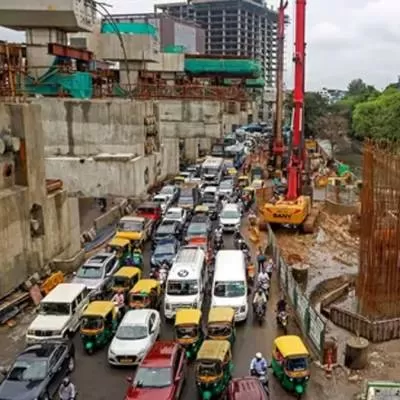
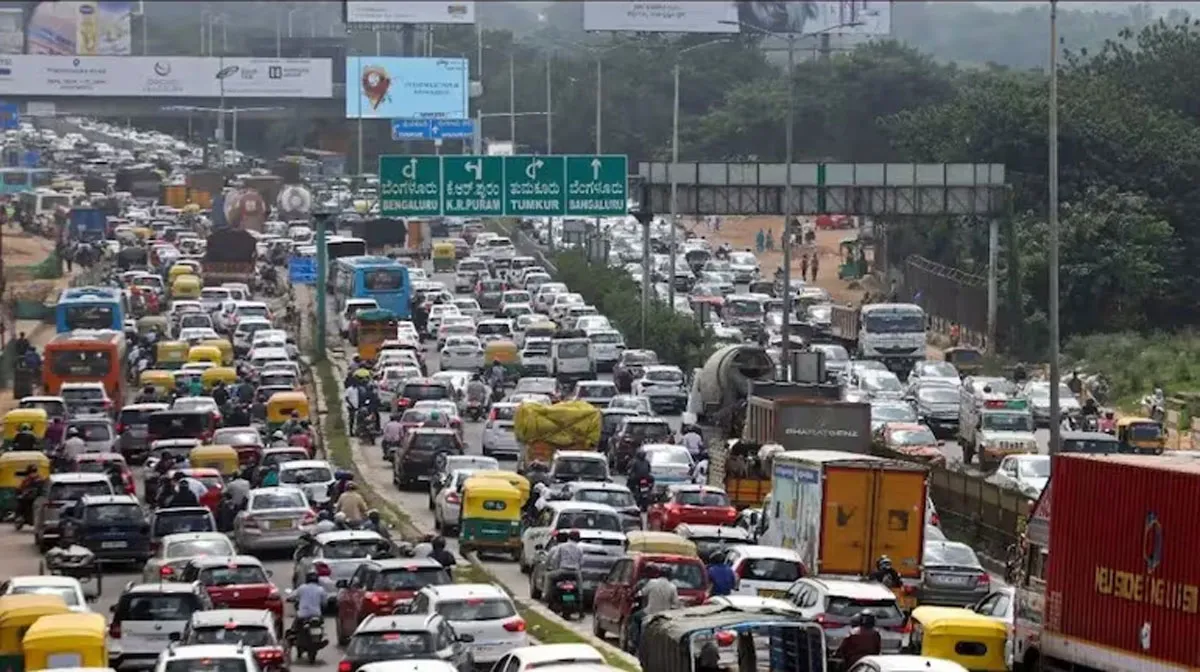
Bengaluru, ranked the world’s second most congested city after Mexico City in 2025 by the Traffic Index released by Dutch location technology firm TomTom, is set to receive a revised Comprehensive Mobility Plan (CMP) for the Bengaluru Metropolitan Region.

The Directorate of Urban Land Transport has invited bids to appoint a consultant to prepare the updated CMP, officials said. The move comes as the existing CMP, approved in 2020, is based on data collected in 2014–15 and no longer reflects the city’s current mobility realities.

According to DULT officials, rapid urban expansion and the addition of major transport infrastructure over the past decade have significantly altered travel patterns across the region, making a comprehensive revision necessary. Under guidelines issued by the Union Ministry of Housing and Urban Affairs, cities are required to revise their CMPs every five years to remain eligible for central funding and ensure alignment with long-term transport objectives.

Several large-scale developments have reshaped Bengaluru’s mobility landscape. The operationalisation of Namma Metro Phase-1 extensions and multiple Phase-2 corridors has led to a sharp increase in ridership. In parallel, Bengaluru Metro Rail Corporation Ltd has prepared a metro master plan extending to 2045, which will need to be integrated into the revised CMP.

The state government has also introduced key policy frameworks such as Parking Policy 2.0 and the Transit-Oriented Development policy, both expected to influence travel behaviour and land-use patterns. In addition, major road infrastructure initiatives, including the Satellite Town Ring Road, new arterial roads, grade separators and proposed tunnel roads under the Greater Bengaluru Authority, will be assessed for sustainability as part of the CMP revision.

The opening of Terminal 2 at Kempegowda International Airport has added a major new mobility node. Terminal 2 currently handles around 160 million passengers annually and is slated for expansion by an additional 278,000 square metres. Once completed, the combined capacity of Terminals 1 and 2 is expected to exceed 850 million passengers per year.

Officials said the CMP revision will be undertaken alongside the revision of the Bengaluru Master Plan to ensure closer integration between transport planning and land use. The objective is to manage rapid regional growth, reduce congestion, increase public transport usage, promote non-motorised and low-carbon mobility, and strengthen coordination among agencies such as the Greater Bengaluru Authority, BMRCL, BMTC, K-RIDE, BDA and the traffic police.

The revised CMP will act as a long-term mobility roadmap for the next 20 to 30 years, guiding investments across metro rail, bus services, suburban rail, road networks, pedestrian and cycling infrastructure, parking management and emerging mobility technologies. Officials said the plan will be based on fresh data, updated travel demand modelling and extensive stakeholder consultations to address Bengaluru’s increasingly complex mobility challenges.

Bengaluru, ranked the world’s second most congested city after Mexico City in 2025 by the Traffic Index released by Dutch location technology firm TomTom, is set to receive a revised Comprehensive Mobility Plan (CMP) for the Bengaluru Metropolitan Region. The Directorate of Urban Land Transport has invited bids to appoint a consultant to prepare the updated CMP, officials said. The move comes as the existing CMP, approved in 2020, is based on data collected in 2014–15 and no longer reflects the city’s current mobility realities. According to DULT officials, rapid urban expansion and the addition of major transport infrastructure over the past decade have significantly altered travel patterns across the region, making a comprehensive revision necessary. Under guidelines issued by the Union Ministry of Housing and Urban Affairs, cities are required to revise their CMPs every five years to remain eligible for central funding and ensure alignment with long-term transport objectives. Several large-scale developments have reshaped Bengaluru’s mobility landscape. The operationalisation of Namma Metro Phase-1 extensions and multiple Phase-2 corridors has led to a sharp increase in ridership. In parallel, Bengaluru Metro Rail Corporation Ltd has prepared a metro master plan extending to 2045, which will need to be integrated into the revised CMP. The state government has also introduced key policy frameworks such as Parking Policy 2.0 and the Transit-Oriented Development policy, both expected to influence travel behaviour and land-use patterns. In addition, major road infrastructure initiatives, including the Satellite Town Ring Road, new arterial roads, grade separators and proposed tunnel roads under the Greater Bengaluru Authority, will be assessed for sustainability as part of the CMP revision. The opening of Terminal 2 at Kempegowda International Airport has added a major new mobility node. Terminal 2 currently handles around 160 million passengers annually and is slated for expansion by an additional 278,000 square metres. Once completed, the combined capacity of Terminals 1 and 2 is expected to exceed 850 million passengers per year. Officials said the CMP revision will be undertaken alongside the revision of the Bengaluru Master Plan to ensure closer integration between transport planning and land use. The objective is to manage rapid regional growth, reduce congestion, increase public transport usage, promote non-motorised and low-carbon mobility, and strengthen coordination among agencies such as the Greater Bengaluru Authority, BMRCL, BMTC, K-RIDE, BDA and the traffic police. The revised CMP will act as a long-term mobility roadmap for the next 20 to 30 years, guiding investments across metro rail, bus services, suburban rail, road networks, pedestrian and cycling infrastructure, parking management and emerging mobility technologies. Officials said the plan will be based on fresh data, updated travel demand modelling and extensive stakeholder consultations to address Bengaluru’s increasingly complex mobility challenges.

Next Story
Infrastructure Transport

Lucknow Metro East-West Corridor Consultancy Contract Awarded

The Uttar Pradesh Metro Rail Corporation has awarded the first construction-related consultancy contract for the Lucknow Metro East West Corridor to a joint venture of AYESA Ingenieria Arquitectura SAU and AYESA India Pvt Ltd. The firm was declared the lowest bidder for the Detailed Design Consultant contract for Lucknow Metro Line-2 under Phase 1B and the contract was recommended following the financial bid. The contract is valued at Rs 159.0 million (mn), covering design services for the corridor. Lucknow Metro Line-2 envisages the construction of an 11.165 kilometre corridor connecting Cha..

Next Story
Infrastructure Urban

Div Com Kashmir Urges Fast Tracking Of Jhelum Water Transport Project

The Divisional Commissioner of Kashmir has called for the fast-tracking of the Jhelum water transport project, urging district administrations and relevant agencies to accelerate planning and clearances. In a meeting convened at the divisional headquarters, the commissioner instructed officials from irrigation, public health engineering and municipal departments to prioritise the project and coordinate survey and design work. The directive emphasised removal of administrative bottlenecks and close monitoring to ensure timely mobilisation of resources and contractors. Officials were told to in..

Next Story
Infrastructure Urban

Interarch Reports Strong Q3 And Nine Month Results

Interarch Building Solutions Limited reported unaudited results for the third quarter and nine months ended 31 December 2025, recording strong revenue growth driven by execution and a robust order book. Net revenue for the third quarter rose by 43.7 per cent to Rs 5.225 billion (bn), compared with Rs 3.636 bn a year earlier, reflecting heightened demand in pre-engineered building projects. The company’s total order book as at 31 January 2026 stood at Rs 16.85 bn, supporting near-term visibility. EBITDA excluding other income for the quarter increased by 43.2 per cent to Rs 503 million (mn),..

Advertisement

Subscribe to Our Newsletter

Get daily newsletters around different themes from Construction world.

STAY CONNECTED

Advertisement

Advertisement

Advertisement

Open In App