CAG asks MHA to expedite the Indo-Nepal Border Road Project
ROADS & HIGHWAYS

CAG asks MHA to expedite the Indo-Nepal Border Road Project

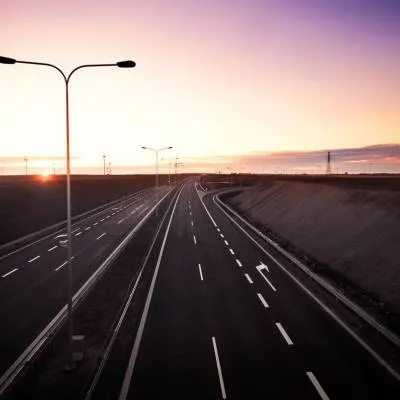
The Comptroller and Auditor General of India (CAG) asked the Ministry of Home Affairs (MHA) to augment the efforts for ensuring the speedy completion of India-Nepal strategic roads for the effective management of the Indo-Nepal border by the border guarding forces along with its benefits to the general population in the bordering areas.

The 23rd audit report of the CAG on the Indo-Nepal Border Road Project that had been recently submitted to Parliament stated that under the project, the construction of the Indo-Nepal border (INB) roads has a total length of 1377 km in three distinct states- Uttar Pradesh (640 km), Bihar (564 km), and Uttarakhand (173 km), had been taken up in November 2010 with the objective of constructing roads having strategic importance by the Indo-Nepal border to be completed by March 2016.

The main aim of the project was to provide better connectivity to the Border Out Posts (BOPs) to fulfill the requirements of the border population along with the better implementation of development initiatives in those areas.

This project aimed at facilitating faster mobility of the 'Sashastra Seema Bal' (SSB) which is the Indo-Nepal border guarding force to dominate the sensitive border more effectively.

The audit report shed light on critical lacunae in this project’s conceptualisation stage which include planning the road alignment away from the border. The other was the non-integration of project design with the Border Out Posts (BOPs) connectivity of the SSB with the border roads’ main alignment and the non-inclusion of link roads as an integral component of this road project.

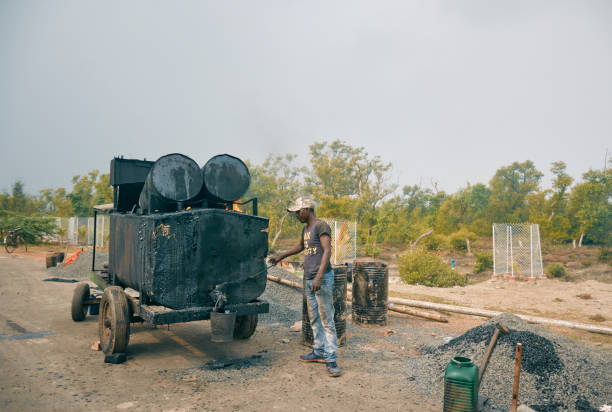
Image Source

The Comptroller and Auditor General of India (CAG) asked the Ministry of Home Affairs (MHA) to augment the efforts for ensuring the speedy completion of India-Nepal strategic roads for the effective management of the Indo-Nepal border by the border guarding forces along with its benefits to the general population in the bordering areas. The 23rd audit report of the CAG on the Indo-Nepal Border Road Project that had been recently submitted to Parliament stated that under the project, the construction of the Indo-Nepal border (INB) roads has a total length of 1377 km in three distinct states- Uttar Pradesh (640 km), Bihar (564 km), and Uttarakhand (173 km), had been taken up in November 2010 with the objective of constructing roads having strategic importance by the Indo-Nepal border to be completed by March 2016. The main aim of the project was to provide better connectivity to the Border Out Posts (BOPs) to fulfill the requirements of the border population along with the better implementation of development initiatives in those areas. This project aimed at facilitating faster mobility of the 'Sashastra Seema Bal' (SSB) which is the Indo-Nepal border guarding force to dominate the sensitive border more effectively. The audit report shed light on critical lacunae in this project’s conceptualisation stage which include planning the road alignment away from the border. The other was the non-integration of project design with the Border Out Posts (BOPs) connectivity of the SSB with the border roads’ main alignment and the non-inclusion of link roads as an integral component of this road project. Image Source

Next Story
Infrastructure Urban

Implementation Status of Jal Jeevan Mission

Since August 2019 the Government has implemented Jal Jeevan Mission to provide assured potable water through household tap connections in rural India. At the start of the mission only 32.3 million (mn) rural households, representing 16.7 per cent, were reported to have tap water connections. States and union territories have reported that 125.8 mn additional rural households have since been provided with tap connections. As a result, of about 193.6 mn rural households roughly 158.2 mn, or 81.71 per cent, are reported to have tap water supply at home.\n\nThe State, district and village level st..

Next Story
Infrastructure Urban

Jal Jeevan Mission Reaches Eighty One Per Cent Rural Coverage

The Government reported substantial progress under the Jal Jeevan Mission, launched in August 2019 to provide tap water to every rural household. At launch only 32.3 million (mn) rural households had tap connections and states and Union territories reported provision of 125.8 mn additional households by March 2026. Consequently, out of about 193.6 mn rural households around 158.2 mn, or 81.71 per cent, are reported to have tap water at home. The Finance Minister announced extension of the mission until 2028 in the 2025-26 budget speech. The Swachh Bharat Mission Grameen, launched in October 20..

Next Story
Infrastructure Urban

Empowering Local Governance for Sustainable Rural Water Supply

The Ministry of Jal Shakti has aligned the Jal Jeevan Mission (JJM) with the 73rd Amendment to strengthen village level planning and community ownership of water supply. Gram Panchayats, village water and sanitation committees and Pani Samitis are to plan, implement, manage and maintain piped water systems, with gram sabha processes formalising handover and oversight. Implementation support agencies including non government organisations, community based organisations and self help groups have been empanelled to train local committees and promote women participation. Under JJM, the department ..

Advertisement

Subscribe to Our Newsletter

Get daily newsletters around different themes from Construction world.

STAY CONNECTED

Advertisement

Advertisement

Advertisement