CAQM Inspects Faridabad Roads to Strengthen Dust Control Measures
ROADS & HIGHWAYS

CAQM Inspects Faridabad Roads to Strengthen Dust Control Measures

The Commission for Air Quality Management in NCR and Adjoining Areas (CAQM) carried out an inspection drive in Faridabad, Haryana, on January 13, 2026, to assess road dust mitigation measures and the maintenance of road stretches under the jurisdiction of the Municipal Corporation of Faridabad (MCF). The exercise formed part of intensified enforcement actions under the Graded Response Action Plan (GRAP).

The inspection was undertaken under ‘Operation Clean Air’ to evaluate the on-ground implementation of road cleaning and sweeping practices, and to identify locations prone to visible dust, municipal solid waste (MSW) accumulation, and related environmental concerns. To ensure comprehensive coverage, nine inspection teams comprising officers from the Haryana State Pollution Control Board (HSPCB) and the Central Pollution Control Board (CPCB) were deployed across the city.

In total, 127 road stretches were inspected during the drive. The teams submitted geo-tagged and time-stamped photographic evidence to CAQM as part of a consolidated inspection report. The findings indicated that while a significant number of road stretches showed low or no visible dust, several locations require targeted corrective action. Of the stretches inspected, 17 recorded high dust levels and 25 moderate dust levels, while 66 stretches showed low dust levels and 19 stretches had no visible dust.

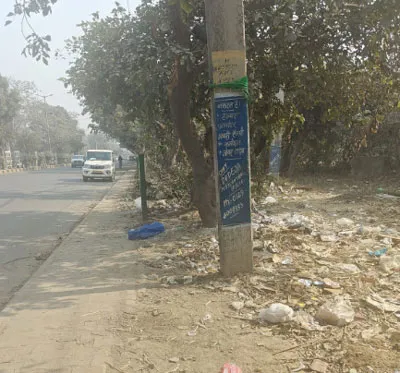
Road stretches with high dust levels were often linked to the accumulation of MSW and construction and demolition (C&D) waste, particularly along major corridors, junctions, and service roads. Isolated instances of open burning were also observed during the inspections.

CAQM emphasised the need for immediate and sustained remedial measures at identified hotspots. These include intensified mechanical sweeping, regular water sprinkling, timely lifting and scientific disposal of MSW and C&D waste, and strict enforcement to curb illegal dumping and open burning. The Commission noted that inspection and enforcement drives under Operation Clean Air will continue across the region to ensure effective GRAP implementation and improved road conditions.

The Commission for Air Quality Management in NCR and Adjoining Areas (CAQM) carried out an inspection drive in Faridabad, Haryana, on January 13, 2026, to assess road dust mitigation measures and the maintenance of road stretches under the jurisdiction of the Municipal Corporation of Faridabad (MCF). The exercise formed part of intensified enforcement actions under the Graded Response Action Plan (GRAP).The inspection was undertaken under ‘Operation Clean Air’ to evaluate the on-ground implementation of road cleaning and sweeping practices, and to identify locations prone to visible dust, municipal solid waste (MSW) accumulation, and related environmental concerns. To ensure comprehensive coverage, nine inspection teams comprising officers from the Haryana State Pollution Control Board (HSPCB) and the Central Pollution Control Board (CPCB) were deployed across the city.In total, 127 road stretches were inspected during the drive. The teams submitted geo-tagged and time-stamped photographic evidence to CAQM as part of a consolidated inspection report. The findings indicated that while a significant number of road stretches showed low or no visible dust, several locations require targeted corrective action. Of the stretches inspected, 17 recorded high dust levels and 25 moderate dust levels, while 66 stretches showed low dust levels and 19 stretches had no visible dust.Road stretches with high dust levels were often linked to the accumulation of MSW and construction and demolition (C&D) waste, particularly along major corridors, junctions, and service roads. Isolated instances of open burning were also observed during the inspections.CAQM emphasised the need for immediate and sustained remedial measures at identified hotspots. These include intensified mechanical sweeping, regular water sprinkling, timely lifting and scientific disposal of MSW and C&D waste, and strict enforcement to curb illegal dumping and open burning. The Commission noted that inspection and enforcement drives under Operation Clean Air will continue across the region to ensure effective GRAP implementation and improved road conditions.

Next Story
Infrastructure Urban

Implementation Status of Jal Jeevan Mission

Since August 2019 the Government has implemented Jal Jeevan Mission to provide assured potable water through household tap connections in rural India. At the start of the mission only 32.3 million (mn) rural households, representing 16.7 per cent, were reported to have tap water connections. States and union territories have reported that 125.8 mn additional rural households have since been provided with tap connections. As a result, of about 193.6 mn rural households roughly 158.2 mn, or 81.71 per cent, are reported to have tap water supply at home.\n\nThe State, district and village level st..

Next Story
Infrastructure Urban

Jal Jeevan Mission Reaches Eighty One Per Cent Rural Coverage

The Government reported substantial progress under the Jal Jeevan Mission, launched in August 2019 to provide tap water to every rural household. At launch only 32.3 million (mn) rural households had tap connections and states and Union territories reported provision of 125.8 mn additional households by March 2026. Consequently, out of about 193.6 mn rural households around 158.2 mn, or 81.71 per cent, are reported to have tap water at home. The Finance Minister announced extension of the mission until 2028 in the 2025-26 budget speech. The Swachh Bharat Mission Grameen, launched in October 20..

Next Story
Infrastructure Urban

Empowering Local Governance for Sustainable Rural Water Supply

The Ministry of Jal Shakti has aligned the Jal Jeevan Mission (JJM) with the 73rd Amendment to strengthen village level planning and community ownership of water supply. Gram Panchayats, village water and sanitation committees and Pani Samitis are to plan, implement, manage and maintain piped water systems, with gram sabha processes formalising handover and oversight. Implementation support agencies including non government organisations, community based organisations and self help groups have been empanelled to train local committees and promote women participation. Under JJM, the department ..

Advertisement

Subscribe to Our Newsletter

Get daily newsletters around different themes from Construction world.

STAY CONNECTED

Advertisement

Advertisement

Advertisement