+
Chennai Metro To Develop Seven Point Three Million Sq Ft
ROADS & HIGHWAYS

Chennai Metro To Develop Seven Point Three Million Sq Ft

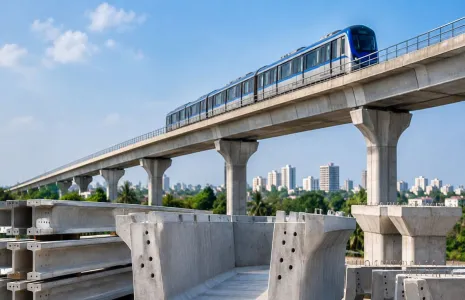
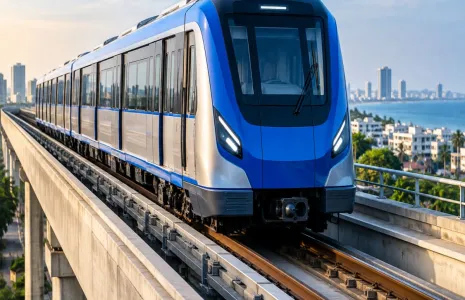
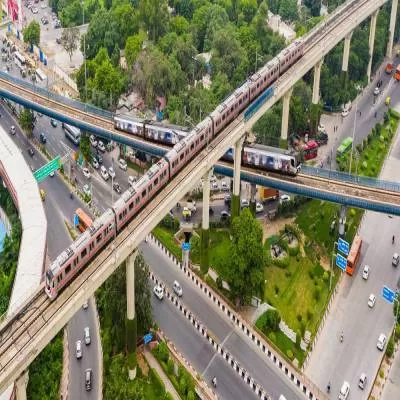
Chennai Metro Rail Limited (CMRL) has proposed developing seven point three million (mn) sq ft of land across 37 station precincts along Phase two corridors as part of a transit-oriented development initiative, officials confirmed earlier this week. The plan is designed to diversify revenue beyond farebox collections and catalyse mixed-use urban growth by leveraging surplus land around metro infrastructure. Proposed objectives include unlocking non-fare revenue and enhancing ridership through integrated land use.

Planned uses span commercial space, institutional components, hospitality, multi-level parking and public-private last-mile connectivity hubs to support commuter flows and neighbourhood economies. Key nodal areas earmarked include Thousand Lights, Chetpet, Nandanam, Alandur, St Thomas Mount, Perumbakkam and Poonamallee Bypass, reflecting central and emerging growth nodes along the corridors. Phase two entails network expansion of approximately 118 km linking central, southern and south-western parts of the city and is expected to intersect high density urban catchments.

CMRL has identified parcels adjacent to stations and depots for potential projects and officials said feasibility studies and detailed project reports are being prepared to determine optimal land use and revenue models. The authority intends to pursue commercial development through transparent competitive bidding or joint venture arrangements subject to approvals from relevant government bodies. Delivery mechanisms will be finalised after financial modelling and regulatory clearances are secured.

The TOD initiative aligns with the Ministry of Housing and Urban Affairs drive to integrate metro infrastructure with urban development and to foster economic vibrancy near transit corridors, officials said. By unlocking surplus land value the metro operator aims to reduce pressure on ticket revenue while attracting private investment to accelerate network expansion and improve last-mile utility for commuters. Exact timelines for tendering have not been disclosed and CMRL expects to begin rolling out projects only after securing approvals and finalising delivery frameworks. The approach is expected to attract private capital while improving commuter convenience and urban amenities.

Chennai Metro Rail Limited (CMRL) has proposed developing seven point three million (mn) sq ft of land across 37 station precincts along Phase two corridors as part of a transit-oriented development initiative, officials confirmed earlier this week. The plan is designed to diversify revenue beyond farebox collections and catalyse mixed-use urban growth by leveraging surplus land around metro infrastructure. Proposed objectives include unlocking non-fare revenue and enhancing ridership through integrated land use. Planned uses span commercial space, institutional components, hospitality, multi-level parking and public-private last-mile connectivity hubs to support commuter flows and neighbourhood economies. Key nodal areas earmarked include Thousand Lights, Chetpet, Nandanam, Alandur, St Thomas Mount, Perumbakkam and Poonamallee Bypass, reflecting central and emerging growth nodes along the corridors. Phase two entails network expansion of approximately 118 km linking central, southern and south-western parts of the city and is expected to intersect high density urban catchments. CMRL has identified parcels adjacent to stations and depots for potential projects and officials said feasibility studies and detailed project reports are being prepared to determine optimal land use and revenue models. The authority intends to pursue commercial development through transparent competitive bidding or joint venture arrangements subject to approvals from relevant government bodies. Delivery mechanisms will be finalised after financial modelling and regulatory clearances are secured. The TOD initiative aligns with the Ministry of Housing and Urban Affairs drive to integrate metro infrastructure with urban development and to foster economic vibrancy near transit corridors, officials said. By unlocking surplus land value the metro operator aims to reduce pressure on ticket revenue while attracting private investment to accelerate network expansion and improve last-mile utility for commuters. Exact timelines for tendering have not been disclosed and CMRL expects to begin rolling out projects only after securing approvals and finalising delivery frameworks. The approach is expected to attract private capital while improving commuter convenience and urban amenities.

Next Story
Infrastructure Urban

Implementation Status of Jal Jeevan Mission

Since August 2019 the Government has implemented Jal Jeevan Mission to provide assured potable water through household tap connections in rural India. At the start of the mission only 32.3 million (mn) rural households, representing 16.7 per cent, were reported to have tap water connections. States and union territories have reported that 125.8 mn additional rural households have since been provided with tap connections. As a result, of about 193.6 mn rural households roughly 158.2 mn, or 81.71 per cent, are reported to have tap water supply at home.\n\nThe State, district and village level st..

Next Story
Infrastructure Urban

Jal Jeevan Mission Reaches Eighty One Per Cent Rural Coverage

The Government reported substantial progress under the Jal Jeevan Mission, launched in August 2019 to provide tap water to every rural household. At launch only 32.3 million (mn) rural households had tap connections and states and Union territories reported provision of 125.8 mn additional households by March 2026. Consequently, out of about 193.6 mn rural households around 158.2 mn, or 81.71 per cent, are reported to have tap water at home. The Finance Minister announced extension of the mission until 2028 in the 2025-26 budget speech. The Swachh Bharat Mission Grameen, launched in October 20..

Next Story
Infrastructure Urban

Empowering Local Governance for Sustainable Rural Water Supply

The Ministry of Jal Shakti has aligned the Jal Jeevan Mission (JJM) with the 73rd Amendment to strengthen village level planning and community ownership of water supply. Gram Panchayats, village water and sanitation committees and Pani Samitis are to plan, implement, manage and maintain piped water systems, with gram sabha processes formalising handover and oversight. Implementation support agencies including non government organisations, community based organisations and self help groups have been empanelled to train local committees and promote women participation. Under JJM, the department ..

Advertisement

Subscribe to Our Newsletter

Get daily newsletters around different themes from Construction world.

STAY CONNECTED

Advertisement

Advertisement

Advertisement