Delhi Clears Rs 37 Billion Dues For Peripheral Expressways
ROADS & HIGHWAYS

Delhi Clears Rs 37 Billion Dues For Peripheral Expressways

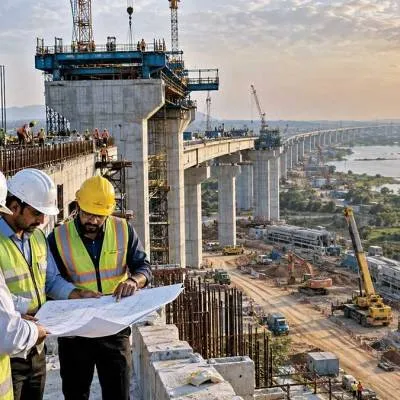
Delhi government has cleared outstanding dues of Rs 37 billion (Rs 37 bn) to contractors and concessionaires involved in peripheral expressway projects, according to official sources. The move aims to settle long-standing liabilities and remove liquidity constraints that had slowed progress on various corridors. Officials indicated that the payments cover work billed over several months and include claims for operations and maintenance. The administration said the payments followed verification procedures and were intended to maintain contractual continuity and to safeguard jobs in the sector.

The clearance is expected to ease cash flow pressures for firms engaged in construction and maintenance and to prevent delays that can arise from stalled payments. Market participants said the receipt of dues will allow contractors to recommence stalled activities and suppliers to meet payroll and equipment costs. Analysts noted that resolving such fiscal backlogs can improve investor confidence in road infrastructure contracts. Trade bodies welcomed the move as a positive step for the construction supply chain.

The funds are likely to be routed through budgetary provisions and central transfers where applicable, with the administration coordinating with nodal agencies to expedite disbursements. Project managers will be required to submit updated completion schedules and expenditure statements to validate further releases. The government will monitor progress to ensure that the inflow translates into accelerated on-ground activity. Timely verification and documentation will remain important to prevent recurrence of delays.

The settlement of arrears comes at a time when infrastructure projects across the region are under scrutiny for timely delivery and cost control. Officials expect that clearing dues will reduce litigation risk and administrative bottlenecks that can inflate project costs. Observers said continued fiscal discipline and timely payments will be crucial for maintaining momentum on expressway construction. Policy analysts said maintaining a predictable payment regime is essential for private participation in public projects.

Delhi government has cleared outstanding dues of Rs 37 billion (Rs 37 bn) to contractors and concessionaires involved in peripheral expressway projects, according to official sources. The move aims to settle long-standing liabilities and remove liquidity constraints that had slowed progress on various corridors. Officials indicated that the payments cover work billed over several months and include claims for operations and maintenance. The administration said the payments followed verification procedures and were intended to maintain contractual continuity and to safeguard jobs in the sector. The clearance is expected to ease cash flow pressures for firms engaged in construction and maintenance and to prevent delays that can arise from stalled payments. Market participants said the receipt of dues will allow contractors to recommence stalled activities and suppliers to meet payroll and equipment costs. Analysts noted that resolving such fiscal backlogs can improve investor confidence in road infrastructure contracts. Trade bodies welcomed the move as a positive step for the construction supply chain. The funds are likely to be routed through budgetary provisions and central transfers where applicable, with the administration coordinating with nodal agencies to expedite disbursements. Project managers will be required to submit updated completion schedules and expenditure statements to validate further releases. The government will monitor progress to ensure that the inflow translates into accelerated on-ground activity. Timely verification and documentation will remain important to prevent recurrence of delays. The settlement of arrears comes at a time when infrastructure projects across the region are under scrutiny for timely delivery and cost control. Officials expect that clearing dues will reduce litigation risk and administrative bottlenecks that can inflate project costs. Observers said continued fiscal discipline and timely payments will be crucial for maintaining momentum on expressway construction. Policy analysts said maintaining a predictable payment regime is essential for private participation in public projects.

Next Story
Infrastructure Transport

The Critical Path

In Ircon International Ltd v. Afcons Infrastructure Ltd, OMP (Comm) 279/2019, the Delhi High Court examined how delay and extension of time (‘EOT’) are to be assessed in construction contracts, particularly in the context of the ‘critical path’ while dealing with challenge to an arbitral award under Section 34 of the Arbitration and Conciliation Act 1996 (‘the Act’). The High Court’s observations regarding the critical path are of significant import for construction and infrastructure projects and related arbitration. The parties entered into a contract for construction of T..

Next Story
Infrastructure Urban

Urgently Wanted: 2 Million Workers!

Construction, India’s second largest employer by industry, employs about 50 million workers but could additionally absorb another 40 million workers, according to estimates shared by the Construction Skill Development Council of India (CSDCI) in 2023. Within this, citing trade estimates, Rahul Bahl, Managing Director, Krishna Buildestates, says the shortage of trained, skilled workers is currently about 2 million, and is expected to rise to 5 million by 2030.Not only is the construction industry struggling to find workers but construction labour productivity in India significantly trails g..

Next Story
Real Estate

144 Years in the Making!

1. A century-spanning construction storyConstruction began in 1882, making the Sagrada Família one of the longest-running architectural projects in modern history. Today, the project is overseen by the Fundació Junta Constructora del Temple Expiatori de la Sagrada Família, with Chief Architect Jordi Faulí leading its final construction phases.2. The world’s tallest church towerhe Sagrada Família in Barcelona reached its final height of 172.5 m (566 ft) on February 20, 2026, with the installation of the cross atop the Tower of Jesus Christ, making it the tallest church in the world...To ..

Advertisement

Subscribe to Our Newsletter

Get daily newsletters around different themes from Construction world.

STAY CONNECTED

Advertisement

Advertisement

Advertisement