


Emergency Response Plan Mandatory for New Highways
ROADS & HIGHWAYS

Emergency Response Plan Mandatory for New Highways

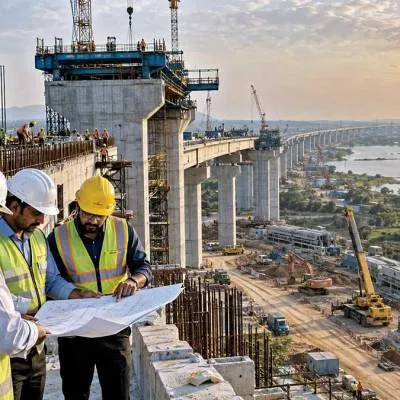
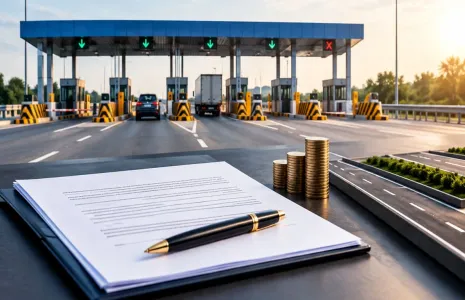
The National Highways Authority of India (NHAI) has made a 24×7 Incident Management System (IMS) mandatory before traffic is allowed on completed highway corridors. The system is intended to respond to emergencies, road accidents, vehicle breakdowns and traffic disruptions, regardless of whether toll collection has started.

The IMS will include ambulances, tow-away vehicles and patrolling vans, along with integration of the 1033 helpline. The helpline will support coordination between response teams and local police, fire stations and hospitals, enabling assistance to reach road users during incidents.

Under the procedure issued by NHAI, the system must be operational before any completed corridor is opened to traffic. The authority has stated that the requirement applies even when a highway is not yet collecting toll, making emergency preparedness a condition for opening newly completed infrastructure.

The decision follows guidelines issued by the Ministry of Road Transport and Highways (MoRTH) for implementing IMS arrangements on national highways. The guidelines focus on improving safety and ensuring that incidents are detected, managed and reported promptly.

NHAI will be responsible for arranging rescue ambulances from locations where accidents are reported. The authority’s responsibilities will also include ensuring that the response network is available throughout the day and night, with vehicles and personnel positioned to provide timely support.

The mandatory system is expected to create a standard emergency response framework across new highway corridors. By requiring the arrangements before traffic movement begins, the procedure aims to reduce delays in rescue operations, improve coordination among emergency agencies and provide immediate assistance to motorists using the national highway network.

The National Highways Authority of India (NHAI) has made a 24×7 Incident Management System (IMS) mandatory before traffic is allowed on completed highway corridors. The system is intended to respond to emergencies, road accidents, vehicle breakdowns and traffic disruptions, regardless of whether toll collection has started. The IMS will include ambulances, tow-away vehicles and patrolling vans, along with integration of the 1033 helpline. The helpline will support coordination between response teams and local police, fire stations and hospitals, enabling assistance to reach road users during incidents. Under the procedure issued by NHAI, the system must be operational before any completed corridor is opened to traffic. The authority has stated that the requirement applies even when a highway is not yet collecting toll, making emergency preparedness a condition for opening newly completed infrastructure. The decision follows guidelines issued by the Ministry of Road Transport and Highways (MoRTH) for implementing IMS arrangements on national highways. The guidelines focus on improving safety and ensuring that incidents are detected, managed and reported promptly. NHAI will be responsible for arranging rescue ambulances from locations where accidents are reported. The authority’s responsibilities will also include ensuring that the response network is available throughout the day and night, with vehicles and personnel positioned to provide timely support. The mandatory system is expected to create a standard emergency response framework across new highway corridors. By requiring the arrangements before traffic movement begins, the procedure aims to reduce delays in rescue operations, improve coordination among emergency agencies and provide immediate assistance to motorists using the national highway network.

Related Stories

Gold Stories

Next Story
Infrastructure Urban

NDMC Approves Five Prakriti Cafés in Three Delhi Parks

The New Delhi Municipal Council (NDMC) approved the setting up of five Prakriti Cafés across three prominent parks in the capital during its council meeting on Tuesday. The locations include Lodhi Garden, Nehru Park and BRICS Garden on Shanti Path. Two cafés will be developed in Lodhi Garden, while two others will come up in Nehru Park. The remaining café is planned for BRICS Garden. The council granted in-principle approval to explore the project under the Build-Operate-Transfer (BOT) model. Under the proposed arrangement, the selected agency will develop the cafés at its own cost and man..

Next Story
Infrastructure Transport

Air India and Airbus to Build India's First Corporate SAF Programme

Air India and Airbus have partnered to develop a framework for India’s first voluntary corporate Sustainable Aviation Fuel (SAF) programme. The feasibility study will examine how businesses can reduce lifecycle emissions associated with air travel by voluntarily supporting the procurement and use of SAF. Jürgen Westermeier, President and Managing Director of Airbus India and South Asia, and P Balaji, Group Head of Governance, Risk and Compliance and Corporate Affairs at Air India, signed the Feasibility Study Agreement. The signing took place in the presence of Rammohan Naidu Kinjarapu, Min..

Next Story
Infrastructure Energy

Indian Companies to Buy US LPG from Four Firms in 2027

Indian state-run oil companies have awarded a joint tender to Saudi Aramco, Chevron, TotalEnergies Trading SA (Totsa) and Vitol for the import of about 2.75 mn t of US liquefied petroleum gas (LPG) in 2027. The contracts are intended to diversify supplies and reduce India’s reliance on the Middle East. Indian Oil, Bharat Petroleum and Hindustan Petroleum floated the tender in September. They sought four very large gas carrier (VLGC) cargoes each month on a delivered basis and one cargo each month on a free-on-board basis from the US. A VLGC typically carries about 46,000 t of LPG, which cons..

Advertisement

Subscribe to Our Newsletter

Get daily newsletters around different themes from Construction world.

STAY CONNECTED

Advertisement

SPECIAL OFFER
QR Code