+
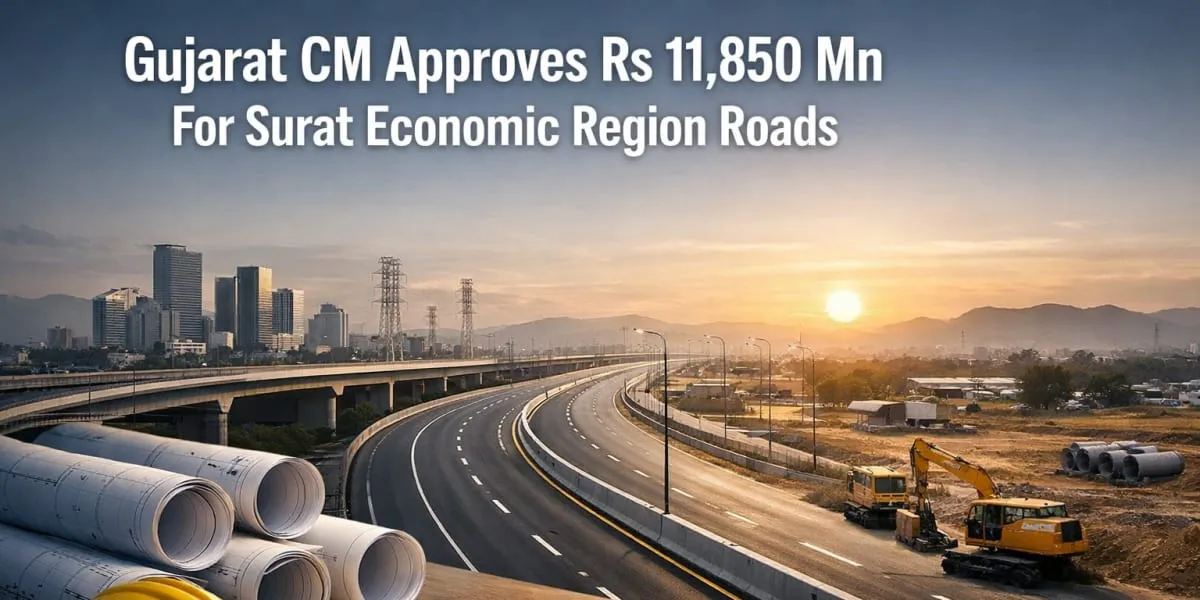
Gujarat CM Approves Rs 11,850 mn For Surat Economic Region Roads
ROADS & HIGHWAYS

Gujarat CM Approves Rs 11,850 mn For Surat Economic Region Roads

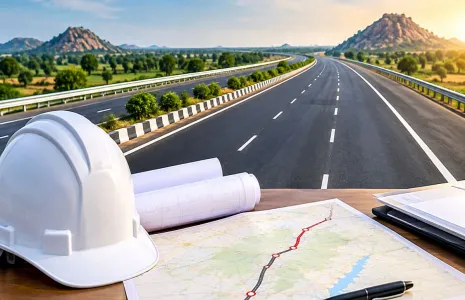
Gujarat Chief Minister Bhupendra Patel has approved works worth Rs 11,850 mn to upgrade road infrastructure in the Surat Economic Region (SER), the growth hub of south Gujarat. The approval forms part of a broader roadmap prepared by the Gujarat State Institution for Transformation (GRIT) to realise the vision of Viksit Bharat at 2047 and to achieve Viksit Gujarat at 2047 during the Amrit Kaal. The GRIT plan set out long term, result oriented priorities centred on infrastructure, innovation, individual and institution.

The first tranche comprises 24 road upgradation works covering a total length of 383 kilometres across five districts of the SER. The SER comprises the districts of Surat, Bharuch, Navsari, Valsad, Tapi and Dang, together contributing more than 35 per cent to the state economy. The upgrades are intended to improve connectivity between major industrial hubs and Gujarat Industrial Development Corporation (GIDC) areas, enhancing logistics efficiency and easing movement of goods and labour.

Improved roads are expected to support established sectors such as textile, chemical, petrochemical and diamond industries while directly benefiting fisheries, Hazira Port, sugar factories, Sumul Dairy, papad manufacturers and mining and lignite projects. Stronger links to key GIDC nodes including Kadod, Kadodara, Jolva, Mangrol, Kosamba and Tadkeshwar are expected to accelerate industrial expansion and attract investment in emerging areas such as semiconductors, green hydrogen and logistics. The project is anticipated to create large scale employment opportunities for the youth of the region.

The road programme should also speed the transport of agricultural produce to markets and bolster rural livelihoods while making travel to religious and eco tourism sites easier, thus supporting the tourism sector. Positioned as a strategic growth engine for Viksit Gujarat at 2047, the SER is expected to remain central to the state roadmap to build a three point five tn dollar economy by 2047. The approval is likely to give fresh momentum to infrastructure led economic development and inclusive regional growth.

Gujarat Chief Minister Bhupendra Patel has approved works worth Rs 11,850 mn to upgrade road infrastructure in the Surat Economic Region (SER), the growth hub of south Gujarat. The approval forms part of a broader roadmap prepared by the Gujarat State Institution for Transformation (GRIT) to realise the vision of Viksit Bharat at 2047 and to achieve Viksit Gujarat at 2047 during the Amrit Kaal. The GRIT plan set out long term, result oriented priorities centred on infrastructure, innovation, individual and institution. The first tranche comprises 24 road upgradation works covering a total length of 383 kilometres across five districts of the SER. The SER comprises the districts of Surat, Bharuch, Navsari, Valsad, Tapi and Dang, together contributing more than 35 per cent to the state economy. The upgrades are intended to improve connectivity between major industrial hubs and Gujarat Industrial Development Corporation (GIDC) areas, enhancing logistics efficiency and easing movement of goods and labour. Improved roads are expected to support established sectors such as textile, chemical, petrochemical and diamond industries while directly benefiting fisheries, Hazira Port, sugar factories, Sumul Dairy, papad manufacturers and mining and lignite projects. Stronger links to key GIDC nodes including Kadod, Kadodara, Jolva, Mangrol, Kosamba and Tadkeshwar are expected to accelerate industrial expansion and attract investment in emerging areas such as semiconductors, green hydrogen and logistics. The project is anticipated to create large scale employment opportunities for the youth of the region. The road programme should also speed the transport of agricultural produce to markets and bolster rural livelihoods while making travel to religious and eco tourism sites easier, thus supporting the tourism sector. Positioned as a strategic growth engine for Viksit Gujarat at 2047, the SER is expected to remain central to the state roadmap to build a three point five tn dollar economy by 2047. The approval is likely to give fresh momentum to infrastructure led economic development and inclusive regional growth.

Next Story
Infrastructure Urban

Implementation Status of Jal Jeevan Mission

Since August 2019 the Government has implemented Jal Jeevan Mission to provide assured potable water through household tap connections in rural India. At the start of the mission only 32.3 million (mn) rural households, representing 16.7 per cent, were reported to have tap water connections. States and union territories have reported that 125.8 mn additional rural households have since been provided with tap connections. As a result, of about 193.6 mn rural households roughly 158.2 mn, or 81.71 per cent, are reported to have tap water supply at home.\n\nThe State, district and village level st..

Next Story
Infrastructure Urban

Jal Jeevan Mission Reaches Eighty One Per Cent Rural Coverage

The Government reported substantial progress under the Jal Jeevan Mission, launched in August 2019 to provide tap water to every rural household. At launch only 32.3 million (mn) rural households had tap connections and states and Union territories reported provision of 125.8 mn additional households by March 2026. Consequently, out of about 193.6 mn rural households around 158.2 mn, or 81.71 per cent, are reported to have tap water at home. The Finance Minister announced extension of the mission until 2028 in the 2025-26 budget speech. The Swachh Bharat Mission Grameen, launched in October 20..

Next Story
Infrastructure Urban

Empowering Local Governance for Sustainable Rural Water Supply

The Ministry of Jal Shakti has aligned the Jal Jeevan Mission (JJM) with the 73rd Amendment to strengthen village level planning and community ownership of water supply. Gram Panchayats, village water and sanitation committees and Pani Samitis are to plan, implement, manage and maintain piped water systems, with gram sabha processes formalising handover and oversight. Implementation support agencies including non government organisations, community based organisations and self help groups have been empanelled to train local committees and promote women participation. Under JJM, the department ..

Advertisement

Subscribe to Our Newsletter

Get daily newsletters around different themes from Construction world.

STAY CONNECTED

Advertisement

Advertisement

Advertisement