+
Himachal Pradesh PWD Studies NHAI Slope Protection Techniques
ROADS & HIGHWAYS

Himachal Pradesh PWD Studies NHAI Slope Protection Techniques

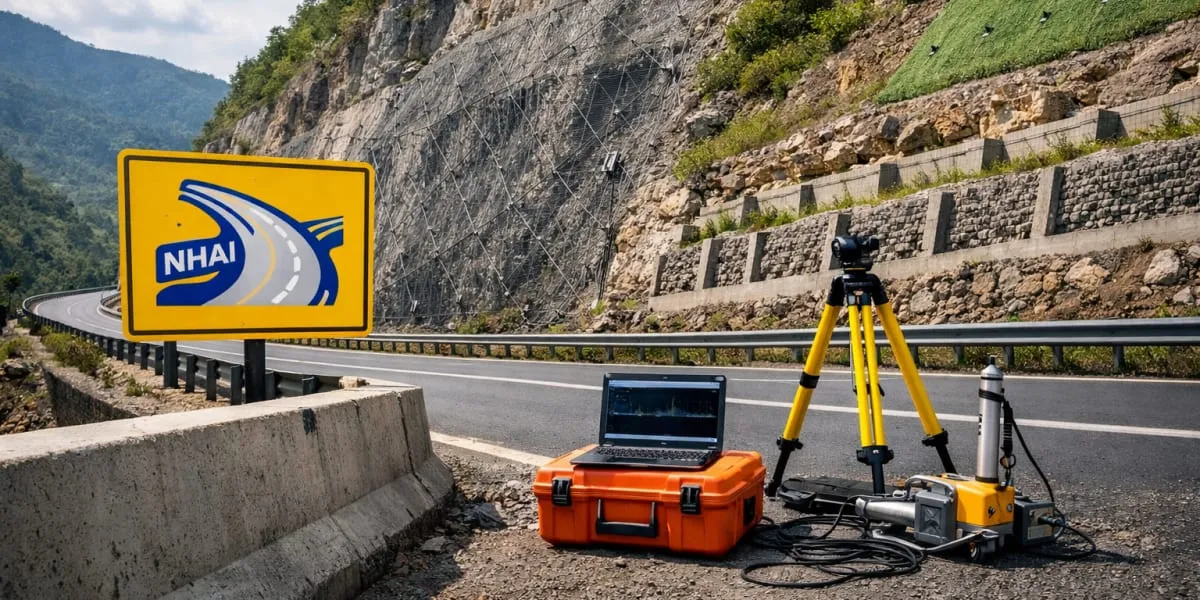
Himachal Pradesh Public Works Department (PWD) has initiated a study of slope protection techniques employed by the National Highways Authority of India (NHAI) on the Kalka-Solan four-lane corridor. The exercise aims to assess methods that could be adapted for state roads prone to slope failures during the monsoon. Engineers are reviewing design elements, construction materials and maintenance practices to improve roadside stability and safety. Site inspections included visual surveys and geotechnical sampling to inform recommendations.

The review covers structural measures such as retaining walls, rock anchors and shotcrete alongside non-structural approaches including geotextiles and vegetation-based stabilisation. Attention is being paid to subsurface and surface drainage features that reduce pore pressure and to monitoring systems that signal deterioration. The delegation examined how sequencing of works and quality control influence long term performance. The team reviewed maintenance histories and repair records to identify recurring failure patterns.

Officials said the study will inform design standards and construction guidelines for vulnerable stretches of the state network and will recommend pilot interventions to test effectiveness. Capacity building for field engineers and contractors is being prioritised alongside an assessment of lifecycle costs and routine maintenance regimes. Emphasis is being placed on solutions that balance durability with environmental sensitivity. The recommendations will consider local material availability and potential environmental clearances required for works.

Coordination with NHAI is planned to facilitate knowledge transfer and to align management practices on overlapping sections. Timelines will be defined after the technical report is finalised and stakeholders will be consulted on implementation priorities. The study is expected to contribute to safer connectivity and reduced disruption from landslides across the region. Community outreach plans are expected to address access issues during construction and to inform residents of safety measures.

Further field tests will refine technical proposals. Additional funding avenues will be actively explored.

Himachal Pradesh Public Works Department (PWD) has initiated a study of slope protection techniques employed by the National Highways Authority of India (NHAI) on the Kalka-Solan four-lane corridor. The exercise aims to assess methods that could be adapted for state roads prone to slope failures during the monsoon. Engineers are reviewing design elements, construction materials and maintenance practices to improve roadside stability and safety. Site inspections included visual surveys and geotechnical sampling to inform recommendations. The review covers structural measures such as retaining walls, rock anchors and shotcrete alongside non-structural approaches including geotextiles and vegetation-based stabilisation. Attention is being paid to subsurface and surface drainage features that reduce pore pressure and to monitoring systems that signal deterioration. The delegation examined how sequencing of works and quality control influence long term performance. The team reviewed maintenance histories and repair records to identify recurring failure patterns. Officials said the study will inform design standards and construction guidelines for vulnerable stretches of the state network and will recommend pilot interventions to test effectiveness. Capacity building for field engineers and contractors is being prioritised alongside an assessment of lifecycle costs and routine maintenance regimes. Emphasis is being placed on solutions that balance durability with environmental sensitivity. The recommendations will consider local material availability and potential environmental clearances required for works. Coordination with NHAI is planned to facilitate knowledge transfer and to align management practices on overlapping sections. Timelines will be defined after the technical report is finalised and stakeholders will be consulted on implementation priorities. The study is expected to contribute to safer connectivity and reduced disruption from landslides across the region. Community outreach plans are expected to address access issues during construction and to inform residents of safety measures. Further field tests will refine technical proposals. Additional funding avenues will be actively explored.

Next Story
Infrastructure Urban

Implementation Status of Jal Jeevan Mission

Since August 2019 the Government has implemented Jal Jeevan Mission to provide assured potable water through household tap connections in rural India. At the start of the mission only 32.3 million (mn) rural households, representing 16.7 per cent, were reported to have tap water connections. States and union territories have reported that 125.8 mn additional rural households have since been provided with tap connections. As a result, of about 193.6 mn rural households roughly 158.2 mn, or 81.71 per cent, are reported to have tap water supply at home.\n\nThe State, district and village level st..

Next Story
Infrastructure Urban

Jal Jeevan Mission Reaches Eighty One Per Cent Rural Coverage

The Government reported substantial progress under the Jal Jeevan Mission, launched in August 2019 to provide tap water to every rural household. At launch only 32.3 million (mn) rural households had tap connections and states and Union territories reported provision of 125.8 mn additional households by March 2026. Consequently, out of about 193.6 mn rural households around 158.2 mn, or 81.71 per cent, are reported to have tap water at home. The Finance Minister announced extension of the mission until 2028 in the 2025-26 budget speech. The Swachh Bharat Mission Grameen, launched in October 20..

Next Story
Infrastructure Urban

Empowering Local Governance for Sustainable Rural Water Supply

The Ministry of Jal Shakti has aligned the Jal Jeevan Mission (JJM) with the 73rd Amendment to strengthen village level planning and community ownership of water supply. Gram Panchayats, village water and sanitation committees and Pani Samitis are to plan, implement, manage and maintain piped water systems, with gram sabha processes formalising handover and oversight. Implementation support agencies including non government organisations, community based organisations and self help groups have been empanelled to train local committees and promote women participation. Under JJM, the department ..

Advertisement

Subscribe to Our Newsletter

Get daily newsletters around different themes from Construction world.

STAY CONNECTED

Advertisement

Advertisement

Advertisement