India Approves First Underwater Road-Rail Tunnel Project
ROADS & HIGHWAYS

India Approves First Underwater Road-Rail Tunnel Project

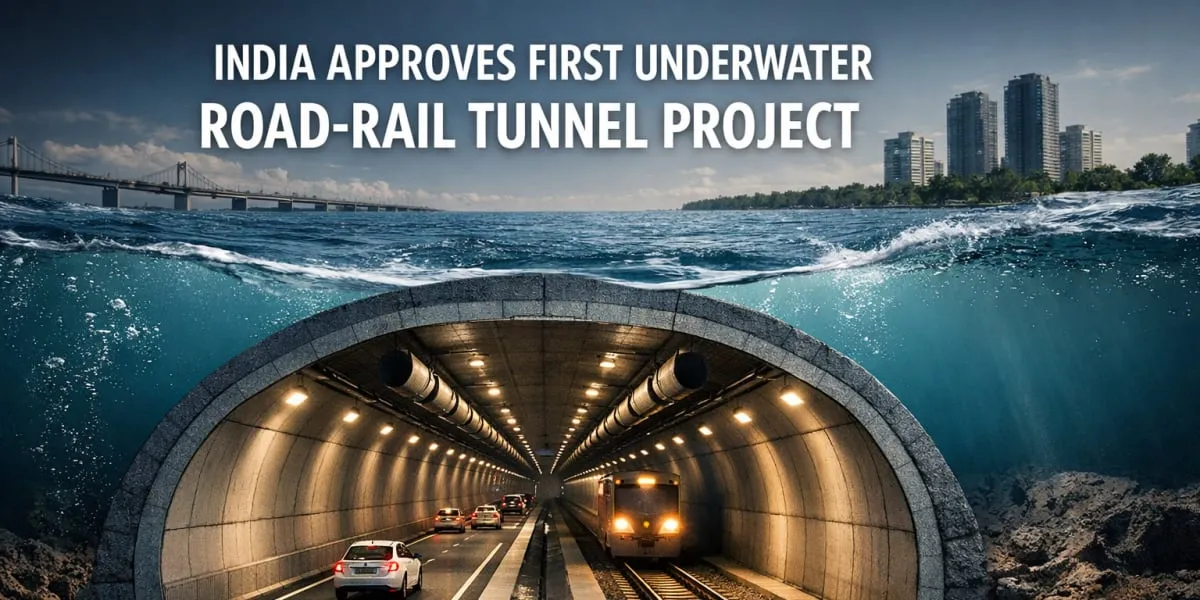
The Indian government has approved the country's first underwater road-rail tunnel project, marking a major step in urban and coastal infrastructure development. The decision signals a shift towards integrated transport corridors that combine road and rail modes to enhance connectivity and resilience. Authorities characterised the approval as a milestone for engineering ambition and national connectivity planning. The move reflects rising investment in large scale infrastructure to support urbanisation and coastal commerce.

France has positioned India as a top priority market and is targeting higher spend by companies seeking projects and partnerships in the country. French firms are expected to explore opportunities in design, tunnelling technology and project financing as part of wider bilateral economic engagement. Observers said the emphasis on collaboration may accelerate transfer of specialised skills and long term industrial partnerships. Analysts expect the initiative to stimulate job creation in engineering, supply chains and maintenance services across the construction lifecycle.

The project will require extensive technical studies, environmental assessment and regulatory coordination across multiple agencies to address marine ecosystems and safety standards. Planners anticipate that integrating road and rail within a single submerged structure will present complex engineering challenges but also yield efficiencies in land use and multimodal connectivity. Stakeholders noted that careful project management will be essential to balance timelines, cost control and environmental safeguards. Project teams will likely study international best practice in submerged tunnelling to adapt proven methods to local conditions.

Implementation will depend on phased procurement, rigorous oversight and capacity building for contractors and operators to meet specialised requirements. Governments and private partners will need to coordinate financing structures and risk allocation to ensure the project remains viable and delivers intended public benefits. If executed effectively, the tunnel is expected to strengthen regional trade links, support economic growth and expand transport choices for communities. Transparent reporting and community engagement will be cited as important to maintain public trust during construction and operation.

The Indian government has approved the country's first underwater road-rail tunnel project, marking a major step in urban and coastal infrastructure development. The decision signals a shift towards integrated transport corridors that combine road and rail modes to enhance connectivity and resilience. Authorities characterised the approval as a milestone for engineering ambition and national connectivity planning. The move reflects rising investment in large scale infrastructure to support urbanisation and coastal commerce. France has positioned India as a top priority market and is targeting higher spend by companies seeking projects and partnerships in the country. French firms are expected to explore opportunities in design, tunnelling technology and project financing as part of wider bilateral economic engagement. Observers said the emphasis on collaboration may accelerate transfer of specialised skills and long term industrial partnerships. Analysts expect the initiative to stimulate job creation in engineering, supply chains and maintenance services across the construction lifecycle. The project will require extensive technical studies, environmental assessment and regulatory coordination across multiple agencies to address marine ecosystems and safety standards. Planners anticipate that integrating road and rail within a single submerged structure will present complex engineering challenges but also yield efficiencies in land use and multimodal connectivity. Stakeholders noted that careful project management will be essential to balance timelines, cost control and environmental safeguards. Project teams will likely study international best practice in submerged tunnelling to adapt proven methods to local conditions. Implementation will depend on phased procurement, rigorous oversight and capacity building for contractors and operators to meet specialised requirements. Governments and private partners will need to coordinate financing structures and risk allocation to ensure the project remains viable and delivers intended public benefits. If executed effectively, the tunnel is expected to strengthen regional trade links, support economic growth and expand transport choices for communities. Transparent reporting and community engagement will be cited as important to maintain public trust during construction and operation.

Next Story
Infrastructure Urban

Lemon Tree Hotels Signs Resort In Lonavala Maharashtra

Lemon Tree Hotels Limited (LTHL) has signed a licence agreement for Lemon Tree Resort in Lonavala, Maharashtra, with the asset to be managed by Carnation Hotels Private Limited, a wholly owned subsidiary of LTHL. The resort will offer 50 well appointed rooms and will include a restaurant, banquet, meeting room, swimming pool, spa and fitness centre. The company described the addition as part of its strategy to expand branded resort offerings in key getaway destinations. Lonavala, located in the Sahyadri hills, is a popular leisure destination in western India known for scenic landscapes and a ..

Next Story
Infrastructure Urban

Kalai Chettinad Art And Architecture Festival At The Lotus Palace

The Lotus Palace Chettinad will host Kalai, the Chettinad Art and Architecture Festival, a four-day, three-night immersive celebration of the artistic legacy of Chettinad from three to six April 2026. The event has been organised by Apeejay Surrendra Park Hotels Limited (ASPHL) and will take place across restored heritage properties in Chettinad. It will be designed to offer guests a layered experience of place, structure and story that connects art, architecture and living traditions. The festival aims to present a confluence of global influences and local aesthetics. Kalai has been curated i..

Next Story
Infrastructure Energy

SJVN Reaches One bn Units At 1,000 MW Bikaner Solar Project

SJVN Limited (SJVN) has reached a milestone with its 1,000 megawatt (MW) Bikaner Solar Power Project by generating one bn units of electricity on 20 March 2026. The achievement underscores the company's role in supplying clean and sustainable energy to the national grid. The generation milestone was recorded within months of the project commencing operations and highlights rapid performance from the new facility. The Bikaner project, located in Bikaner district of Rajasthan, has been developed and implemented by SJVN Green Energy Limited (SGEL) under the Central Public Sector Undertaking Schem..

Advertisement

Subscribe to Our Newsletter

Get daily newsletters around different themes from Construction world.

STAY CONNECTED

Advertisement

Advertisement

Advertisement