

India Builds 57,125 Km Of Highways In Five Years
ROADS & HIGHWAYS

India Builds 57,125 Km Of Highways In Five Years

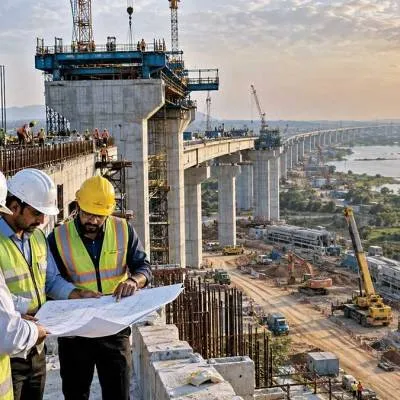
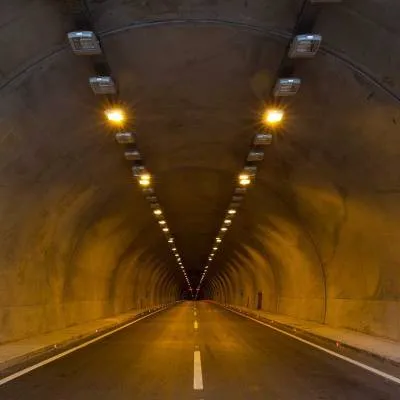
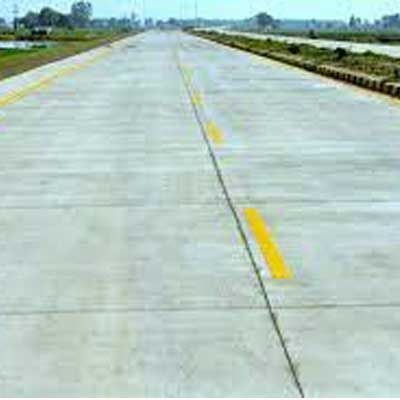
The Ministry of Road Transport and Highways has constructed around 57,125 km of National Highways over the past five financial years. Under Phase-I of the Bharatmala Pariyojana, 796 projects covering 26,425 km have been awarded out of the planned 34,800 km. Of this, 21,248 km had been completed up to September 2025.

In Karnataka, 3,187 km of National Highway projects—including expressways and economic corridors—have been sanctioned or awarded during the same period.

The National Highway network has expanded from 1,32,499 km in March 2019 to 1,46,560 km at present. The length of 4-lane and above highways has grown 1.4 times, from 31,066 km in 2019 to 43,512 km. Highways below 2-lane configuration have reduced from 27 per cent of the network in 2019 to 9 per cent. Access-controlled National High Speed Corridors and expressways totalling about 3,052 km are now operational.

These developments have increased average freight speeds on High Speed Corridors from 30–35 km/h on 4-lane highways to around 50 km/h, strengthening regional connectivity and logistics efficiency and supporting economic growth.

This information was provided by the Union Minister for Road Transport and Highways, Shri Nitin Jairam Gadkari, in a written reply in the Rajya Sabha.

The Ministry of Road Transport and Highways has constructed around 57,125 km of National Highways over the past five financial years. Under Phase-I of the Bharatmala Pariyojana, 796 projects covering 26,425 km have been awarded out of the planned 34,800 km. Of this, 21,248 km had been completed up to September 2025. In Karnataka, 3,187 km of National Highway projects—including expressways and economic corridors—have been sanctioned or awarded during the same period. The National Highway network has expanded from 1,32,499 km in March 2019 to 1,46,560 km at present. The length of 4-lane and above highways has grown 1.4 times, from 31,066 km in 2019 to 43,512 km. Highways below 2-lane configuration have reduced from 27 per cent of the network in 2019 to 9 per cent. Access-controlled National High Speed Corridors and expressways totalling about 3,052 km are now operational. These developments have increased average freight speeds on High Speed Corridors from 30–35 km/h on 4-lane highways to around 50 km/h, strengthening regional connectivity and logistics efficiency and supporting economic growth. This information was provided by the Union Minister for Road Transport and Highways, Shri Nitin Jairam Gadkari, in a written reply in the Rajya Sabha.

Next Story
Infrastructure Urban

ISRO’s IMAT Success Boosts Readiness for Maiden Gaganyaan Mission

Union Minister of State for Science and Technology Dr Jitendra Singh informed Parliament that ISRO has achieved a key milestone in its preparations for India’s first human space mission with the successful completion of the Integrated Main Parachute Airdrop Test (IMAT). He said in the Lok Sabha that the test forms a central part of the qualification campaign for the Crew Module’s parachute-based deceleration system, one of the most vital elements in human-rating the mission.According to Dr. Jitendra Singh, the IMAT recreated one of the most demanding descent conditions by intentionally del..

Next Story
Infrastructure Urban

Gyanesh Kumar Takes Charge as Chair of International IDEA Council

Chief Election Commissioner of India Gyanesh Kumar has assumed the Chairship of the Council of Member States of the International Institute for Democracy and Electoral Assistance for 2026. The ceremony in Stockholm was also attended by India’s Ambassador to Sweden, Anurag Bhushan. India, a founding member of International IDEA, has long contributed to the organisation’s governance and global democratic dialogue, and the new Chairship signals broad recognition of the Election Commission of India as a trusted and innovative election management institution.During his visit, Kumar held discuss..

Next Story
Infrastructure Energy

Coal Mines Boost Local Growth and Support India’s Energy Self-reliance

The Magadh and Amrapali coal mines in Jharkhand are playing a pivotal role in strengthening India’s energy security, contributing nearly half of Central Coalfields Limited’s total coal production in 2024–25. Both mines support the broader goal of ensuring steady coal availability for the power sector under the vision of Aatmanirbhar Bharat. Magadh has estimated mineable reserves of 854.91 million tonnes, while Amrapali holds 456.34 million tonne. For FY 2025–26, the two are expected to generate net sales revenues of Rs 28.12 billion and Rs 23.67 billion respectively. Local development ..

Advertisement

Subscribe to Our Newsletter

Get daily newsletters around different themes from Construction world.

STAY CONNECTED

Advertisement

Advertisement

Advertisement

Advertisement

Get CW App