New Road Grid Planned for Bengaluru's Expanding Periphery
ROADS & HIGHWAYS

New Road Grid Planned for Bengaluru's Expanding Periphery

Bengaluru Development Minister Krishna Byre Gowda said the Karnataka government has notified a new road grid for areas of Bengaluru Urban district outside the Greater Bengaluru Authority (GBA). The plan aims to support future urban expansion with better road connectivity and coordinated drinking water and drainage infrastructure.

Gowda said Bengaluru had expanded rapidly over the past 25 years without sufficient advance planning, resulting in traffic congestion and continuing deficiencies in roads, water supply and drainage. He noted that 110 villages and seven city municipal councils were brought within Bengaluru about two decades ago, but the infrastructure deficit in these areas had not been fully resolved.

Urbanisation is now spreading beyond the GBA boundaries, with surrounding areas increasingly developing as extensions of the city. Citing estimates by experts, Gowda said Bengaluru’s urbanised area could reach 1,400–1,800 square km in the coming years, making advance planning necessary to prevent peripheral areas from facing the same problems as the existing city.

The entire Bengaluru Urban district has recently been brought under the Bangalore Water Supply and Sewerage Board (BWSSB), which is preparing a master plan for drinking water provision and the gradual creation of adequate drainage infrastructure. A separate road network has been identified across areas governed by the Bangalore Metropolitan Region Development Authority (BMRDA) and other local development authorities.

The notified grid will connect taluk and hobli headquarters with major district roads, State highways, the Peripheral Ring Road (PRR) and the Satellite Town Ring Road (STRR). It covers hundreds of existing Zilla Panchayat, Public Works Department (PWD) and State Highway roads proposed for widening, with corridors ranging from 30 metres to 90 metres instead of earlier widths of about 10 metres. Construction of the full network could take 5 to 10 years. Land within notified corridors will have to remain vacant during new layout development or house construction, and residents have been advised to check road alignments on the BMRDA website before developing property.

Bengaluru Development Minister Krishna Byre Gowda said the Karnataka government has notified a new road grid for areas of Bengaluru Urban district outside the Greater Bengaluru Authority (GBA). The plan aims to support future urban expansion with better road connectivity and coordinated drinking water and drainage infrastructure. Gowda said Bengaluru had expanded rapidly over the past 25 years without sufficient advance planning, resulting in traffic congestion and continuing deficiencies in roads, water supply and drainage. He noted that 110 villages and seven city municipal councils were brought within Bengaluru about two decades ago, but the infrastructure deficit in these areas had not been fully resolved. Urbanisation is now spreading beyond the GBA boundaries, with surrounding areas increasingly developing as extensions of the city. Citing estimates by experts, Gowda said Bengaluru’s urbanised area could reach 1,400–1,800 square km in the coming years, making advance planning necessary to prevent peripheral areas from facing the same problems as the existing city. The entire Bengaluru Urban district has recently been brought under the Bangalore Water Supply and Sewerage Board (BWSSB), which is preparing a master plan for drinking water provision and the gradual creation of adequate drainage infrastructure. A separate road network has been identified across areas governed by the Bangalore Metropolitan Region Development Authority (BMRDA) and other local development authorities. The notified grid will connect taluk and hobli headquarters with major district roads, State highways, the Peripheral Ring Road (PRR) and the Satellite Town Ring Road (STRR). It covers hundreds of existing Zilla Panchayat, Public Works Department (PWD) and State Highway roads proposed for widening, with corridors ranging from 30 metres to 90 metres instead of earlier widths of about 10 metres. Construction of the full network could take 5 to 10 years. Land within notified corridors will have to remain vacant during new layout development or house construction, and residents have been advised to check road alignments on the BMRDA website before developing property.

Related Stories

Gold Stories
Next Story
Infrastructure Urban

Electromech Infraprojects Files DRHP for Rs 3.26 Billion IPO

Electromech Infraprojects has filed its Draft Red Herring Prospectus (DRHP) with the Securities and Exchange Board of India (SEBI) for a proposed initial public offering (IPO). The offering comprises a fresh issue of equity shares aggregating up to Rs 3.26 billion and an offer for sale of up to 1.89 million equity shares by existing shareholders. The shares have a face value of Rs 5 each.The Mumbai-based company provides mechanical, electrical and plumbing (MEP) solutions for data centres, Global Capability Centres (GCCs), and commercial and industrial projects. Its services cover technical de..

Next Story
Real Estate

Dubai South Home Sales Rise 27% Above 2025 Total: Anarock

Dubai South recorded 12,428 residential property transactions between January and August 2026, surpassing the 9,788 transactions registered during the whole of 2025 by 27 per cent, according to Anarock Research's Dubai South Residential Micro-Market Report. Residential sales value reached AED 15.9 billion during the eight-month period, representing 81 per cent of the AED 19.6 billion recorded in 2025.The report highlights significant growth in Dubai South's residential market, with annual sales value increasing from AED 720 million in 2020 to AED 19.6 billion in 2025. Transaction volumes also ..
Next Story
Technology

dSPACE Unveils Advanced Validation Technologies in India

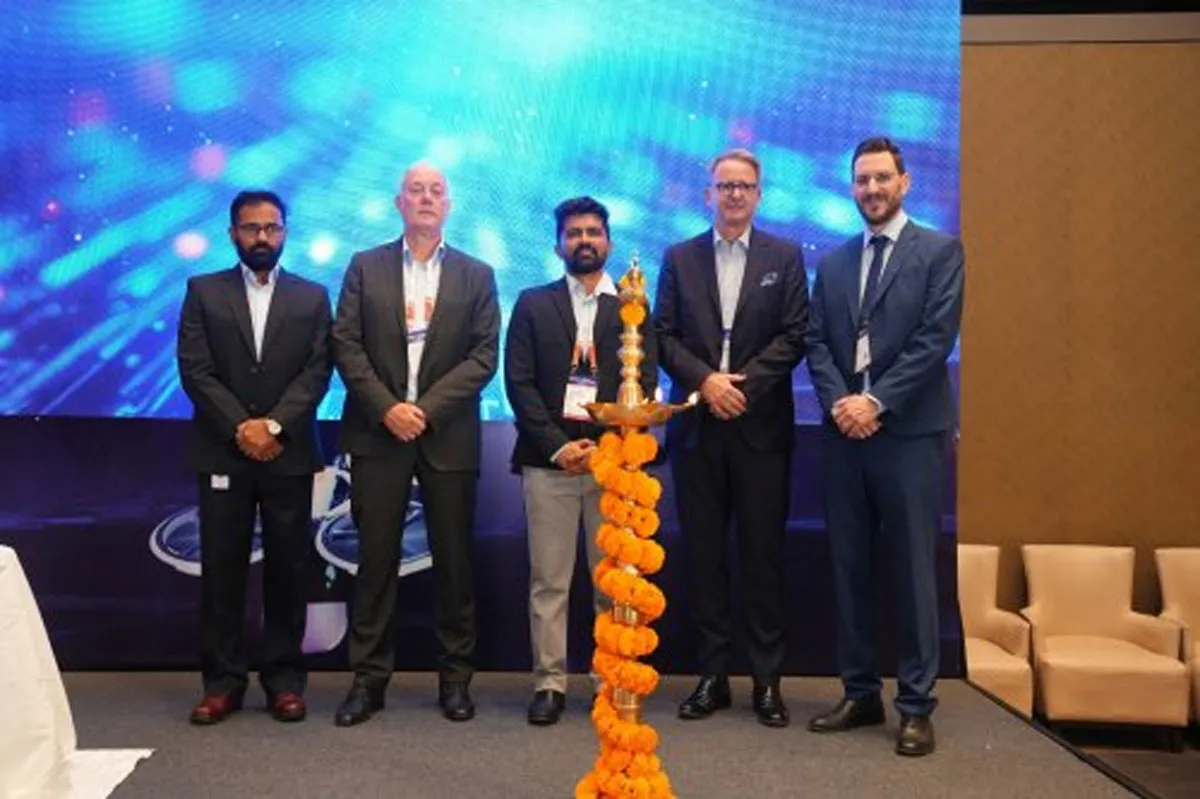
dSPACE showcased its latest simulation and validation technologies at the User Conference India 2026, held on 25 September at Marriott Whitefield, Bengaluru. The event brought together over 500 delegates from automotive and non-automotive original equipment manufacturers (OEMs), suppliers and global engineering companies.Held under the theme 'Software-defined. Test-verified.', the conference focused on simulation, virtual validation, artificial intelligence (AI) deployment, electronic control unit (ECU) cybersecurity and scalable hardware-in-the-loop (HIL) testing.The technology showcase featu..

Advertisement

Subscribe to Our Newsletter

Get daily newsletters around different themes from Construction world.

STAY CONNECTED

Advertisement

SPECIAL OFFER
QR Code