NHAI And WII Show Underpasses Aid Wildlife On Delhi-Dehradun Corridor
ROADS & HIGHWAYS

NHAI And WII Show Underpasses Aid Wildlife On Delhi-Dehradun Corridor

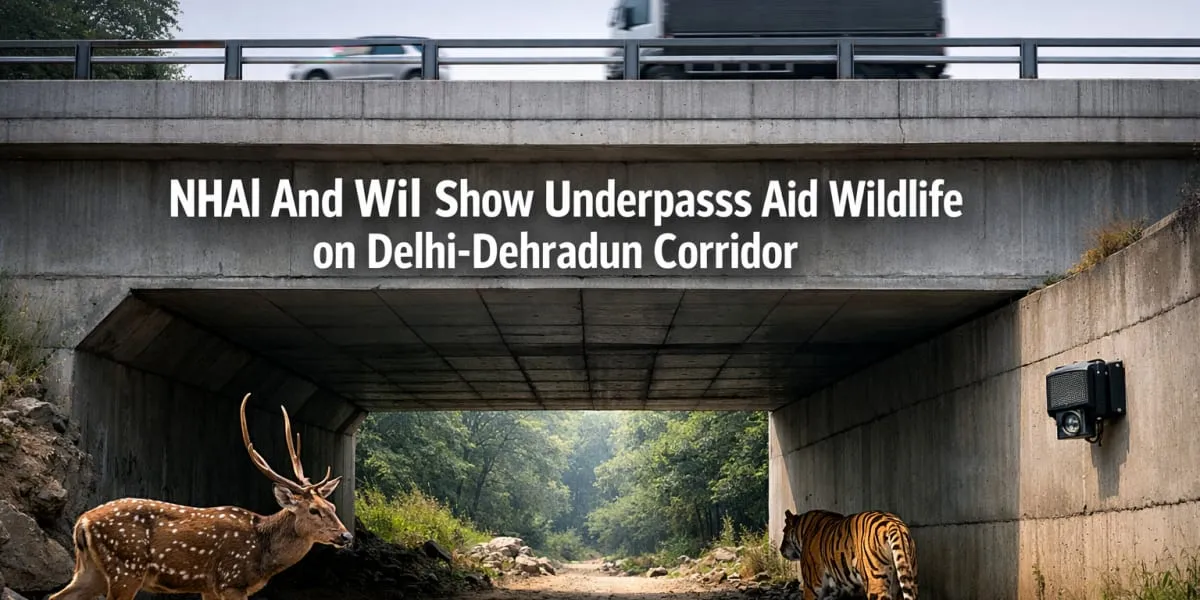
The National Highway Authority of India (NHAI) in collaboration with the Wildlife Institute of India (WII) released a report titled Landscapes Reconnected documenting the first evidence of wildlife using animal underpasses on the Delhi-Dehradun Economic Corridor. The study demonstrates that highway development can coexist with preservation of ecologically sensitive areas and provides empirical findings on wildlife mitigation measures. The report follows monitoring along the Ganeshpur to Asharodi section of the corridor.

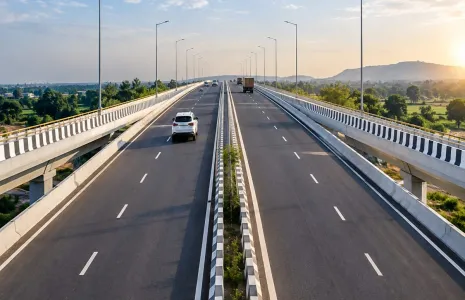
The research was conducted along an 18 km stretch between Ganeshpur and Asharodi and includes 10.97 km of animal underpass and an elevated corridor averaging six to seven metres in height. The study area was divided into three zones covering flat riverbed, hilly terrain and mixed Sal forest in the Shivalik range. The methodology comprised a 40-day monitoring programme using 150 camera traps and 29 acoustic recorders.

The monitoring recorded 111,234 images of humans, domestic animals and wildlife, of which 40,444 images were attributed to 18 wild species using the underpasses, including carnivores, herbivores, ungulates, pheasants and primates. The golden jackal was most frequently captured followed by nilgai, sambar and spotted deer while smaller mammals such as the Indian hare also regularly used the structures. The study recorded 60 instances of elephants using the corridors, indicating that even the largest animals can navigate the infrastructure to maintain migration patterns.

Analysis identified strategic soundscape management as a primary factor influencing underpass use and showed that generalist species have habituated to higher traffic sound while noise-sensitive species use quieter segments. The report recommends targeted noise reduction measures including sound barriers in high-frequency crossing areas to enhance passage for sensitive species and reduce human-wildlife conflict. The findings underscore reductions in the risk of population isolation in the Shivalik landscape and NHAI will continue to adopt data-driven mitigation strategies to balance infrastructure growth with biodiversity conservation.

The National Highway Authority of India (NHAI) in collaboration with the Wildlife Institute of India (WII) released a report titled Landscapes Reconnected documenting the first evidence of wildlife using animal underpasses on the Delhi-Dehradun Economic Corridor. The study demonstrates that highway development can coexist with preservation of ecologically sensitive areas and provides empirical findings on wildlife mitigation measures. The report follows monitoring along the Ganeshpur to Asharodi section of the corridor. The research was conducted along an 18 km stretch between Ganeshpur and Asharodi and includes 10.97 km of animal underpass and an elevated corridor averaging six to seven metres in height. The study area was divided into three zones covering flat riverbed, hilly terrain and mixed Sal forest in the Shivalik range. The methodology comprised a 40-day monitoring programme using 150 camera traps and 29 acoustic recorders. The monitoring recorded 111,234 images of humans, domestic animals and wildlife, of which 40,444 images were attributed to 18 wild species using the underpasses, including carnivores, herbivores, ungulates, pheasants and primates. The golden jackal was most frequently captured followed by nilgai, sambar and spotted deer while smaller mammals such as the Indian hare also regularly used the structures. The study recorded 60 instances of elephants using the corridors, indicating that even the largest animals can navigate the infrastructure to maintain migration patterns. Analysis identified strategic soundscape management as a primary factor influencing underpass use and showed that generalist species have habituated to higher traffic sound while noise-sensitive species use quieter segments. The report recommends targeted noise reduction measures including sound barriers in high-frequency crossing areas to enhance passage for sensitive species and reduce human-wildlife conflict. The findings underscore reductions in the risk of population isolation in the Shivalik landscape and NHAI will continue to adopt data-driven mitigation strategies to balance infrastructure growth with biodiversity conservation.

Next Story
Infrastructure Energy

TEXMiN Signs MoUs, Announces Startup Funding at IInvenTiv 2026

TEXMiN IIT (ISM) Dhanbad has announced a series of strategic industry collaborations and startup incubation funding during IInvenTiv 2026, aimed at strengthening India’s mining and deep-tech innovation ecosystem. TEXMiN functions as the Technology Translation Research Park (TTRP) supported by the Department of Science and Technology (DST), Government of India.The announcements were made at the inaugural ceremony of IInvenTiv 2026, the Ministry of Education’s flagship R&D fair being hosted at IIT (ISM) Dhanbad. The event brought together academic institutions, startups, investors, indus..

Next Story
Infrastructure Urban

IEEMA Launches ELECRAMA 2027, World’s Largest Electrical Show

Indian Electrical & Electronics Manufacturers’ Association (IEEMA) has officially announced the 17th edition of ELECRAMA, billed as the world’s largest electrical show. ELECRAMA 2027 will be held from February 20 to February 24, 2027 at India Expo Mart, Greater Noida, Delhi. The upcoming edition will be organised under the theme “Harnessing the power of ‘I’.”According to IEEMA, the theme highlights multiple dimensions including India’s growing global capabilities, intelligence-led innovation, industry impact, immersive stakeholder experiences, knowledge-driven insights throug..

Next Story
Infrastructure Urban

Action TESA Launches OrnaMatte Range with Durable Matte Surface Finishes

Action TESA has introduced OrnaMatte, a new range of performance-driven matte finishes aimed at enhancing modern interior surfaces with a balance of aesthetics and durability. The company, known for engineered panel products including MDF, HDHMR, Boilo and particle boards, said the offering aligns with evolving consumer demand for contemporary yet long-lasting furniture and interior solutions.The company noted that in the Indian market, surface finish selection is often influenced by architects, interior designers and peer recommendations, rather than personal preference alone. Interior design..

Advertisement

Subscribe to Our Newsletter

Get daily newsletters around different themes from Construction world.

STAY CONNECTED

Advertisement

Advertisement

Advertisement