



NHAI Introduces Wildlife-Safe Red Markings On NH-45
ROADS & HIGHWAYS

NHAI Introduces Wildlife-Safe Red Markings On NH-45

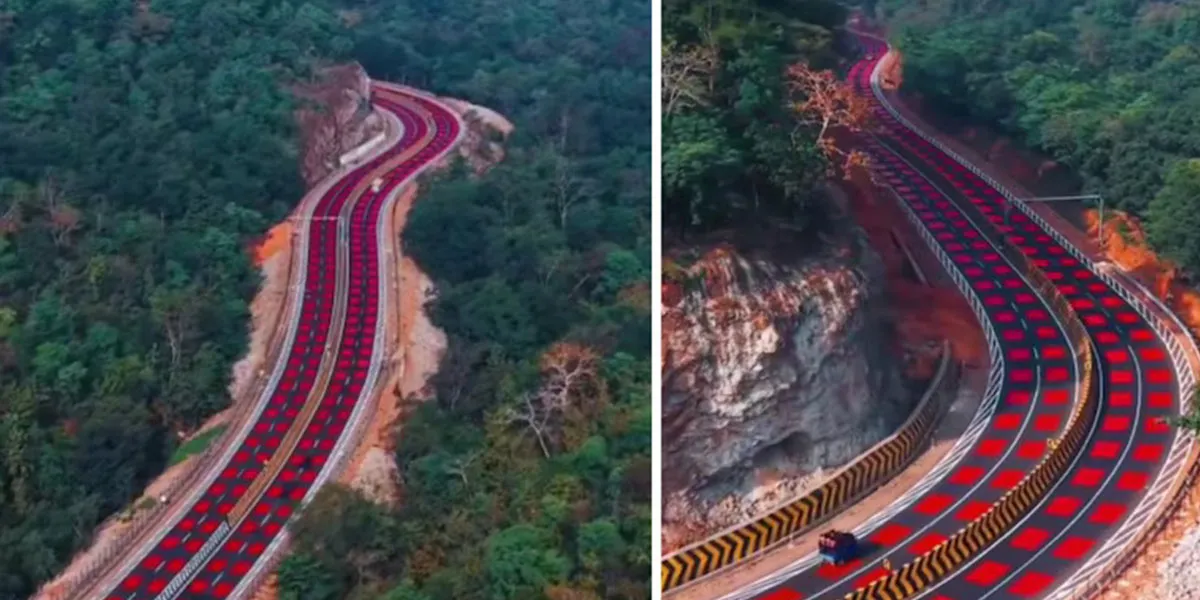
In a first-of-its-kind conservation-focused initiative, the National Highways Authority of India has introduced innovative table-top red road markings on a key stretch of National Highway 45 in Madhya Pradesh to improve wildlife safety. The project runs through one of the state’s most ecologically sensitive regions, passing the Nauradehi Wildlife Sanctuary and the Veerangana Durgavati Tiger Reserve, and is being seen as a potential model for wildlife-friendly infrastructure nationwide.

The Madhya Pradesh government highlighted the initiative on social media, describing wildlife protection as a “sacred duty”. The red table-top markings are designed to slow down vehicles and reduce animal–vehicle collisions within the tiger reserve.

The wildlife-safe stretch is located on the 11.96 km Hiran–Sindoor section of NH-45, which connects Bhopal and Jabalpur. Situated around 60 km from Jabalpur, the highway cuts through dense forest areas where animals frequently cross the road. The region is home to tigers, deer, jackals, sambar and other species, making collisions a recurring concern despite existing safeguards.

Unlike conventional speed breakers, the new design features slightly raised, red-coloured chequered markings across the road surface, creating a tabletop effect that encourages drivers to slow down gradually. The red colour was chosen for its high visibility compared with traditional white or yellow markings. Authorities said the strong visual contrast and textured surface serve as an early warning for motorists entering wildlife-heavy zones. Almost the entire 12 km forest stretch has been covered with these markings.

In addition to the road markings, NHAI has constructed 25 wildlife underpasses along the highway to allow animals to move freely beneath the road. An eight-foot-high iron fence has also been installed on both sides. However, officials said certain locations remained accident-prone, prompting the need for additional traffic-calming measures.

The project forms part of NHAI’s Green Highways programme, aligned with the Ministry of Road Transport and Highways’ Green Highways Policy of 2015. While comprehensive national data on animal–vehicle collisions is limited, available figures underline the urgency of such interventions. In Punjab, animal collisions account for about 53 per cent of fatalities linked to such accidents, while Madhya Pradesh has recorded 237 animal–vehicle collisions and 94 deaths over the past two years.

NHAI official Amritlal Sahu said the work is currently underway and will be expanded further. He noted that the red markings have been introduced to clearly demarcate dangerous zones and encourage motorists to drive slowly, reducing risk to both people and wildlife.

Built at a cost of around Rs 1.22 billion, the highway project is expected to be fully completed in 2025. Officials said the upgraded road could also support tourism and local economic activity following the reclassification of nearby wildlife zones. If successful, similar eco-sensitive road designs may be implemented on other national highways passing through forest and wildlife corridors across India.

In a first-of-its-kind conservation-focused initiative, the National Highways Authority of India has introduced innovative table-top red road markings on a key stretch of National Highway 45 in Madhya Pradesh to improve wildlife safety. The project runs through one of the state’s most ecologically sensitive regions, passing the Nauradehi Wildlife Sanctuary and the Veerangana Durgavati Tiger Reserve, and is being seen as a potential model for wildlife-friendly infrastructure nationwide. The Madhya Pradesh government highlighted the initiative on social media, describing wildlife protection as a “sacred duty”. The red table-top markings are designed to slow down vehicles and reduce animal–vehicle collisions within the tiger reserve. The wildlife-safe stretch is located on the 11.96 km Hiran–Sindoor section of NH-45, which connects Bhopal and Jabalpur. Situated around 60 km from Jabalpur, the highway cuts through dense forest areas where animals frequently cross the road. The region is home to tigers, deer, jackals, sambar and other species, making collisions a recurring concern despite existing safeguards. Unlike conventional speed breakers, the new design features slightly raised, red-coloured chequered markings across the road surface, creating a tabletop effect that encourages drivers to slow down gradually. The red colour was chosen for its high visibility compared with traditional white or yellow markings. Authorities said the strong visual contrast and textured surface serve as an early warning for motorists entering wildlife-heavy zones. Almost the entire 12 km forest stretch has been covered with these markings. In addition to the road markings, NHAI has constructed 25 wildlife underpasses along the highway to allow animals to move freely beneath the road. An eight-foot-high iron fence has also been installed on both sides. However, officials said certain locations remained accident-prone, prompting the need for additional traffic-calming measures. The project forms part of NHAI’s Green Highways programme, aligned with the Ministry of Road Transport and Highways’ Green Highways Policy of 2015. While comprehensive national data on animal–vehicle collisions is limited, available figures underline the urgency of such interventions. In Punjab, animal collisions account for about 53 per cent of fatalities linked to such accidents, while Madhya Pradesh has recorded 237 animal–vehicle collisions and 94 deaths over the past two years. NHAI official Amritlal Sahu said the work is currently underway and will be expanded further. He noted that the red markings have been introduced to clearly demarcate dangerous zones and encourage motorists to drive slowly, reducing risk to both people and wildlife. Built at a cost of around Rs 1.22 billion, the highway project is expected to be fully completed in 2025. Officials said the upgraded road could also support tourism and local economic activity following the reclassification of nearby wildlife zones. If successful, similar eco-sensitive road designs may be implemented on other national highways passing through forest and wildlife corridors across India.

Next Story
Infrastructure Transport

Tripura Rail Survey Approved For Jirania–Bodhjung Link

The Ministry of Railways has approved a Final Location Survey (FLS) for a proposed new railway line between Jirania and Bodhjung Nagar in Tripura. The planned section will span 14 km and is estimated to cost around Rs 4.2 million, with the entire alignment located within West Tripura district. The approval marks a key step towards strengthening railway infrastructure and supporting industrial growth in the state. Bodhjung Nagar is Tripura’s principal industrial and commercial hub, developed mainly for resource-based industries such as rubber, bamboo and food processing. The proposed Jirania..

Next Story
Infrastructure Transport

MCF Raebareli Rolls Out Its 15,000th Passenger Coach

The Modern Coach Factory (MCF) in Raebareli, Uttar Pradesh, has reached a major production milestone with the manufacture of its 15,000th passenger coach on December 15, the Ministry of Railways said. During the current financial year 2025–26, the unit has produced a total of 1,310 coaches so far. Established in 2007 at Lalganj in Raebareli, MCF is among India’s most advanced passenger coach manufacturing facilities. Built at a cost of around Rs 31.92 billion, the factory has an installed annual capacity of 1,000 coaches and is located about 3 km from Lalganj on the Kanpur–Raebareli Roa..

Next Story
Infrastructure Transport

RVNL Wins Gandak River Rail Bridge Contract

Rail Vikas Nigam Limited (RVNL) has received a Letter of Award from North Eastern Railway for a major railway infrastructure project valued at Rs 1.65 billion. The contract relates to the construction of the substructure for a key railway bridge over the Gandak River. The bridge will be constructed between Paniyahwa and Valmikinagar stations as part of the doubling of the Gorakhpur Cantt–Valmikinagar railway section. Designed to enhance capacity and operational efficiency, the structure will comprise 14 spans of 61 metres each and will be supported by double D-type well foundations. The des..

Advertisement

Subscribe to Our Newsletter

Get daily newsletters around different themes from Construction world.

STAY CONNECTED

Advertisement

Advertisement

Advertisement

Advertisement

Open In App