NHAI Moves to Curb Diesel Generator Emissions on Dwarka Expressway
ROADS & HIGHWAYS

NHAI Moves to Curb Diesel Generator Emissions on Dwarka Expressway

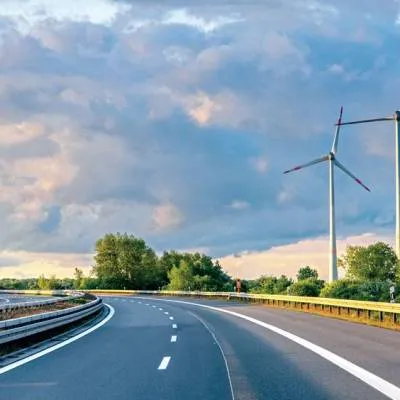
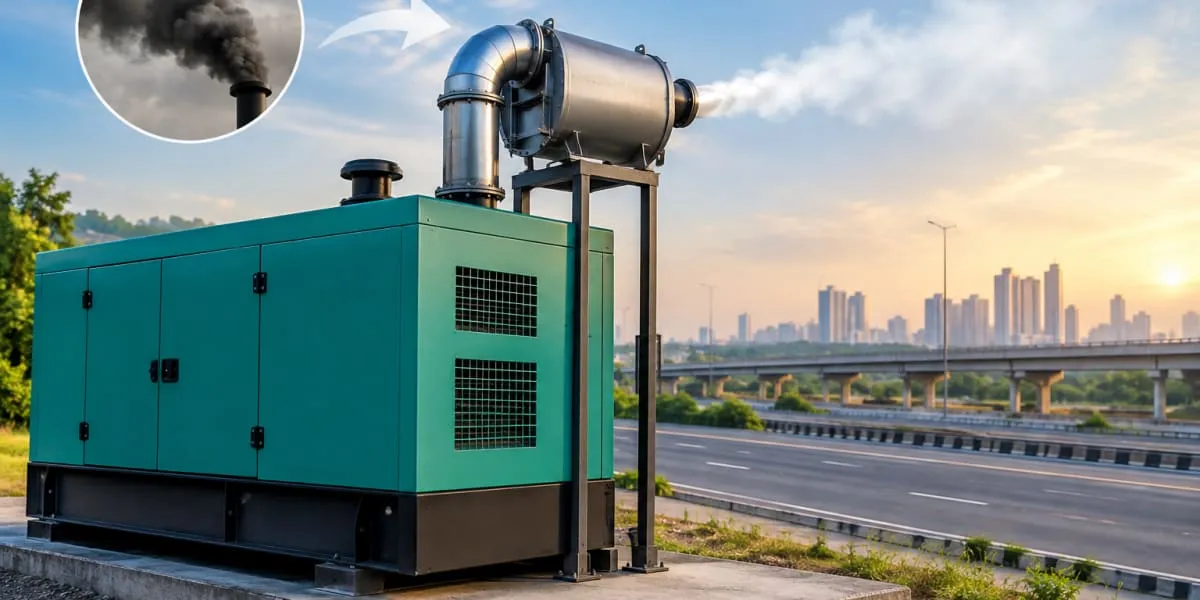
The National Highways Authority of India (NHAI) has begun installing Retrofit Emission Control Devices (RECDs) on 25 diesel generator sets along the 8.7-kilometre Package-IV stretch of the Dwarka Expressway. The initiative is intended to reduce emissions in the National Capital Region (NCR) ahead of the winter pollution season.

The section connects Basai with the Kherki Dhaula and Delhi-Gurugram Expressway cloverleaf intersection. The area is vulnerable to severe air pollution during winter, when deteriorating ambient air quality leads to the implementation of measures under the Graded Response Action Plan (GRAP).

The work follows directions from the Commission for Air Quality Management (CAQM) on regulating diesel generators and introducing emission-control measures across the Delhi-NCR region. The devices will be fitted to generator sets used for expressway lighting and other associated operations.

The implementation includes installation, testing and commissioning of the equipment, along with comprehensive maintenance support. This arrangement is intended to ensure that the devices remain operational and continue supporting emission reduction during the period of heightened pollution.

NHAI said the initiative forms part of its wider approach to integrating environmental protection into the construction and operation of national highways. The authority is applying the approach particularly to infrastructure projects located in the NCR, where transport expansion is being undertaken alongside stricter air-quality requirements.

The measures are also aligned with CAQM’s broader objective of improving ambient air quality during the critical winter period. By controlling emissions from generators supporting expressway operations, the project is expected to strengthen compliance with regional pollution-control norms while maintaining essential lighting and associated infrastructure services.

The National Highways Authority of India (NHAI) has begun installing Retrofit Emission Control Devices (RECDs) on 25 diesel generator sets along the 8.7-kilometre Package-IV stretch of the Dwarka Expressway. The initiative is intended to reduce emissions in the National Capital Region (NCR) ahead of the winter pollution season. The section connects Basai with the Kherki Dhaula and Delhi-Gurugram Expressway cloverleaf intersection. The area is vulnerable to severe air pollution during winter, when deteriorating ambient air quality leads to the implementation of measures under the Graded Response Action Plan (GRAP). The work follows directions from the Commission for Air Quality Management (CAQM) on regulating diesel generators and introducing emission-control measures across the Delhi-NCR region. The devices will be fitted to generator sets used for expressway lighting and other associated operations. The implementation includes installation, testing and commissioning of the equipment, along with comprehensive maintenance support. This arrangement is intended to ensure that the devices remain operational and continue supporting emission reduction during the period of heightened pollution. NHAI said the initiative forms part of its wider approach to integrating environmental protection into the construction and operation of national highways. The authority is applying the approach particularly to infrastructure projects located in the NCR, where transport expansion is being undertaken alongside stricter air-quality requirements. The measures are also aligned with CAQM’s broader objective of improving ambient air quality during the critical winter period. By controlling emissions from generators supporting expressway operations, the project is expected to strengthen compliance with regional pollution-control norms while maintaining essential lighting and associated infrastructure services.

Related Stories

Gold Stories
Next Story
Real Estate

Born Smart or Built Smart?

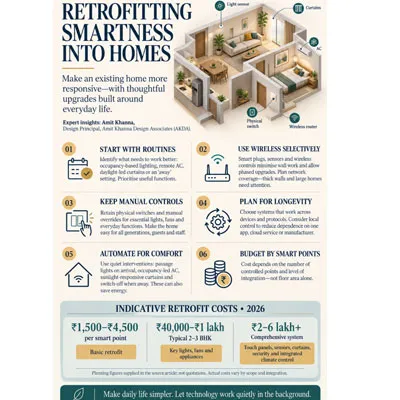
In residential projects where the homeowner has a clear requirement for extensive automation, the smart-home brief should influence the design from the outset. CW explores exactly how such mandates influence design-development. QUICK BYTESIntegrate smart technology with architecture, interiors and MEP from the outset.Let residents’ needs and routines guide automation.Integrate sensors, wiring and controls without compromising design.Build flexible infrastructure for evolving technologies.Smart systems should be simple, reliable and easy to use.Existing homes can be retrofitted with mini..

Next Story
Technology

Move Less, Build More

On high-rise sites in Mumbai, until a few years ago, the common material handling solution was manpower and the repeated relocation of material until it finally reached the floor where it was to be installed.Cut to today. “Now, we are adopting automation in material handling, not to replace people but to reduce unnecessary movement, improve planning, and use people and equipment more efficiently,” says Raahul Maroo, Founder & Managing Director, Tat:vm Builders and Developers.To read the full article Click Here ..

Next Story
Infrastructure Urban

Law and Order

In modern economies, construction projects serve as a catalyst for economic growth and national development. In India, the construction industry plays a vital role in infrastructure development, urbanisation and employment generation. However, these projects involve significant financial, contractual, legal, environmental and safety risks, necessitating an effective legal framework to regulate their execution.The India perspectiveConstruction projects are governed by various legal and regulatory requirements relating to land acquisition, planning permissions, labour welfare, environmental clea..

Advertisement

Subscribe to Our Newsletter

Get daily newsletters around different themes from Construction world.

STAY CONNECTED

Advertisement

SPECIAL OFFER
QR Code