+
NHAI Proposes Tunnel Or New Road To Replace Tamhini Ghat
ROADS & HIGHWAYS

NHAI Proposes Tunnel Or New Road To Replace Tamhini Ghat

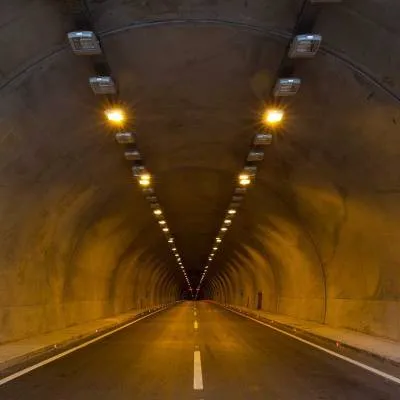
The National Highways Authority of India (NHAI) is preparing a proposal to provide a safer and more efficient alternative to the Tamhini Ghat corridor that links Pune with the Konkan. The plan under consideration includes either construction of a new tunnel or creation of an entirely new road alignment to address recurring landslides, sharp bends and severe congestion during the monsoon season. Officials have accelerated administrative and survey work to evaluate technical feasibility and route options. The study aims to prioritise traveller safety and uninterrupted movement of goods.

The central government has granted national highway status to the Pune–Dighi Port stretch, highlighting its strategic importance for coastal trade. At present the road to Dighi Port passes through Pune, Chandani Chowk, Paud, Tamhini, Mangaon and Dighi, and the ghat section is characterised by steep gradients and narrow curves that slow traffic and raise accident risk for heavy goods vehicles. Frequent intense rainfall makes the ghat prone to landslides and seasonal blockages, while weekend tourist traffic compounds congestion and delays. These operational challenges have prompted NHAI to explore durable engineering solutions.

One option under review is a new alignment via Panshet, Mangaon and Dighi Port that would bypass the current Tamhini stretch entirely, while another proposes upgrading the existing ghat by easing hazardous curves and constructing a tunnel between Dongarwadi and Tamhini to shorten the route. Preliminary data collection and planning are already under way, with traffic modelling and geological surveys forming part of the assessment. Engineers are examining how realignment or tunnelling might deliver smoother gradients and safer overtaking provisions for commercial carriers. Environmental and land acquisition considerations will also form part of the appraisal.

One tunnel route could reduce the Dighi–Pune distance by nearly 30 kilometres and a Mangaon–Kumbhe–Kumbhyachi Wadi–Ghol–Panshet–Pune proposal could cut it by up to 50 kilometres. Authorities expect a re-engineered corridor to reduce travel time, improve safety and bolster trade, tourism and development across western Maharashtra. The work is a strategic investment to strengthen logistical efficiency between industrial belt near Mangaon and the port hinterland.

The National Highways Authority of India (NHAI) is preparing a proposal to provide a safer and more efficient alternative to the Tamhini Ghat corridor that links Pune with the Konkan. The plan under consideration includes either construction of a new tunnel or creation of an entirely new road alignment to address recurring landslides, sharp bends and severe congestion during the monsoon season. Officials have accelerated administrative and survey work to evaluate technical feasibility and route options. The study aims to prioritise traveller safety and uninterrupted movement of goods. The central government has granted national highway status to the Pune–Dighi Port stretch, highlighting its strategic importance for coastal trade. At present the road to Dighi Port passes through Pune, Chandani Chowk, Paud, Tamhini, Mangaon and Dighi, and the ghat section is characterised by steep gradients and narrow curves that slow traffic and raise accident risk for heavy goods vehicles. Frequent intense rainfall makes the ghat prone to landslides and seasonal blockages, while weekend tourist traffic compounds congestion and delays. These operational challenges have prompted NHAI to explore durable engineering solutions. One option under review is a new alignment via Panshet, Mangaon and Dighi Port that would bypass the current Tamhini stretch entirely, while another proposes upgrading the existing ghat by easing hazardous curves and constructing a tunnel between Dongarwadi and Tamhini to shorten the route. Preliminary data collection and planning are already under way, with traffic modelling and geological surveys forming part of the assessment. Engineers are examining how realignment or tunnelling might deliver smoother gradients and safer overtaking provisions for commercial carriers. Environmental and land acquisition considerations will also form part of the appraisal. One tunnel route could reduce the Dighi–Pune distance by nearly 30 kilometres and a Mangaon–Kumbhe–Kumbhyachi Wadi–Ghol–Panshet–Pune proposal could cut it by up to 50 kilometres. Authorities expect a re-engineered corridor to reduce travel time, improve safety and bolster trade, tourism and development across western Maharashtra. The work is a strategic investment to strengthen logistical efficiency between industrial belt near Mangaon and the port hinterland.

Next Story
Building Material

NITI Aayog Unveils Cement Decarbonisation Roadmap

NITI Aayog has released a sector-specific decarbonisation roadmap for cement as part of three green transition reports covering cement, aluminium and MSMEs. The report projects cement production rising to around 2,100 million tonnes by 2070 from 391 million tonnes in 2023, while targeting a reduction in carbon intensity to 0.09–0.13 tCO₂e per tonne. It recommends clinker substitution, refuse-derived fuels, CCUS adoption and carbon trading mechanisms to enable deep decarbonisation. ..

Next Story
Technology

Genesys Launches Advanced GeoRadar System

Genesys International Corporation has launched an advanced Ground Penetrating Radar (GPR) solution from IDS GeoRadar for underground utility mapping in India. The system uses patented Equalised Scrambling Technology (EST) and Wide/Multi-Array Antenna Technology to deliver high-resolution three-dimensional imaging of subsurface infrastructure. The technology enables the detection and mapping of buried assets such as water pipelines, sewer networks, telecom cables and power lines. By providing detailed subsurface insights, the system aims to help urban authorities and infrastructure developers ..

Next Story
Infrastructure Urban

Hindustan Zinc Partners Virginia Tech to Boost Silver Recovery

Hindustan Zinc Limited recently signed a Memorandum of Understanding (MoU) with Virginia Tech to advance research aimed at improving silver recovery across its lead–zinc (Pb–Zn) concentrators. The collaboration will focus on refining flotation techniques and optimising reagent usage to improve concentrate quality and operational efficiency at processing plants.Virginia Tech, based in Blacksburg, Virginia, is globally recognised for its expertise in mining engineering, mineral processing and applied metallurgical research. Through this partnership, Hindustan Zinc will leverage global resear..

Advertisement

Subscribe to Our Newsletter

Get daily newsletters around different themes from Construction world.

STAY CONNECTED

Advertisement

Advertisement

Advertisement

Open In App