NHAI to Deploy AI Dashcam Monitoring for National Highways
ROADS & HIGHWAYS

NHAI to Deploy AI Dashcam Monitoring for National Highways

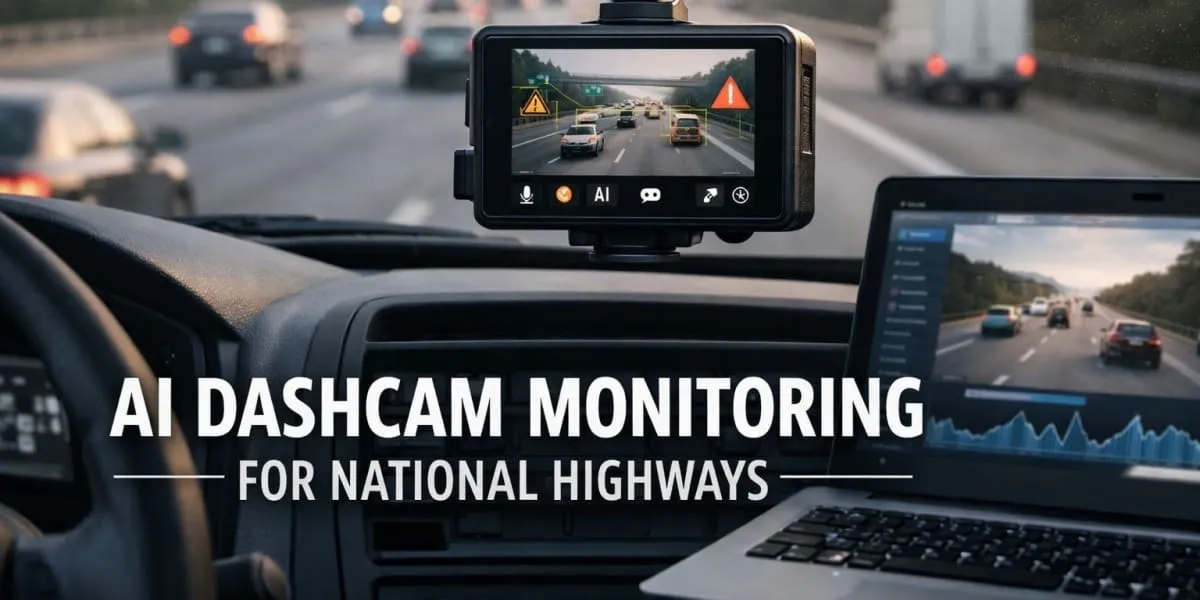
The National Highways Authority of India (NHAI) will deploy advanced Artificial Intelligence (AI) powered Dashcam Analytics Services (DAS) across around 40,000 km of the national highway network to modernise operations and maintenance. The initiative will use Machine Learning (ML) to process high-resolution imagery and video gathered from specialised dashboard cameras mounted on Route Patrol Vehicles (RPVs). It will aim to move operations and maintenance towards data-driven workflows and remote monitoring to improve efficiency and responsiveness.

The RPVs will conduct comprehensive weekly surveys on all stretches and AI models will automatically identify over 30 types of defects and anomalies. The major focus will be on pavement condition including detection of potholes, rutting and severe cracking, while road furniture monitoring will detect damaged or faded lane markings, compromised crash barriers and non-functional street lighting. The system is also intended to monitor water stagnation, missing drainage covers, vegetation growth and the condition of bus bays for maintenance prioritisation.

Safety monitoring will cover unauthorised median openings, unauthorised signboards and illegal parking or encroachments to support timely enforcement and remediation. To further enhance evaluation of lighting and markings, at least one weekly survey will be carried out at night each month to assess road signages, pavement markings, road studs and highway lighting performance. The objective is to provide continuous condition assessment that informs targeted repairs and reduces safety risks for road users.

The authority has created five zones to ensure systematic monitoring and will develop a specialised IT platform with modules for data management, AI analytics and interactive visualisation dashboards. The platform will enable side-by-side comparisons of road condition over time and integration of AI generated results into the central NHAI Data Lake for seamless monitoring and timely rectification of defects. The move is expected to enable more efficient resource allocation, improve road safety and enhance user experience across the national highway network.

The National Highways Authority of India (NHAI) will deploy advanced Artificial Intelligence (AI) powered Dashcam Analytics Services (DAS) across around 40,000 km of the national highway network to modernise operations and maintenance. The initiative will use Machine Learning (ML) to process high-resolution imagery and video gathered from specialised dashboard cameras mounted on Route Patrol Vehicles (RPVs). It will aim to move operations and maintenance towards data-driven workflows and remote monitoring to improve efficiency and responsiveness. The RPVs will conduct comprehensive weekly surveys on all stretches and AI models will automatically identify over 30 types of defects and anomalies. The major focus will be on pavement condition including detection of potholes, rutting and severe cracking, while road furniture monitoring will detect damaged or faded lane markings, compromised crash barriers and non-functional street lighting. The system is also intended to monitor water stagnation, missing drainage covers, vegetation growth and the condition of bus bays for maintenance prioritisation. Safety monitoring will cover unauthorised median openings, unauthorised signboards and illegal parking or encroachments to support timely enforcement and remediation. To further enhance evaluation of lighting and markings, at least one weekly survey will be carried out at night each month to assess road signages, pavement markings, road studs and highway lighting performance. The objective is to provide continuous condition assessment that informs targeted repairs and reduces safety risks for road users. The authority has created five zones to ensure systematic monitoring and will develop a specialised IT platform with modules for data management, AI analytics and interactive visualisation dashboards. The platform will enable side-by-side comparisons of road condition over time and integration of AI generated results into the central NHAI Data Lake for seamless monitoring and timely rectification of defects. The move is expected to enable more efficient resource allocation, improve road safety and enhance user experience across the national highway network.

Next Story
Infrastructure Transport

AFCONS & Navayuga set world records with Missing Link Expressway

Maharashtra’s most ambitious greenfield bypass — a 13.3-km alignment carrying twin record-setting tunnels and India’s tallest cable-stayed road bridge — was thrown open to traffic on Maharashtra Day, finally completing the Mumbai–Pune Expressway after a 23-year wait. CW reports…The 650-m cable-stayed bridge over Tiger Valley at sunset — the package executed by Afcons Infrastructure Ltd carries 182-m pylons, the tallest on any Indian road bridge.On 1 May 2026, Chief Minister Devendra Fadnavis, flanked by Deputy Chief Ministers Eknath Shinde and Sunetra Pawar (representing the late..

Next Story
Infrastructure Transport

Mumbai–Pune Missing Link boosts realty prospects

The recently opened ‘missing link’ on the Mumbai–Pune Expressway is set to significantly transform connectivity between the two cities by reducing travel time and bypassing the challenging ghat section. The new alignment, featuring tunnels and viaducts, is designed to improve safety, ease congestion and ensure a smoother, faster commute for both passenger and commercial traffic.With improved travel efficiency, the corridor is expected to strengthen intercity movement, encouraging more frequent travel for work, leisure and logistics. This enhanced accessibility is likely to benefit real e..

Next Story
Infrastructure Urban

How Hormuz is Hijacking Indian Highways

At the recently held RAHSTA Round Table on 29th April in Pune, and earlier during our webinars for Cement Expo by Indian Cement Review and by FIRST Construction Council on manufacturing construction equipment for the world, one thread lay common: the industry is being subjected to a cost-push chain reaction moving from crude oil → freight/insurance → steel, cement fuel, bitumen, polymers, packaging, logistics and finally project margins. Indeed, the West Asia crisis caused by the war and the Hormuz Strait blockade, which does not directly concern us, has turned around and hit us. If the wa..

Advertisement

Subscribe to Our Newsletter

Get daily newsletters around different themes from Construction world.

STAY CONNECTED

Advertisement

Advertisement

Advertisement