Road Safety Conclave 2026 Ignites Nationwide School Movement
ROADS & HIGHWAYS

Road Safety Conclave 2026 Ignites Nationwide School Movement

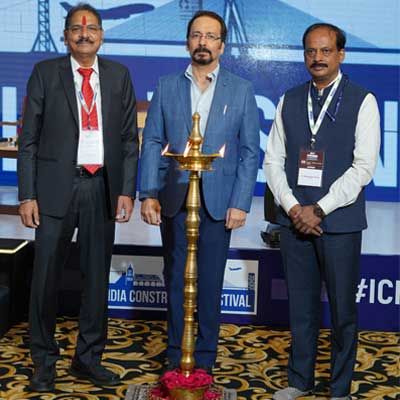
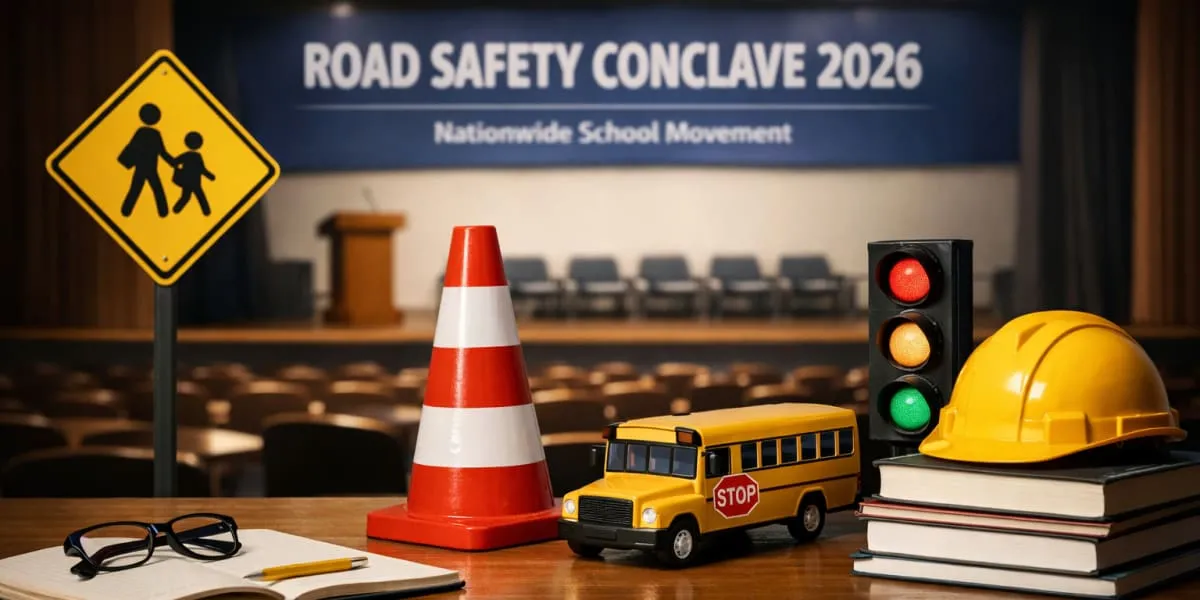
The Road Safety Conclave 2026 was held at Vivekanand School in Anand Vihar, Delhi and was organised by the Ministry of Road Transport and Highways to strengthen the national road safety ecosystem and foster responsible mobility among young people. The event brought together policymakers, educators, students and civil society with the objective of translating awareness into sustained action. It attracted nearly 4,000 students from classes three to 12 and over 500 teachers from around 100 schools, reflecting strong grassroots commitment.

A key focus was on empowering students as change-makers through activities such as poster making, role play challenges, nukkad natak, panel discussions, documentary creation and innovation challenges. These initiatives were intended to educate participants and enable them to act as Road Safety Ambassadors within their communities, promoting responsible behaviour and grassroots awareness. The conclave also underlined school level interventions including establishment of Road Safety Clubs and Gate Safety Patrol systems.

The Minister of State for Road Transport and Highways reported that highway development has accelerated under current leadership with emphasis on integrating safety features alongside infrastructure expansion, noting a national network of approximately 146,000 km of National Highways. He outlined the elevation of road safety as a national priority since 2014 through a comprehensive four E strategy of Engineering, Enforcement, Education and Emergency Care and cited the Motor Vehicles Amendment Act, 2019 as strengthening enforcement. He emphasised that enforcement must be complemented by behavioural change and sustained public awareness.

The minister further described citizen centric measures including the PM RAHAT Scheme which provides cashless treatment of up to Rs 0.15 million (mn) for accident victims, supported by enhanced emergency response systems, trauma care and rapid response teams. Infrastructure improvements and technology such as crash barriers, intelligent signage, AI based monitoring, intelligent transport systems and FASTag enabled tolling were presented as transformative tools to reduce fatalities. Participants were urged to follow traffic rules, wear helmets and seat belts, avoid mobile distractions and to spread awareness, reinforcing a collective pledge towards safer roads and the vision of Viksit Bharat 2047.

The Road Safety Conclave 2026 was held at Vivekanand School in Anand Vihar, Delhi and was organised by the Ministry of Road Transport and Highways to strengthen the national road safety ecosystem and foster responsible mobility among young people. The event brought together policymakers, educators, students and civil society with the objective of translating awareness into sustained action. It attracted nearly 4,000 students from classes three to 12 and over 500 teachers from around 100 schools, reflecting strong grassroots commitment. A key focus was on empowering students as change-makers through activities such as poster making, role play challenges, nukkad natak, panel discussions, documentary creation and innovation challenges. These initiatives were intended to educate participants and enable them to act as Road Safety Ambassadors within their communities, promoting responsible behaviour and grassroots awareness. The conclave also underlined school level interventions including establishment of Road Safety Clubs and Gate Safety Patrol systems. The Minister of State for Road Transport and Highways reported that highway development has accelerated under current leadership with emphasis on integrating safety features alongside infrastructure expansion, noting a national network of approximately 146,000 km of National Highways. He outlined the elevation of road safety as a national priority since 2014 through a comprehensive four E strategy of Engineering, Enforcement, Education and Emergency Care and cited the Motor Vehicles Amendment Act, 2019 as strengthening enforcement. He emphasised that enforcement must be complemented by behavioural change and sustained public awareness. The minister further described citizen centric measures including the PM RAHAT Scheme which provides cashless treatment of up to Rs 0.15 million (mn) for accident victims, supported by enhanced emergency response systems, trauma care and rapid response teams. Infrastructure improvements and technology such as crash barriers, intelligent signage, AI based monitoring, intelligent transport systems and FASTag enabled tolling were presented as transformative tools to reduce fatalities. Participants were urged to follow traffic rules, wear helmets and seat belts, avoid mobile distractions and to spread awareness, reinforcing a collective pledge towards safer roads and the vision of Viksit Bharat 2047.

Next Story
Infrastructure Transport

AFCONS & Navayuga set world records with Missing Link Expressway

Maharashtra’s most ambitious greenfield bypass — a 13.3-km alignment carrying twin record-setting tunnels and India’s tallest cable-stayed road bridge — was thrown open to traffic on Maharashtra Day, finally completing the Mumbai–Pune Expressway after a 23-year wait. CW reports…The 650-m cable-stayed bridge over Tiger Valley at sunset — the package executed by Afcons Infrastructure Ltd carries 182-m pylons, the tallest on any Indian road bridge.On 1 May 2026, Chief Minister Devendra Fadnavis, flanked by Deputy Chief Ministers Eknath Shinde and Sunetra Pawar (representing the late..

Next Story
Infrastructure Transport

Mumbai–Pune Missing Link boosts realty prospects

The recently opened ‘missing link’ on the Mumbai–Pune Expressway is set to significantly transform connectivity between the two cities by reducing travel time and bypassing the challenging ghat section. The new alignment, featuring tunnels and viaducts, is designed to improve safety, ease congestion and ensure a smoother, faster commute for both passenger and commercial traffic.With improved travel efficiency, the corridor is expected to strengthen intercity movement, encouraging more frequent travel for work, leisure and logistics. This enhanced accessibility is likely to benefit real e..

Next Story
Infrastructure Urban

How Hormuz is Hijacking Indian Highways

At the recently held RAHSTA Round Table on 29th April in Pune, and earlier during our webinars for Cement Expo by Indian Cement Review and by FIRST Construction Council on manufacturing construction equipment for the world, one thread lay common: the industry is being subjected to a cost-push chain reaction moving from crude oil → freight/insurance → steel, cement fuel, bitumen, polymers, packaging, logistics and finally project margins. Indeed, the West Asia crisis caused by the war and the Hormuz Strait blockade, which does not directly concern us, has turned around and hit us. If the wa..

Advertisement

Subscribe to Our Newsletter

Get daily newsletters around different themes from Construction world.

STAY CONNECTED

Advertisement

Advertisement

Advertisement