+
Tanakpur-Lipulekh Road To Be Completed Within Next Year
ROADS & HIGHWAYS

Tanakpur-Lipulekh Road To Be Completed Within Next Year

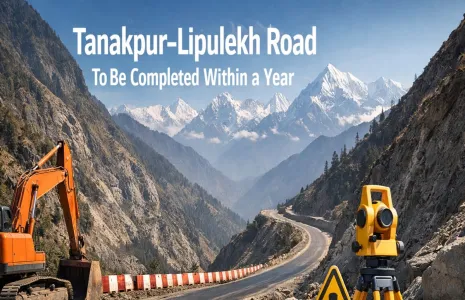
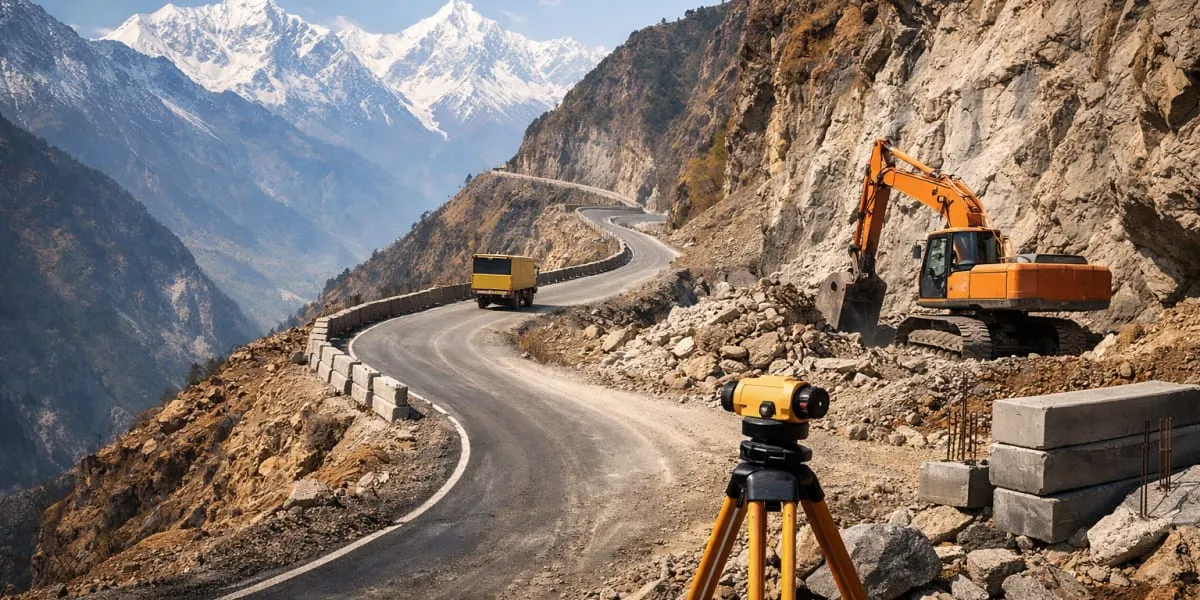
Union minister for road transport and highways Nitin Gadkari told a public function in Dehradun that the Tanakpur-Lipulekh road via Pithoragarh would be completed within the next year. He stated the project, valued at Rs 52 billion (Rs 52 bn), comprised 370 kilometres of roadway, of which approximately 200 kilometres had been constructed and 129 kilometres continued to face significant obstacles. The minister said officials were working to overcome those obstacles and accelerate remaining work.

He emphasised reverence for Mansarovar and noted that the route had previously required travel via Nepal and China, prompting the government to undertake the challenging task of building a direct road. The scheme aims to provide direct access from Tanakpur to Lipulekh through Pithoragarh and to strengthen connectivity in the border region. The minister framed the work as part of broader infrastructure and strategic priorities under the Prime Minister's leadership.

Uttarakhand chief minister Pushkar Singh Dhami praised the Prime Minister's leadership and outlined a vision to make the State a model of development and heritage preservation. He expressed confidence in the ruling party's prospects for the 2027 assembly elections and framed the state's progress as integral to that campaign. Local administration was described as coordinating with central agencies to ensure project completion.

The Prime Minister inaugurated the six-lane Delhi-Dehradun Economic Corridor, a 213 kilometre access-controlled route developed at a cost of Rs 120 billion (Rs 120 bn). The corridor, which crosses Delhi, Uttar Pradesh and Uttarakhand, is expected to reduce journey times between Delhi and Dehradun from over six hours at present to around two-and-a-half hours. Officials characterised the corridor as a major addition to regional transport infrastructure and part of concurrent efforts to upgrade connectivity.

Union minister for road transport and highways Nitin Gadkari told a public function in Dehradun that the Tanakpur-Lipulekh road via Pithoragarh would be completed within the next year. He stated the project, valued at Rs 52 billion (Rs 52 bn), comprised 370 kilometres of roadway, of which approximately 200 kilometres had been constructed and 129 kilometres continued to face significant obstacles. The minister said officials were working to overcome those obstacles and accelerate remaining work. He emphasised reverence for Mansarovar and noted that the route had previously required travel via Nepal and China, prompting the government to undertake the challenging task of building a direct road. The scheme aims to provide direct access from Tanakpur to Lipulekh through Pithoragarh and to strengthen connectivity in the border region. The minister framed the work as part of broader infrastructure and strategic priorities under the Prime Minister's leadership. Uttarakhand chief minister Pushkar Singh Dhami praised the Prime Minister's leadership and outlined a vision to make the State a model of development and heritage preservation. He expressed confidence in the ruling party's prospects for the 2027 assembly elections and framed the state's progress as integral to that campaign. Local administration was described as coordinating with central agencies to ensure project completion. The Prime Minister inaugurated the six-lane Delhi-Dehradun Economic Corridor, a 213 kilometre access-controlled route developed at a cost of Rs 120 billion (Rs 120 bn). The corridor, which crosses Delhi, Uttar Pradesh and Uttarakhand, is expected to reduce journey times between Delhi and Dehradun from over six hours at present to around two-and-a-half hours. Officials characterised the corridor as a major addition to regional transport infrastructure and part of concurrent efforts to upgrade connectivity.

Related Stories

Gold Stories

Next Story
Infrastructure Urban

Infrastructure Opportunity Outlook by IMPACCT.Info

India’s infrastructure pipeline is witnessing dynamic activity across stages — from immediate bidding to future planning. IMPACCT segments these into three categories: Immediate, 3–6 Month, and Future Opportunities, enabling businesses to identify, prepare, and participate in high-value tenders and projects across sectors.To read full article Click Here ..

Next Story
Real Estate

Glass, Reframed!

Glass façades, quintessential aesthetic building envelopes globally, have been widely adopted in India as well. But when the focus is high-performance building systems that deliver energy efficiency, comfort and architectural identity, glass isn’t the only preference. Combination solutions, involving glass and some other material, improve façade outcomes. Some combinations come at comparable prices, some at a higher price. Here is a selection of performance-oriented solutions...To read the full story Click Here ..

Next Story
Infrastructure Urban

Beyond Building Faster

India’s cities are expanding at an unprecedented pace, bringing new infrastructure and development opportunities while also intensifying challenges around mobility, public spaces, liveability and supporting infrastructure. The question, therefore, is not simply whether India can build faster, but whether it can build cities that work better.At a CW webinar, Are We Designing Better Cities – or Just Building Faster?, moderator Ar. Samir Shaikh, Founding Principal, AR&UD Studio, brought together perspectives from design, development, master planning and technology...To read the full artic..

Advertisement

Subscribe to Our Newsletter

Get daily newsletters around different themes from Construction world.

STAY CONNECTED

Advertisement

SPECIAL OFFER
QR Code