UP receives environmental nod for 594 km Ganga Expressway project
ROADS & HIGHWAYS

UP receives environmental nod for 594 km Ganga Expressway project

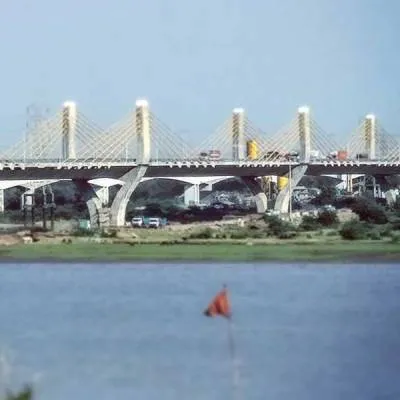
The State Level Environment Impact Authority released environmental approval for the 594-km Ganga Expressway project, for which the bidding process has already begun.

The predicted cost of the project is Rs 36,230 crore. It will be developed in PPP mode, and tenders have been floated for design, build, finance, operate and transfer.

The expressway will commence at Bijauli village in Meerut district from the Meerut-Bulandshahr highway and end at the Prayagraj bypass near the Joodapur Dandu village in Prayagraj district.

It will include 12 districts, comprising Hapur, Meerut, Amroha, Rae Bareli, Bulandshahr, Badaun, Sambhal, Hardoi, Shahjahanpur, Unnao, Pratapgarh and Prayagraj.

It will be a six-lane expressway, expandable to eight lanes. Work on land procurement for the project is on, and they have procured around 94% of the land. It is assessed that approximately 12,000 people will obtain temporary employment during the project construction, while another 1,000 people will obtain employment during the construction of toll plazas on this stretch.

Image Source

Also read: How Purvanchal Expressway accelerates prosperity for Uttar Pradesh

The State Level Environment Impact Authority released environmental approval for the 594-km Ganga Expressway project, for which the bidding process has already begun. The predicted cost of the project is Rs 36,230 crore. It will be developed in PPP mode, and tenders have been floated for design, build, finance, operate and transfer. The expressway will commence at Bijauli village in Meerut district from the Meerut-Bulandshahr highway and end at the Prayagraj bypass near the Joodapur Dandu village in Prayagraj district. It will include 12 districts, comprising Hapur, Meerut, Amroha, Rae Bareli, Bulandshahr, Badaun, Sambhal, Hardoi, Shahjahanpur, Unnao, Pratapgarh and Prayagraj. It will be a six-lane expressway, expandable to eight lanes. Work on land procurement for the project is on, and they have procured around 94% of the land. It is assessed that approximately 12,000 people will obtain temporary employment during the project construction, while another 1,000 people will obtain employment during the construction of toll plazas on this stretch. Image Source Also read: How Purvanchal Expressway accelerates prosperity for Uttar Pradesh

Next Story
Infrastructure Urban

Implementation Status of Jal Jeevan Mission

Since August 2019 the Government has implemented Jal Jeevan Mission to provide assured potable water through household tap connections in rural India. At the start of the mission only 32.3 million (mn) rural households, representing 16.7 per cent, were reported to have tap water connections. States and union territories have reported that 125.8 mn additional rural households have since been provided with tap connections. As a result, of about 193.6 mn rural households roughly 158.2 mn, or 81.71 per cent, are reported to have tap water supply at home.\n\nThe State, district and village level st..

Next Story
Infrastructure Urban

Jal Jeevan Mission Reaches Eighty One Per Cent Rural Coverage

The Government reported substantial progress under the Jal Jeevan Mission, launched in August 2019 to provide tap water to every rural household. At launch only 32.3 million (mn) rural households had tap connections and states and Union territories reported provision of 125.8 mn additional households by March 2026. Consequently, out of about 193.6 mn rural households around 158.2 mn, or 81.71 per cent, are reported to have tap water at home. The Finance Minister announced extension of the mission until 2028 in the 2025-26 budget speech. The Swachh Bharat Mission Grameen, launched in October 20..

Next Story
Infrastructure Urban

Empowering Local Governance for Sustainable Rural Water Supply

The Ministry of Jal Shakti has aligned the Jal Jeevan Mission (JJM) with the 73rd Amendment to strengthen village level planning and community ownership of water supply. Gram Panchayats, village water and sanitation committees and Pani Samitis are to plan, implement, manage and maintain piped water systems, with gram sabha processes formalising handover and oversight. Implementation support agencies including non government organisations, community based organisations and self help groups have been empanelled to train local committees and promote women participation. Under JJM, the department ..

Advertisement

Subscribe to Our Newsletter

Get daily newsletters around different themes from Construction world.

STAY CONNECTED

Advertisement

Advertisement

Advertisement