300 Railway Projects Spanning 13,808 km Sanctioned Under PM Gati Shakti
RAILWAYS & METRO RAIL

300 Railway Projects Spanning 13,808 km Sanctioned Under PM Gati Shakti

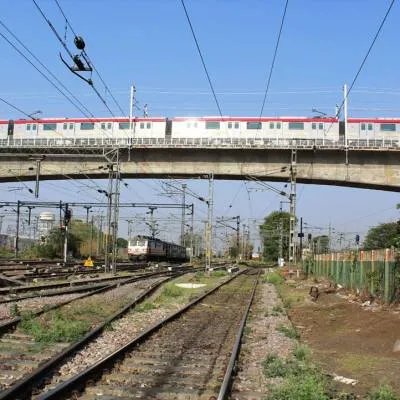
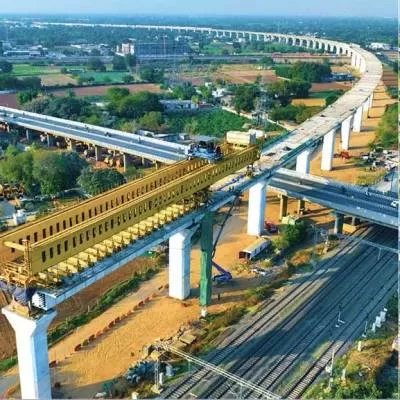
Indian Railways has sanctioned 300 infrastructure projects spanning 13,808 kilometres under the PM Gati Shakti National Master Plan since financial year 2022-23, the ministry told the Rajya Sabha in a written reply. The package of measures reflects a sustained push to expand the country's transport and logistics network. The minister indicated that approvals cover projects across multiple regions and aim to rebalance connectivity to smaller towns and border areas.\n\nThe sanctioned projects comprise 51 new railway lines, 17 gauge conversion works and 232 doubling projects, which are intended to enhance capacity, reduce congestion and improve links to ports and terminals. Authorities expect the interventions to ease freight movements and unlock faster transit times for industrial consignments. Project selection was guided by strategic priorities to connect mines, collieries and economic zones.\n\nThe ministry added that 982 surveys have been sanctioned under the framework, including 295 for new lines, 13 for gauge conversions and 674 for doubling, covering a cumulative length of 67,010 kilometres. The PM Gati Shakti framework, launched in October 2021, has sought to integrate planning across railways, roads, ports, pipelines and telecommunications. Officials said the coordinated approach has enabled faster clearances, improved route alignment and cost reductions through use of advanced planning tools developed by BISAG-N.\n\nSeveral major projects approved under the plan are intended to strengthen freight corridors and improve access to industrial hubs and ports. The railways are using the institutional mechanism of PM Gati Shakti for survey work and to identify alternative alignments that avoid sensitive forest and wildlife areas while maintaining connectivity. The government has increased funding, delegated powers to field officials and stepped up coordination with state authorities to expedite land acquisition and environmental clearances. The initiatives are expected to boost logistics efficiency, reduce transportation costs and support employment, regional development and sustainable growth.

Indian Railways has sanctioned 300 infrastructure projects spanning 13,808 kilometres under the PM Gati Shakti National Master Plan since financial year 2022-23, the ministry told the Rajya Sabha in a written reply. The package of measures reflects a sustained push to expand the country's transport and logistics network. The minister indicated that approvals cover projects across multiple regions and aim to rebalance connectivity to smaller towns and border areas.\n\nThe sanctioned projects comprise 51 new railway lines, 17 gauge conversion works and 232 doubling projects, which are intended to enhance capacity, reduce congestion and improve links to ports and terminals. Authorities expect the interventions to ease freight movements and unlock faster transit times for industrial consignments. Project selection was guided by strategic priorities to connect mines, collieries and economic zones.\n\nThe ministry added that 982 surveys have been sanctioned under the framework, including 295 for new lines, 13 for gauge conversions and 674 for doubling, covering a cumulative length of 67,010 kilometres. The PM Gati Shakti framework, launched in October 2021, has sought to integrate planning across railways, roads, ports, pipelines and telecommunications. Officials said the coordinated approach has enabled faster clearances, improved route alignment and cost reductions through use of advanced planning tools developed by BISAG-N.\n\nSeveral major projects approved under the plan are intended to strengthen freight corridors and improve access to industrial hubs and ports. The railways are using the institutional mechanism of PM Gati Shakti for survey work and to identify alternative alignments that avoid sensitive forest and wildlife areas while maintaining connectivity. The government has increased funding, delegated powers to field officials and stepped up coordination with state authorities to expedite land acquisition and environmental clearances. The initiatives are expected to boost logistics efficiency, reduce transportation costs and support employment, regional development and sustainable growth.

Related Stories

Gold Stories

Next Story
Infrastructure Urban

KONE Opens India's First Digital Experience Centre in Pune

KONE, a global elevator and escalator manufacturer, has inaugurated its first Digital Experience Centre (DEC) in India, located in Pune. The facility aims to showcase how artificial intelligence (AI), connectivity and data-driven technologies can enhance customer experiences and improve building operations.The centre was inaugurated by Jussi Herlin, Executive Vice Chair, KONE Corporation; Philippe Delorme, President and CEO, KONE; and Nandan Nilekani, Co-founder and Chairman of the Board, Infosys.Designed as an interactive customer environment, the facility demonstrates digital solutions cover..

Next Story
Infrastructure Urban

CII GreenCo Launches Circularity Guidelines for Indian Industry

The Confederation of Indian Industry (CII) GreenCo Council has launched the CII GreenCo Circularity Guidelines – Pilot Version at the 17th CII GreenCo Waste & Resource Management Summit 2026 in Chennai. The initiative aims to strengthen resource efficiency, waste reduction and circular economy practices across Indian manufacturing and process industries.The guidelines introduce a structured framework with circularity indices covering raw materials, consumables, packaging and other resource inputs. These indicators will help industries assess existing practices, identify opportunities to ..

Next Story
Infrastructure Energy

Global Electronics Association Launches IPC-1783-CO2E Standard

The Global Electronics Association has introduced IPC-1783-CO2E, a new international standard aimed at improving consistency, transparency and comparability in product carbon footprint reporting across the electronics manufacturing industry.The standard, titled International Standard for Data Collection and Reporting of CO2 Equivalent (CO2e) Emissions for the Electronics Manufacturing Supply Chain, provides industry-specific guidance for collecting, estimating and reporting carbon emissions data.With increasing regulatory requirements and customer expectations, electronics manufacturers face c..

Advertisement

Subscribe to Our Newsletter

Get daily newsletters around different themes from Construction world.

STAY CONNECTED

Advertisement

SPECIAL OFFER
QR Code