


Cabinet Approves Jaipur Metro Phase Two
RAILWAYS & METRO RAIL

Cabinet Approves Jaipur Metro Phase Two

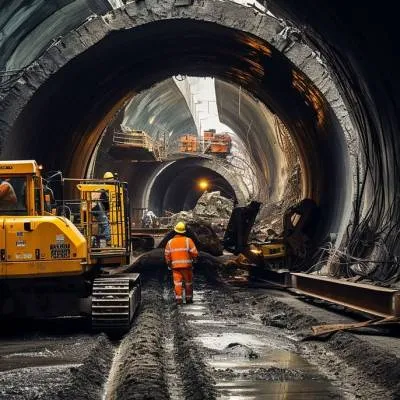
The Union Cabinet has approved Jaipur Metro Phase Two, a 41 km North–South corridor from Prahladpura to Todi Mod comprising 36 stations and including underground works at the airport. The project is sanctioned at a total cost of Rs 130,376.6 million (Rs 130.38 bn) and will be implemented by Rajasthan Metro Rail Corporation Limited, a 50:50 joint venture of the Government of India and the Government of Rajasthan. The scheme will expand the citywide rapid transit network and support sustainable urban mobility.

The Phase Two corridor will provide seamless connectivity to major activity nodes including Sitapura Industrial Area, VKIA and Jaipur Airport, as well as Tonk Road, SMS Hospital and Stadium, Ambabari and Vidhyadhar Nagar. Planned interchanges and feeder systems will integrate the new corridor with the operational Phase One, ensuring a unified and continuous metro network across the city. Underground stations near the airport will support multimodal transfers and passenger convenience.

Jaipur Metro Phase One currently records an average daily ridership of around 60,000 passengers on the shorter but critical 11.64 km corridor with 11 stations, serving the heritage walled city and key residential and commercial districts. Commissioning of Phase Two is expected to generate a manifold increase in patronage, substantially enhancing the share of public transport in Jaipur and reducing dependence on private vehicles. The expanded network is projected to ease peak congestion and improve travel times for commuters.

The project underwent appraisal by inter?ministerial consultation, the Network Planning Group and the Public Investment Board and has an economic internal rate of return above the 14 per cent threshold, indicating strong socio?economic viability. Funding will combine equity from the two governments, subordinate debt and multilateral financing under the Metro Rail Policy, 2017, and the scheme aligns with the Rajasthan transit oriented development policy 2025 and proposed UMTA reforms. Targeted for completion by September 2031, Phase Two is expected to lower emissions, ease traffic congestion and enhance mobility for residents, workers and tourists, reinforcing Jaipur as a modern, future ready city and contributing to Viksit Bharat and Viksit Rajasthan.

The Union Cabinet has approved Jaipur Metro Phase Two, a 41 km North–South corridor from Prahladpura to Todi Mod comprising 36 stations and including underground works at the airport. The project is sanctioned at a total cost of Rs 130,376.6 million (Rs 130.38 bn) and will be implemented by Rajasthan Metro Rail Corporation Limited, a 50:50 joint venture of the Government of India and the Government of Rajasthan. The scheme will expand the citywide rapid transit network and support sustainable urban mobility. The Phase Two corridor will provide seamless connectivity to major activity nodes including Sitapura Industrial Area, VKIA and Jaipur Airport, as well as Tonk Road, SMS Hospital and Stadium, Ambabari and Vidhyadhar Nagar. Planned interchanges and feeder systems will integrate the new corridor with the operational Phase One, ensuring a unified and continuous metro network across the city. Underground stations near the airport will support multimodal transfers and passenger convenience. Jaipur Metro Phase One currently records an average daily ridership of around 60,000 passengers on the shorter but critical 11.64 km corridor with 11 stations, serving the heritage walled city and key residential and commercial districts. Commissioning of Phase Two is expected to generate a manifold increase in patronage, substantially enhancing the share of public transport in Jaipur and reducing dependence on private vehicles. The expanded network is projected to ease peak congestion and improve travel times for commuters. The project underwent appraisal by inter?ministerial consultation, the Network Planning Group and the Public Investment Board and has an economic internal rate of return above the 14 per cent threshold, indicating strong socio?economic viability. Funding will combine equity from the two governments, subordinate debt and multilateral financing under the Metro Rail Policy, 2017, and the scheme aligns with the Rajasthan transit oriented development policy 2025 and proposed UMTA reforms. Targeted for completion by September 2031, Phase Two is expected to lower emissions, ease traffic congestion and enhance mobility for residents, workers and tourists, reinforcing Jaipur as a modern, future ready city and contributing to Viksit Bharat and Viksit Rajasthan.

Next Story
Infrastructure Urban

Mineral Auction Rules Amended To Speed Mine Operationalisation

The Ministry of Mines notified the Mineral (Auction) Second Amendment Rules, 2026 on 30 March 2026 to accelerate operationalisation of mines and improve ease of doing business in the mining sector. The amendment follows a prior change to the Mineral (Auction) Rules, 2015 effected on 17 October 2025 that introduced intermediary timelines between issuance of a letter of intent (LoI) and execution of the mining lease. The 2025 change provided that one per cent of performance security would be appropriated for each month of delay by the preferred bidder and introduced incentives for early operatio..

Next Story
Infrastructure Transport

Indian Railways Strengthens Telecom And AI Safety Systems

Indian Railways strengthened its telecom and digital infrastructure during 2025-26 with the aim of improving safety, operational efficiency and the passenger experience. The programme promoted modernisation through advanced technologies, robust communication systems and passenger-centric solutions. These measures were presented as part of a drive to build a digitally integrated rail ecosystem. A key development was the enhancement of the Internet Protocol Multi-Protocol Label Switching (IP MPLS) backbone, commissioned at 1,396 stations to meet bandwidth needs of mission-critical applications. ..

Next Story
Infrastructure Transport

NHAI Holds Workshop on Litigation Management and Coordination

The National Highways Authority of India (NHAI) organised a day-long workshop in New Delhi to strengthen capacity and interdepartmental synergy for faster execution of national highway projects. The event was held under Mission Karmayogi – Sadhana Saptah, an initiative of the Government of India to enhance governance through capacity building and improved processes. The workshop focused on structured and solution oriented deliberations to address implementation constraints. The session was chaired by the NHAI chairman Santosh Kumar Yadav and brought together senior officials from NHAI, the M..

Advertisement

Subscribe to Our Newsletter

Get daily newsletters around different themes from Construction world.

STAY CONNECTED

Advertisement

Advertisement

Advertisement