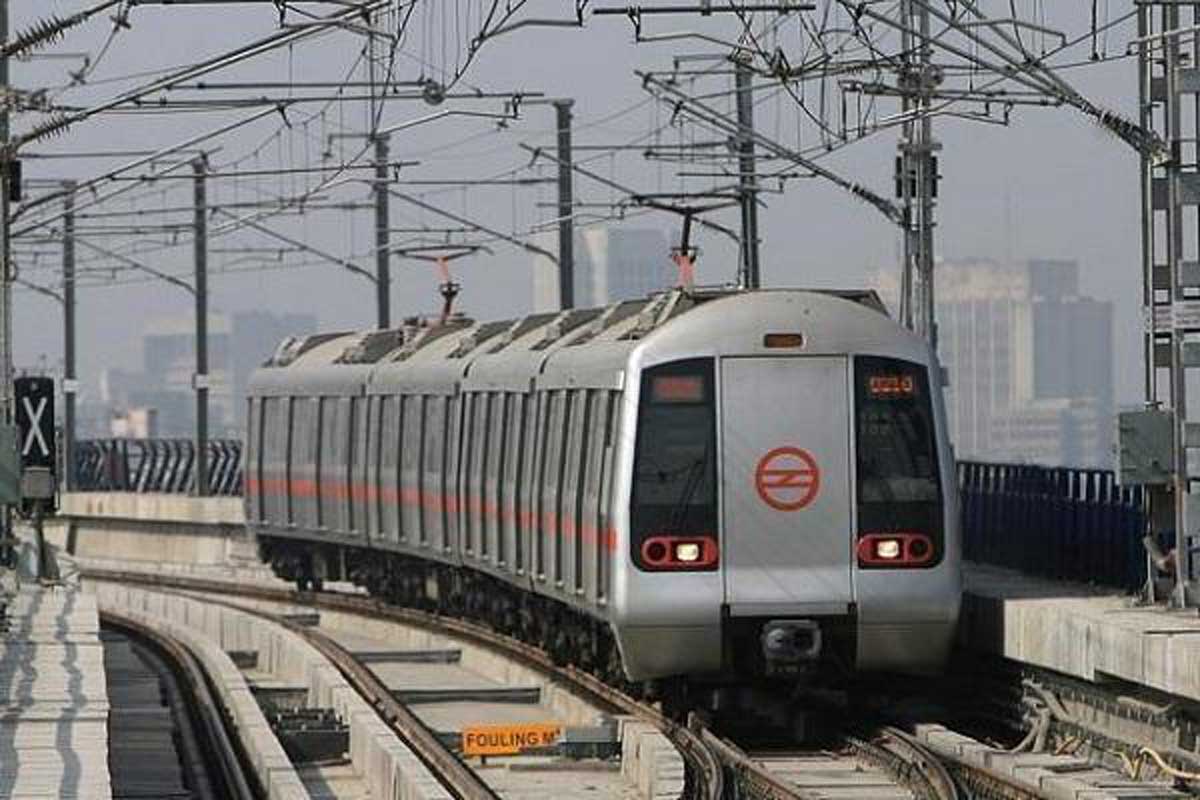
Delhi MRTS Phase IV contract worth €54 million bagged by Alstom
RAILWAYS & METRO RAIL

Delhi MRTS Phase IV contract worth €54 million bagged by Alstom

In order to design, manufacture, deliver, install, test, and commission train-control and signalling solutions for Delhi MRTS Phase-IV from Mukundpur to Maujpur (Line 7 ext.) and Aerocity to Tughlakabad Corridor (Line 10) trains, Alstom has been granted contracts for €54 million. On these lines, Alstom will install its scalable communications-based train control solutions (CBTC), which integrate with its Automatic Train Supervision (ATS) system.

According to estimates, this technique can cut energy use by up to 30%. The capacity, efficacy, dependability, and safety of the metro lines can all be greatly increased by CBTC while the operating costs for the operators are reduced. Alstom is unquestionably a strong market leader in the mass transit industry and the CBTC business. With more than 30 years of experience in radio CBTC, the company has been chosen to build 160 CBTC metro lines, with more than 90 of them now in operation. Currently, Alstom's top-notch signalling technologies are installed on 18 metro lines in India.

With the Delhi Metro, Alstom has a long-standing partnership and has provided the network with more than 800 operating metro vehicles. In November 2022, the business received a contract for the design, manufacturing, procurement, testing, and commissioning of 312 standard gauge metro vehicles for the Delhi Metro Phase IV expansion. Additionally, during Phase I, II, and III, Alstom and DMRC provided and installed train control and signalling systems for the Red Line (L1), Yellow Line (L2), Green Line (L5), Violet Line (L6), and Pink Line (L7).

The present Delhi Metro network includes 286 stations and a length of 391 km. In addition to Gurgaon, Faridabad, Bahadurgarh, and Ballabhgarh in Haryana, Noida, Greater Noida, and Ghaziabad in Uttar Pradesh, the network has now spread outside the city borders of Delhi.

In order to design, manufacture, deliver, install, test, and commission train-control and signalling solutions for Delhi MRTS Phase-IV from Mukundpur to Maujpur (Line 7 ext.) and Aerocity to Tughlakabad Corridor (Line 10) trains, Alstom has been granted contracts for €54 million. On these lines, Alstom will install its scalable communications-based train control solutions (CBTC), which integrate with its Automatic Train Supervision (ATS) system. According to estimates, this technique can cut energy use by up to 30%. The capacity, efficacy, dependability, and safety of the metro lines can all be greatly increased by CBTC while the operating costs for the operators are reduced. Alstom is unquestionably a strong market leader in the mass transit industry and the CBTC business. With more than 30 years of experience in radio CBTC, the company has been chosen to build 160 CBTC metro lines, with more than 90 of them now in operation. Currently, Alstom's top-notch signalling technologies are installed on 18 metro lines in India. With the Delhi Metro, Alstom has a long-standing partnership and has provided the network with more than 800 operating metro vehicles. In November 2022, the business received a contract for the design, manufacturing, procurement, testing, and commissioning of 312 standard gauge metro vehicles for the Delhi Metro Phase IV expansion. Additionally, during Phase I, II, and III, Alstom and DMRC provided and installed train control and signalling systems for the Red Line (L1), Yellow Line (L2), Green Line (L5), Violet Line (L6), and Pink Line (L7). The present Delhi Metro network includes 286 stations and a length of 391 km. In addition to Gurgaon, Faridabad, Bahadurgarh, and Ballabhgarh in Haryana, Noida, Greater Noida, and Ghaziabad in Uttar Pradesh, the network has now spread outside the city borders of Delhi.

Next Story
Real Estate

RBI Rate Cut Boosts Confidence Across Housing Market

Industry Context and Market DynamicsThe real estate industry has welcomed the RBI’s rate cut as a timely boost to affordability and demand. With home prices having risen steadily across major markets, even a marginal reduction in interest rates meaningfully strengthens purchasing power, especially for first-time and mid-income buyers.Ashish Jerath, President – Sales & Marketing, Smartworld Developers, observes:“The RBI’s 25-basis-point cut, bringing the repo rate down to 5.25%, is a timely boost for the real estate sector. Lower interest rates reduce borrowing costs, enabling homeb..

Next Story
Infrastructure Transport

BMC Resumes Rs 170 Billion Road Works, Targets 80 per cent By Jan 2026

Following the withdrawal of the southwest monsoon in October, the Brihanmumbai Municipal Corporation (BMC) has restarted work on 645 roads—covering 297.49 kilometres—under its large-scale concretisation programme. Data shows that more than 60 per cent of the resumed works are located in the western suburbs. Officials said the civic body aims to complete concretisation on 80 per cent of the roads where fresh work has begun by January 2026. Launched in 2022, the Rs 170 billion project seeks to concretise 700 kilometres of roads across Mumbai. All civil works were halted during the monsoon ..

Next Story
Infrastructure Urban

India Pushes Digital Shift In Urban Land Mapping

The Department of Land Resources (DoLR) under the Ministry of Rural Development has convened a National Symposium on NAKSHA – the National Geospatial Knowledge-based Land Survey of Urban Habitations – to advance India’s transition to modern, technology-driven land mapping. Speaking at the inaugural session, Secretary Manoj Joshi underscored the urgent need to move revenue departments away from outdated, tape-based methods and rough hand-drawn sketches. He stressed that adopting latitude–longitude-based digital mapping and GIS-linked registration systems is essential for economic stabi..

Advertisement

Subscribe to Our Newsletter

Get daily newsletters around different themes from Construction world.

STAY CONNECTED

Advertisement

Advertisement

Advertisement

Advertisement

Open In App