DMRC: Delhi to house India's first National Metro Rail Knowledge Centre
RAILWAYS & METRO RAIL

DMRC: Delhi to house India's first National Metro Rail Knowledge Centre

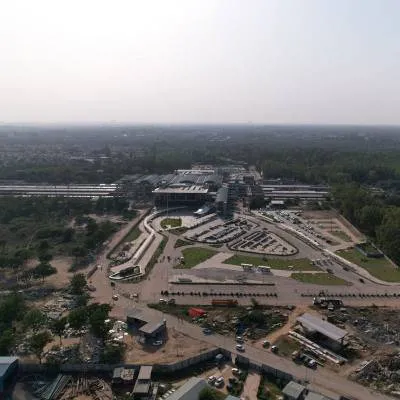
In New Delhi, the creation of the first National Metro Rail Knowledge Centre is underway.

GA Infra has been given the contract by the Delhi Metro Rail Corporation (DMRC) for the facility's design and construction.

Near a projected cost of Rs 460 million, the centre will be built under a public-private partnership (PPP) model and would be located at the Vishwavidyalaya Metro Station in Delhi.

At the Patel Chowk station in Delhi, the DMRC already operates a metro museum where it has technology and models on exhibit that seek to chart the growth of the Delhi Metro from an 8 km network in 2002 to around 390 km across Delhi in 2021.

In order to demonstrate the expansion of the metro networks and transit systems in numerous cities across India, the National Metro Rail Knowledge Centre has been suggested.

The building is intended to serve as a hub for information and innovation for the Indian Metro train networks. It will give all parties involved a platform for dialogue and collaboration.

India's metro rail sector has seen significant growth as a result of the opening of various new metro projects around the country.

Numerous metro projects have been proposed and planned to accommodate the growth of different Indian cities, and they are now in the pipeline.

Various small and big cities in India have successfully integrated the metro into their comprehensive transportation ecosystems thanks to the advent of new technology and metro variants.

This will be a crucial building that serves as a resource centre for the metro's expansion.

The centre's mission is to educate stakeholders and the general public about construction, operations of facilities, and the most recent advances. It will give people a place to network and share their experiences, innovations, and best practices.

The centre will additionally act as a hub for research and development activities. This will give the resources needed for future metro system growth in terms of construction, services, and technological advancements.

Also read:
Kochi Metro second phase work back on track
Metro rail expansion in Hyderabad


In New Delhi, the creation of the first National Metro Rail Knowledge Centre is underway. GA Infra has been given the contract by the Delhi Metro Rail Corporation (DMRC) for the facility's design and construction. Near a projected cost of Rs 460 million, the centre will be built under a public-private partnership (PPP) model and would be located at the Vishwavidyalaya Metro Station in Delhi. At the Patel Chowk station in Delhi, the DMRC already operates a metro museum where it has technology and models on exhibit that seek to chart the growth of the Delhi Metro from an 8 km network in 2002 to around 390 km across Delhi in 2021. In order to demonstrate the expansion of the metro networks and transit systems in numerous cities across India, the National Metro Rail Knowledge Centre has been suggested. The building is intended to serve as a hub for information and innovation for the Indian Metro train networks. It will give all parties involved a platform for dialogue and collaboration. India's metro rail sector has seen significant growth as a result of the opening of various new metro projects around the country. Numerous metro projects have been proposed and planned to accommodate the growth of different Indian cities, and they are now in the pipeline. Various small and big cities in India have successfully integrated the metro into their comprehensive transportation ecosystems thanks to the advent of new technology and metro variants. This will be a crucial building that serves as a resource centre for the metro's expansion. The centre's mission is to educate stakeholders and the general public about construction, operations of facilities, and the most recent advances. It will give people a place to network and share their experiences, innovations, and best practices. The centre will additionally act as a hub for research and development activities. This will give the resources needed for future metro system growth in terms of construction, services, and technological advancements. Also read: Kochi Metro second phase work back on track Metro rail expansion in Hyderabad

Related Stories

Gold Stories

Next Story
Infrastructure Urban

KONE Opens India's First Digital Experience Centre in Pune

KONE, a global elevator and escalator manufacturer, has inaugurated its first Digital Experience Centre (DEC) in India, located in Pune. The facility aims to showcase how artificial intelligence (AI), connectivity and data-driven technologies can enhance customer experiences and improve building operations.The centre was inaugurated by Jussi Herlin, Executive Vice Chair, KONE Corporation; Philippe Delorme, President and CEO, KONE; and Nandan Nilekani, Co-founder and Chairman of the Board, Infosys.Designed as an interactive customer environment, the facility demonstrates digital solutions cover..

Next Story
Infrastructure Urban

CII GreenCo Launches Circularity Guidelines for Indian Industry

The Confederation of Indian Industry (CII) GreenCo Council has launched the CII GreenCo Circularity Guidelines – Pilot Version at the 17th CII GreenCo Waste & Resource Management Summit 2026 in Chennai. The initiative aims to strengthen resource efficiency, waste reduction and circular economy practices across Indian manufacturing and process industries.The guidelines introduce a structured framework with circularity indices covering raw materials, consumables, packaging and other resource inputs. These indicators will help industries assess existing practices, identify opportunities to ..

Next Story
Infrastructure Energy

Global Electronics Association Launches IPC-1783-CO2E Standard

The Global Electronics Association has introduced IPC-1783-CO2E, a new international standard aimed at improving consistency, transparency and comparability in product carbon footprint reporting across the electronics manufacturing industry.The standard, titled International Standard for Data Collection and Reporting of CO2 Equivalent (CO2e) Emissions for the Electronics Manufacturing Supply Chain, provides industry-specific guidance for collecting, estimating and reporting carbon emissions data.With increasing regulatory requirements and customer expectations, electronics manufacturers face c..

Advertisement

Subscribe to Our Newsletter

Get daily newsletters around different themes from Construction world.

STAY CONNECTED

Advertisement

SPECIAL OFFER
QR Code