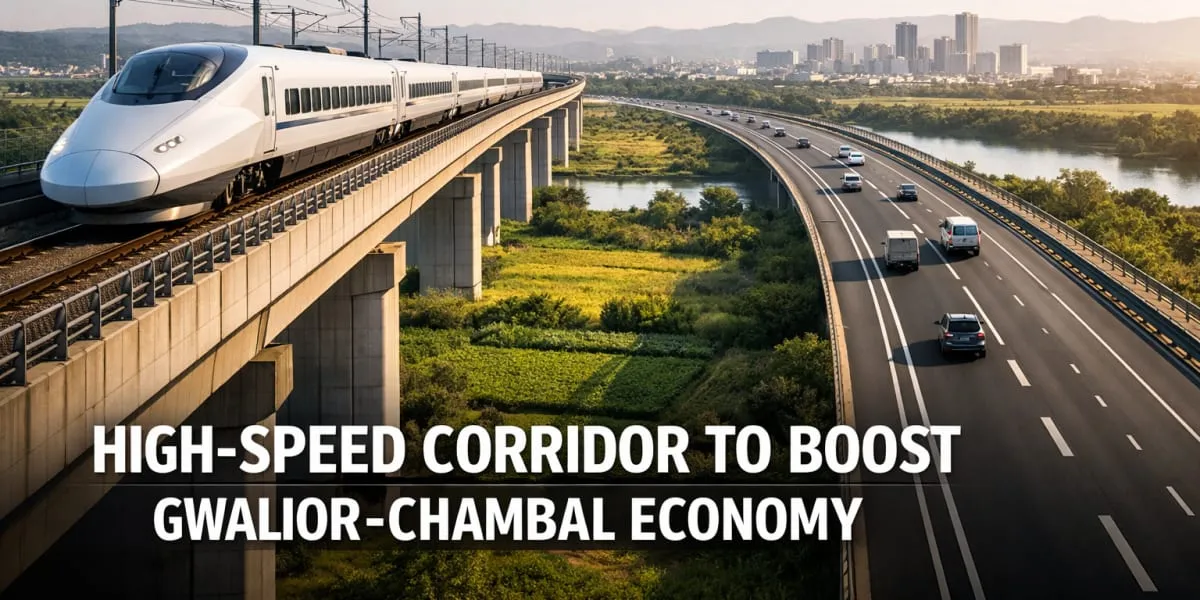
High-Speed Corridor To Boost Gwalior-Chambal Economy
RAILWAYS & METRO RAIL

High-Speed Corridor To Boost Gwalior-Chambal Economy

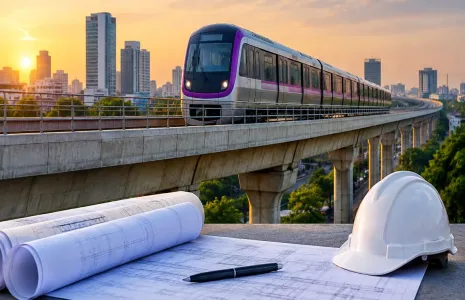
On nine April 2026 in New Delhi, Scindia, the minister for civil aviation and steel, said the proposed high-speed corridor would strengthen connectivity across the Gwalior-Chambal region and act as a catalyst for economic development. He noted that improved transport links were expected to reduce travel times between urban centres and rural hinterlands and to facilitate movement of goods and people. The announcement reiterated government commitment to infrastructure investment in the region and he indicated that the corridor would connect manufacturing clusters and agricultural zones, creating market linkages and reducing logistics costs.

Officials outlined that the corridor would link key towns and enhance integration with national transport networks, supporting industrial expansion and tourism. Local administrations were described as preparing to coordinate land acquisition, environmental clearances and resettlement plans to ensure timely implementation. The scheme was presented as aligned with broader regional development strategies and planners also pointed to expected improvements in freight throughput and last mile road connections to complement rail services.

Economic analysts highlighted that better rail connectivity typically attracts businesses seeking access to markets and labour and can stimulate ancillary services along the route. They cautioned that benefits would depend on project execution, last mile connectivity and complementary investments in skill development and logistics. The minister emphasised the need for close monitoring and inter-agency collaboration to maximise socio-economic returns and analysts asked for transparent timelines and clear indicators for social inclusion, environmental safeguards and private sector participation to assess impact.

Community leaders welcomed the proposal while urging safeguards for livelihoods and environmental sustainability during construction. The project timeline and detailed financing arrangements were expected to be disclosed as plans advance and approvals are secured. Stakeholders were said to be optimistic that the corridor would deliver long-term connectivity gains and support balanced regional growth and residents sought assurances on compensation and employment opportunities during the construction phase.

On nine April 2026 in New Delhi, Scindia, the minister for civil aviation and steel, said the proposed high-speed corridor would strengthen connectivity across the Gwalior-Chambal region and act as a catalyst for economic development. He noted that improved transport links were expected to reduce travel times between urban centres and rural hinterlands and to facilitate movement of goods and people. The announcement reiterated government commitment to infrastructure investment in the region and he indicated that the corridor would connect manufacturing clusters and agricultural zones, creating market linkages and reducing logistics costs. Officials outlined that the corridor would link key towns and enhance integration with national transport networks, supporting industrial expansion and tourism. Local administrations were described as preparing to coordinate land acquisition, environmental clearances and resettlement plans to ensure timely implementation. The scheme was presented as aligned with broader regional development strategies and planners also pointed to expected improvements in freight throughput and last mile road connections to complement rail services. Economic analysts highlighted that better rail connectivity typically attracts businesses seeking access to markets and labour and can stimulate ancillary services along the route. They cautioned that benefits would depend on project execution, last mile connectivity and complementary investments in skill development and logistics. The minister emphasised the need for close monitoring and inter-agency collaboration to maximise socio-economic returns and analysts asked for transparent timelines and clear indicators for social inclusion, environmental safeguards and private sector participation to assess impact. Community leaders welcomed the proposal while urging safeguards for livelihoods and environmental sustainability during construction. The project timeline and detailed financing arrangements were expected to be disclosed as plans advance and approvals are secured. Stakeholders were said to be optimistic that the corridor would deliver long-term connectivity gains and support balanced regional growth and residents sought assurances on compensation and employment opportunities during the construction phase.

Next Story
Real Estate

Nila Spaces Lists VIDA on Alt DRX, Enables Fractional Ownership

Nila Spaces has listed its GIFT City residential project VIDA on Alt DRX, marking the first tokenised asset under the platform’s “Gujarat Tri-City Investment Opportunity.” The move enables retail investors to participate in premium real estate across Ahmedabad, Gandhinagar and GIFT City starting from the equivalent of 1 sq ft ownership.The initiative aims to address traditional barriers in residential real estate investment, including high entry costs, low liquidity and lengthy transaction cycles. By enabling fractional ownership, the model reduces entry thresholds from Rs 7.5 million–..

Next Story
Real Estate

Mindspace REIT Reports Strong FY26 Performance

Mindspace Business Parks REIT reported a strong performance for Q4 FY26 and FY26, supported by robust leasing activity, rising occupancy and improved financial metrics across its portfolio.Portfolio committed occupancy increased by 1.2 per cent QoQ to 95.7 per cent, while the REIT achieved gross leasing of 3.5 million sq ft in Q4 FY26 and 7.1 million sq ft for the full year. Pre-leasing remained strong, with nearly 2.0 million sq ft secured at Mindspace Madhapur, Hyderabad, reflecting sustained demand from global occupiers.Revenue from operations rose 31.0 per cent YoY to Rs 8.88 billion in Q4..

Next Story
Infrastructure Urban

MMRDA Allocates BKC Land for Health, Education Projects

The Mumbai Metropolitan Region Development Authority (MMRDA) has allocated land parcels at Bandra-Kurla Complex (BKC) to healthcare and education institutions, with a total investment exceeding Rs 5.8 billion, as per updates shared on its official social media handles.A 10,026.44 sq m (2.5-acre) plot in the G-Block has been allotted to Jupiter Lifeline Hospitals through a bidding process. The project, with a construction potential of 20,052.88 sq m, has secured a bid of around Rs 3.54 billion and will house a multi-specialty hospital.Additionally, a 5,117.85 sq m plot has been allotted to D. Y..

Advertisement

Subscribe to Our Newsletter

Get daily newsletters around different themes from Construction world.

STAY CONNECTED

Advertisement

Advertisement

Advertisement