Union Cabinet Approves Small Hydro Power Development Scheme
POWER & RENEWABLE ENERGY

Union Cabinet Approves Small Hydro Power Development Scheme

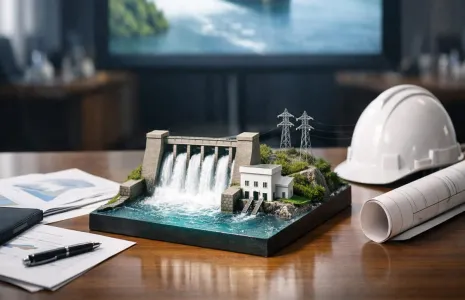
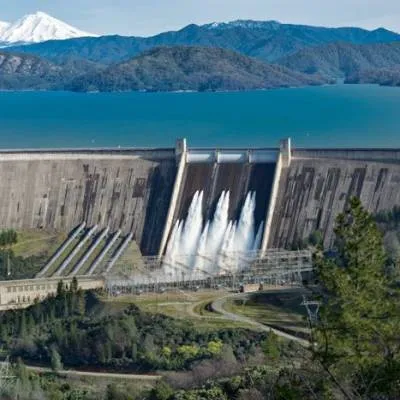
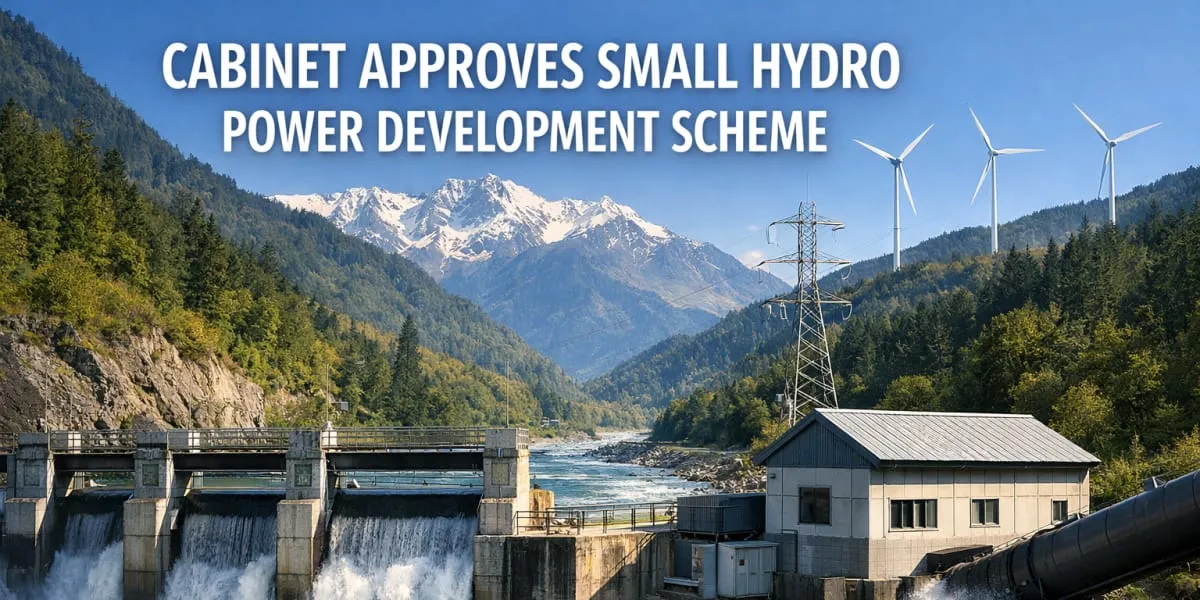
The Union Cabinet has approved the Small Hydro Power Development Scheme to support small hydropower projects of one to 25 megawatt (MW) capacity, with a focus on hilly and North Eastern states. The scheme runs from FY2026–27 to FY2030–31 and carries an outlay of Rs25.846 billion (bn). It aims to unlock around 1,500 MW of new small hydropower capacity and to bolster decentralised, round-the-clock electricity provision in remote areas.

India has harnessed about 5,171 MW of small hydropower against an estimated potential of 21,133.61 MW, leaving over 15,960 MW to be developed. The scheme is expected to attract investments of roughly Rs150 bn and to generate 5.1 million (mn) person-days of employment during the construction phase. Support for indigenous plant and machinery is intended to strengthen domestic supply chains and contribute to the Atmanirbhar Bharat vision.

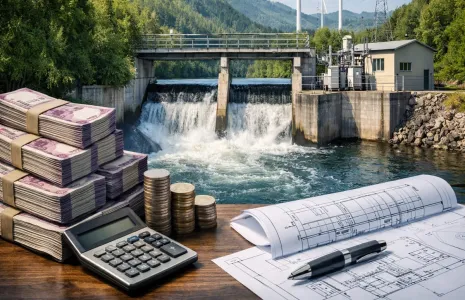
Financial incentives include assistance to North Eastern states and international border districts of Rs36 million (mn) per MW or 30 per cent of project cost, subject to a ceiling of Rs 300 million per project. Other locations will receive Rs 24 mn per MW or 20 per cent of cost, capped at Rs 200 mn per project. A separate allocation of Rs 300 mn will support the preparation of detailed project reports for at least 200 projects.

Regional potential is broadly distributed: the Northern region accounts for 7,978 MW, the Southern region for 5,490 MW, the North-Eastern region for 3,262 MW, the Western region for 2,963 MW and the Eastern region for 1,440 MW. States such as Himachal Pradesh, Uttarakhand and Karnataka figure prominently in their respective regions. The distribution allows tailored strategies, with some regions ready for quicker deployment owing to stronger infrastructure.

The scheme is designed to combine targeted financial support, streamlined procedures and project readiness measures to accelerate deployment in challenging terrains. Small hydropower offers a low ecological footprint, limited land requirement and long operational life, making it a viable tool for inclusive rural development. By enhancing grid resilience and local energy access, the programme is positioned to support sustainable and self-reliant energy growth.

The Union Cabinet has approved the Small Hydro Power Development Scheme to support small hydropower projects of one to 25 megawatt (MW) capacity, with a focus on hilly and North Eastern states. The scheme runs from FY2026–27 to FY2030–31 and carries an outlay of Rs25.846 billion (bn). It aims to unlock around 1,500 MW of new small hydropower capacity and to bolster decentralised, round-the-clock electricity provision in remote areas. India has harnessed about 5,171 MW of small hydropower against an estimated potential of 21,133.61 MW, leaving over 15,960 MW to be developed. The scheme is expected to attract investments of roughly Rs150 bn and to generate 5.1 million (mn) person-days of employment during the construction phase. Support for indigenous plant and machinery is intended to strengthen domestic supply chains and contribute to the Atmanirbhar Bharat vision. Financial incentives include assistance to North Eastern states and international border districts of Rs36 million (mn) per MW or 30 per cent of project cost, subject to a ceiling of Rs 300 million per project. Other locations will receive Rs 24 mn per MW or 20 per cent of cost, capped at Rs 200 mn per project. A separate allocation of Rs 300 mn will support the preparation of detailed project reports for at least 200 projects. Regional potential is broadly distributed: the Northern region accounts for 7,978 MW, the Southern region for 5,490 MW, the North-Eastern region for 3,262 MW, the Western region for 2,963 MW and the Eastern region for 1,440 MW. States such as Himachal Pradesh, Uttarakhand and Karnataka figure prominently in their respective regions. The distribution allows tailored strategies, with some regions ready for quicker deployment owing to stronger infrastructure. The scheme is designed to combine targeted financial support, streamlined procedures and project readiness measures to accelerate deployment in challenging terrains. Small hydropower offers a low ecological footprint, limited land requirement and long operational life, making it a viable tool for inclusive rural development. By enhancing grid resilience and local energy access, the programme is positioned to support sustainable and self-reliant energy growth.

Next Story
Infrastructure Urban

MoCA Releases Second Phase FTO Rankings to Strengthen Pilot Training

Ministry of Civil Aviation (MoCA) under Minister Ram Mohan Naidu released the second phase ranking of Directorate General of Civil Aviation (DGCA) approved Flying Training Organisations (FTOs) in April 2026. The framework was developed under the minister's guidance to standardise the evaluation of training institutions. The initiative aims to create a transparent, performance-driven system for pilot training across India. The data-driven framework compiled by the Directorate General of Civil Aviation ensures objective comparison and continuous monitoring of FTO performance with emphasis on saf..

Next Story
Infrastructure Urban

Centre Offers Financial Incentives For State Mining Reforms

The Centre has incorporated a financial incentive mechanism with an outlay of Rs 50,000 mn into the Scheme for Special Assistance to States for Capital Investment (SASCI) for the financial year 2026-27. The Ministry of Mines, acting as the nodal ministry, has issued operational guidelines for the new scheme component. The measure follows the perceived success of the previous fiscal year and aims to promote mining sector reforms across States and union territories with legislatures. The incentives are intended to expedite operationalisation of mines and to boost mineral production and state rev..

Next Story
Technology

India Netherlands Relations Move Towards Stronger Strategic Partnership

At the Dutch Embassy in Chanakyapuri, New Delhi, the Union Minister of State with independent charge of Science and Technology and Earth Sciences and minister in the Prime Minister's Office, Dr Jitendra Singh, attended the Netherlands National Day celebration as the chief guest. He noted that India and the Netherlands share an enduring relationship that is steadily progressing towards a stronger strategic partnership. The minister highlighted the event as a platform to reaffirm bilateral ties. He outlined that the partnership encompasses key sectors such as water management, agriculture and hi..

Advertisement

Subscribe to Our Newsletter

Get daily newsletters around different themes from Construction world.

STAY CONNECTED

Advertisement

Advertisement

Advertisement