+
India's power sector seeks increased coal transports
RAILWAYS & METRO RAIL

India's power sector seeks increased coal transports

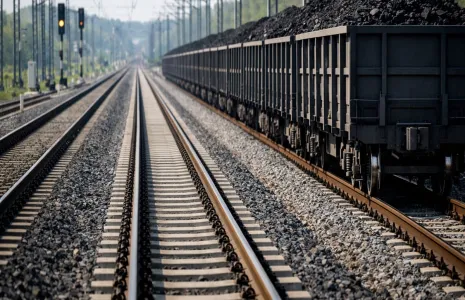
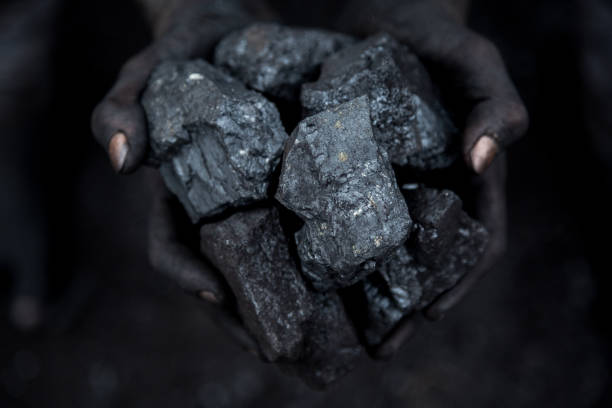
The Indian power utilities struggle with dwindling coal supplies when the power demand has augmented. The government is facing a problem as it is not able to increase the number of railway rakes significantly for coal transportation to power units as it would affect the supply chain of other sectors that witness a pick-up in demand.

As of April 18, in total 81 of 150 power plants that run on domestic coal consisted of critically low coal levels. Also, many of them cited the lack of rakes as a key reason. Additionally, 11 imported coal-based power plants also had critical levels of coal.

In the past three years, power consumption was the same so the production of Coal India did not increase and did not hurt.

However in FY22, the consumption of coal increased by 8%, and production of Coal India has not grown significantly to address that. There is another problem of a severe shortage of rakes available. As much as 60 million tonne of coal lies with Coal India which cannot be transported.

An inter-ministerial sub-group currently monitors the coal situation closely since several states have been forced to undertake power cuts, this situation is likely to make the summer worse as the heat increases. The ministries of coal and power sought help from the Ministry of Railways to manufacture more rakes available to transport coal, however, the railways face the challenge of diverting more capacity towards the power sector without disrupting the supply chain for other sectors.

Image Source

Also read: CIL increases coal supply by 5.57% to thermal power stations

The Indian power utilities struggle with dwindling coal supplies when the power demand has augmented. The government is facing a problem as it is not able to increase the number of railway rakes significantly for coal transportation to power units as it would affect the supply chain of other sectors that witness a pick-up in demand. As of April 18, in total 81 of 150 power plants that run on domestic coal consisted of critically low coal levels. Also, many of them cited the lack of rakes as a key reason. Additionally, 11 imported coal-based power plants also had critical levels of coal. In the past three years, power consumption was the same so the production of Coal India did not increase and did not hurt. However in FY22, the consumption of coal increased by 8%, and production of Coal India has not grown significantly to address that. There is another problem of a severe shortage of rakes available. As much as 60 million tonne of coal lies with Coal India which cannot be transported. An inter-ministerial sub-group currently monitors the coal situation closely since several states have been forced to undertake power cuts, this situation is likely to make the summer worse as the heat increases. The ministries of coal and power sought help from the Ministry of Railways to manufacture more rakes available to transport coal, however, the railways face the challenge of diverting more capacity towards the power sector without disrupting the supply chain for other sectors. Image Source Also read: CIL increases coal supply by 5.57% to thermal power stations

Next Story
Infrastructure Urban

Implementation Status of Jal Jeevan Mission

Since August 2019 the Government has implemented Jal Jeevan Mission to provide assured potable water through household tap connections in rural India. At the start of the mission only 32.3 million (mn) rural households, representing 16.7 per cent, were reported to have tap water connections. States and union territories have reported that 125.8 mn additional rural households have since been provided with tap connections. As a result, of about 193.6 mn rural households roughly 158.2 mn, or 81.71 per cent, are reported to have tap water supply at home.\n\nThe State, district and village level st..

Next Story
Infrastructure Urban

Jal Jeevan Mission Reaches Eighty One Per Cent Rural Coverage

The Government reported substantial progress under the Jal Jeevan Mission, launched in August 2019 to provide tap water to every rural household. At launch only 32.3 million (mn) rural households had tap connections and states and Union territories reported provision of 125.8 mn additional households by March 2026. Consequently, out of about 193.6 mn rural households around 158.2 mn, or 81.71 per cent, are reported to have tap water at home. The Finance Minister announced extension of the mission until 2028 in the 2025-26 budget speech. The Swachh Bharat Mission Grameen, launched in October 20..

Next Story
Infrastructure Urban

Empowering Local Governance for Sustainable Rural Water Supply

The Ministry of Jal Shakti has aligned the Jal Jeevan Mission (JJM) with the 73rd Amendment to strengthen village level planning and community ownership of water supply. Gram Panchayats, village water and sanitation committees and Pani Samitis are to plan, implement, manage and maintain piped water systems, with gram sabha processes formalising handover and oversight. Implementation support agencies including non government organisations, community based organisations and self help groups have been empanelled to train local committees and promote women participation. Under JJM, the department ..

Advertisement

Subscribe to Our Newsletter

Get daily newsletters around different themes from Construction world.

STAY CONNECTED

Advertisement

Advertisement

Advertisement