Indian Railways' 100-Day Plan: Super App, Vande Bharat Trains, and More
RAILWAYS & METRO RAIL

Indian Railways' 100-Day Plan: Super App, Vande Bharat Trains, and More

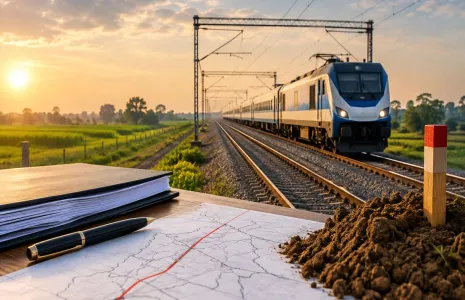
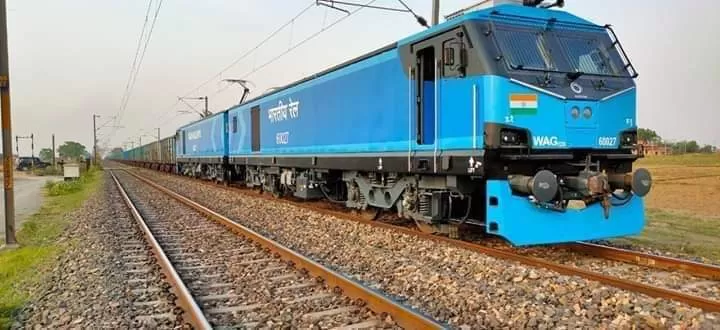
Indian Railways has announced an ambitious 100-day plan post-elections 2024, focusing on a slew of passenger-friendly measures and infrastructure development projects. According to government officials, the plan includes the introduction of a 24-hour ticket refund scheme, the launch of a comprehensive 'super App' for railway facilities, and the rollout of three economic corridors.

Under the new ticket refund scheme, passengers can expect refunds within 24 hours, a significant improvement over the current process which takes up to one week. The upcoming 'super App' will provide a one-stop solution for all railway-related services, including ticket booking, live train tracking, and food bookings on trains.

As part of the 100-day agenda, Indian Railways will also implement an insurance scheme for all rail passengers, known as the "PM Rail Yatri Bima Yojana". The modernization plan entails an investment of Rs 10 to 12 lakh crore over the next five years, aimed at transforming Railways with world-class facilities.

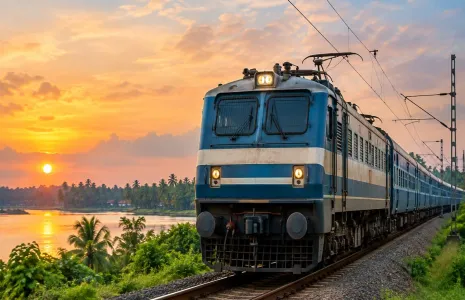
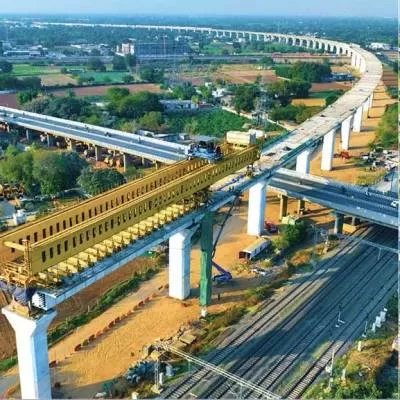
Vande Bharat trains, known for their speed and comfort, will be expanded across India in three categories: Vande metro for short routes, Vande chair car for medium routes, and Vande Sleeper for longer routes. Additionally, plans are underway to operationalize the Ahmedabad-Mumbai bullet train by April 2029, with feasibility studies for three more bullet train projects in North, South, and East India.

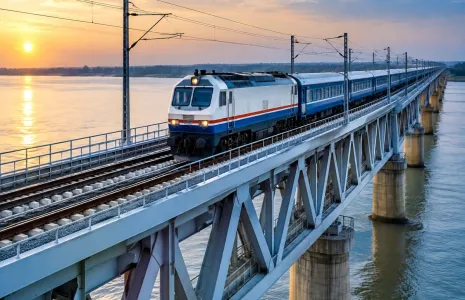
Furthermore, Indian Railways is set to develop three economic corridors spanning over 40,000 kms, with an investment exceeding Rs 10 lakh crore. Over 1,300 railway stations will undergo modernization with private participation, offering world-class amenities such as shopping malls and airport-like waiting lounges.

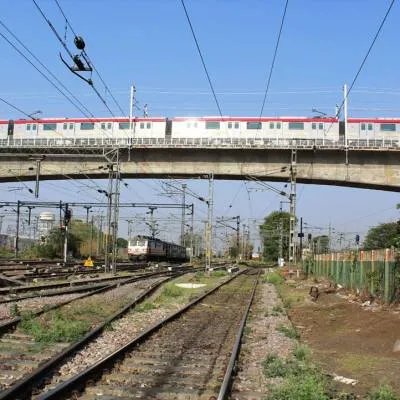
Metro networks will witness expansion in more urban cities, with work already initiated in 20 urban centers. Moreover, high-frequency trains like the RAPID rail, including the Delhi-Meerut route, are in the pipeline for enhanced connectivity.

The announcement came during a meeting chaired by the cabinet secretary, where different ministries and departments presented their 100-day agenda after the formation of the new government. Indian Railways' comprehensive plan aims to revolutionize the passenger experience and modernize the country's railway infrastructure for the future.

Indian Railways has announced an ambitious 100-day plan post-elections 2024, focusing on a slew of passenger-friendly measures and infrastructure development projects. According to government officials, the plan includes the introduction of a 24-hour ticket refund scheme, the launch of a comprehensive 'super App' for railway facilities, and the rollout of three economic corridors. Under the new ticket refund scheme, passengers can expect refunds within 24 hours, a significant improvement over the current process which takes up to one week. The upcoming 'super App' will provide a one-stop solution for all railway-related services, including ticket booking, live train tracking, and food bookings on trains. As part of the 100-day agenda, Indian Railways will also implement an insurance scheme for all rail passengers, known as the PM Rail Yatri Bima Yojana. The modernization plan entails an investment of Rs 10 to 12 lakh crore over the next five years, aimed at transforming Railways with world-class facilities. Vande Bharat trains, known for their speed and comfort, will be expanded across India in three categories: Vande metro for short routes, Vande chair car for medium routes, and Vande Sleeper for longer routes. Additionally, plans are underway to operationalize the Ahmedabad-Mumbai bullet train by April 2029, with feasibility studies for three more bullet train projects in North, South, and East India. Furthermore, Indian Railways is set to develop three economic corridors spanning over 40,000 kms, with an investment exceeding Rs 10 lakh crore. Over 1,300 railway stations will undergo modernization with private participation, offering world-class amenities such as shopping malls and airport-like waiting lounges. Metro networks will witness expansion in more urban cities, with work already initiated in 20 urban centers. Moreover, high-frequency trains like the RAPID rail, including the Delhi-Meerut route, are in the pipeline for enhanced connectivity. The announcement came during a meeting chaired by the cabinet secretary, where different ministries and departments presented their 100-day agenda after the formation of the new government. Indian Railways' comprehensive plan aims to revolutionize the passenger experience and modernize the country's railway infrastructure for the future.

Related Stories

Gold Stories

Next Story
Infrastructure Urban

KONE Opens India's First Digital Experience Centre in Pune

KONE, a global elevator and escalator manufacturer, has inaugurated its first Digital Experience Centre (DEC) in India, located in Pune. The facility aims to showcase how artificial intelligence (AI), connectivity and data-driven technologies can enhance customer experiences and improve building operations.The centre was inaugurated by Jussi Herlin, Executive Vice Chair, KONE Corporation; Philippe Delorme, President and CEO, KONE; and Nandan Nilekani, Co-founder and Chairman of the Board, Infosys.Designed as an interactive customer environment, the facility demonstrates digital solutions cover..

Next Story
Infrastructure Urban

CII GreenCo Launches Circularity Guidelines for Indian Industry

The Confederation of Indian Industry (CII) GreenCo Council has launched the CII GreenCo Circularity Guidelines – Pilot Version at the 17th CII GreenCo Waste & Resource Management Summit 2026 in Chennai. The initiative aims to strengthen resource efficiency, waste reduction and circular economy practices across Indian manufacturing and process industries.The guidelines introduce a structured framework with circularity indices covering raw materials, consumables, packaging and other resource inputs. These indicators will help industries assess existing practices, identify opportunities to ..

Next Story
Infrastructure Energy

Global Electronics Association Launches IPC-1783-CO2E Standard

The Global Electronics Association has introduced IPC-1783-CO2E, a new international standard aimed at improving consistency, transparency and comparability in product carbon footprint reporting across the electronics manufacturing industry.The standard, titled International Standard for Data Collection and Reporting of CO2 Equivalent (CO2e) Emissions for the Electronics Manufacturing Supply Chain, provides industry-specific guidance for collecting, estimating and reporting carbon emissions data.With increasing regulatory requirements and customer expectations, electronics manufacturers face c..

Advertisement

Subscribe to Our Newsletter

Get daily newsletters around different themes from Construction world.

STAY CONNECTED

Advertisement

SPECIAL OFFER
QR Code