Indian Railways Commissions Kavach on Prayagraj-Kanpur Section
RAILWAYS & METRO RAIL

Indian Railways Commissions Kavach on Prayagraj-Kanpur Section

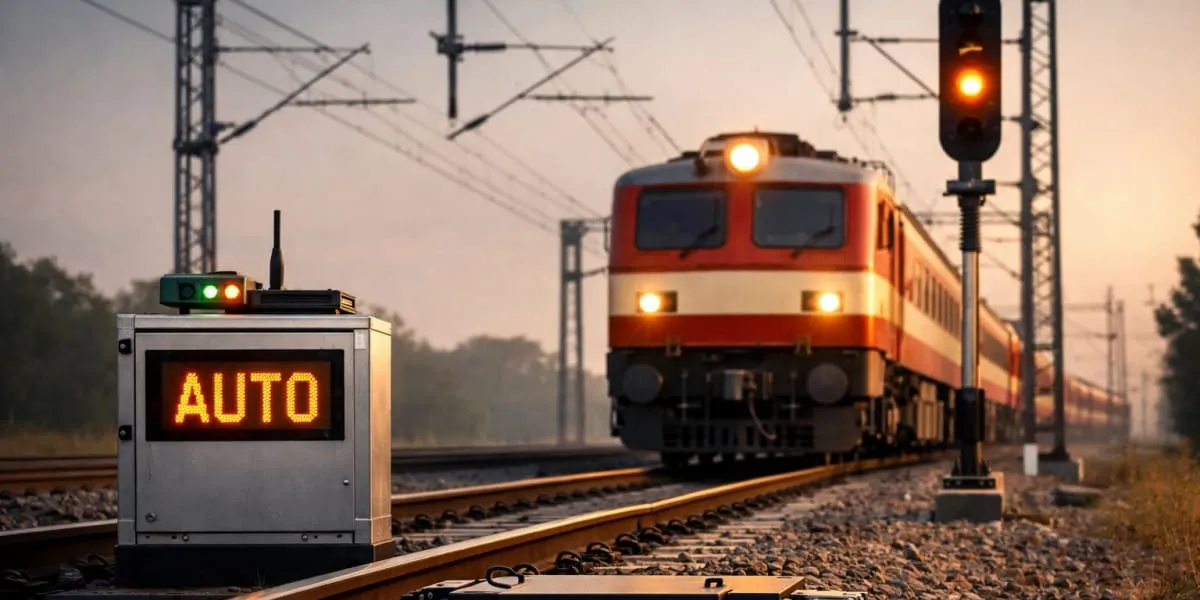
Indian Railways has commissioned the Kavach Automatic Train Protection system on the Prayagraj (excluding) - Kanpur (excluding) section, covering 190 route kilometres of the Delhi–Howrah high-density corridor on 22 March 2026. The deployment was validated through trials and the system was implemented via train number 14163, with senior officers and divisional heads undertaking a footplate inspection to assess performance. The step is intended to enhance safety and operational efficiency on one of Indian Railways' most vital corridors.

In the first phase, Kavach will be enabled on eight pairs of trains including train numbers 14113/14114, 14163/14164, 12307/12308 and 12417/12418, and additional services such as Vande Bharat rakes will be progressively included. The commissioning forms part of measures to permit running trains at 160 kmph and to modernise signalling and train protection infrastructure under Mission Raftaar. Passenger services such as train number 15003/15004 underwent passenger trials which demonstrated consistent and reliable performance in regular service.

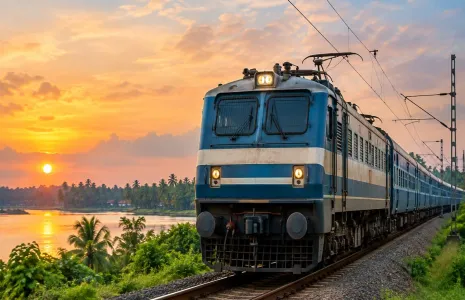
Extensive trials were conducted with WAP-seven locomotives hauling eight, 16 and 22 LHB coach formations and with a 20-coach Vande Bharat rake to ensure system reliability under varied operational conditions. More than 20,000 kilometres of passenger trial runs have been completed with all system validations found satisfactory, and the prior commissioning of Kavach Version four point zero covered 1,452 route kilometres on the high-density Delhi–Mumbai and Delhi–Howrah routes. The WAP-seven locomotive, a high-performance electric locomotive used for premium passenger services, featured in the validation runs.

Kavach, an indigenously developed automatic train protection system under the Make in India initiative, provides automatic train protection, prevents signal passing at danger and enables automatic brake application in case of human error, thereby strengthening the safety framework. The system will be extended next to the Ghaziabad-Tundla section to support 160 kmph operations as part of ongoing efforts to modernise and improve reliability for passengers. Indian Railways said progressive deployment across the network will continue to prioritise safety and efficiency.

Indian Railways has commissioned the Kavach Automatic Train Protection system on the Prayagraj (excluding) - Kanpur (excluding) section, covering 190 route kilometres of the Delhi–Howrah high-density corridor on 22 March 2026. The deployment was validated through trials and the system was implemented via train number 14163, with senior officers and divisional heads undertaking a footplate inspection to assess performance. The step is intended to enhance safety and operational efficiency on one of Indian Railways' most vital corridors. In the first phase, Kavach will be enabled on eight pairs of trains including train numbers 14113/14114, 14163/14164, 12307/12308 and 12417/12418, and additional services such as Vande Bharat rakes will be progressively included. The commissioning forms part of measures to permit running trains at 160 kmph and to modernise signalling and train protection infrastructure under Mission Raftaar. Passenger services such as train number 15003/15004 underwent passenger trials which demonstrated consistent and reliable performance in regular service. Extensive trials were conducted with WAP-seven locomotives hauling eight, 16 and 22 LHB coach formations and with a 20-coach Vande Bharat rake to ensure system reliability under varied operational conditions. More than 20,000 kilometres of passenger trial runs have been completed with all system validations found satisfactory, and the prior commissioning of Kavach Version four point zero covered 1,452 route kilometres on the high-density Delhi–Mumbai and Delhi–Howrah routes. The WAP-seven locomotive, a high-performance electric locomotive used for premium passenger services, featured in the validation runs. Kavach, an indigenously developed automatic train protection system under the Make in India initiative, provides automatic train protection, prevents signal passing at danger and enables automatic brake application in case of human error, thereby strengthening the safety framework. The system will be extended next to the Ghaziabad-Tundla section to support 160 kmph operations as part of ongoing efforts to modernise and improve reliability for passengers. Indian Railways said progressive deployment across the network will continue to prioritise safety and efficiency.

Next Story
Infrastructure Transport

The Critical Path

In Ircon International Ltd v. Afcons Infrastructure Ltd, OMP (Comm) 279/2019, the Delhi High Court examined how delay and extension of time (‘EOT’) are to be assessed in construction contracts, particularly in the context of the ‘critical path’ while dealing with challenge to an arbitral award under Section 34 of the Arbitration and Conciliation Act 1996 (‘the Act’). The High Court’s observations regarding the critical path are of significant import for construction and infrastructure projects and related arbitration. The parties entered into a contract for construction of T..

Next Story
Infrastructure Urban

Urgently Wanted: 2 Million Workers!

Construction, India’s second largest employer by industry, employs about 50 million workers but could additionally absorb another 40 million workers, according to estimates shared by the Construction Skill Development Council of India (CSDCI) in 2023. Within this, citing trade estimates, Rahul Bahl, Managing Director, Krishna Buildestates, says the shortage of trained, skilled workers is currently about 2 million, and is expected to rise to 5 million by 2030.Not only is the construction industry struggling to find workers but construction labour productivity in India significantly trails g..

Next Story
Real Estate

144 Years in the Making!

1. A century-spanning construction storyConstruction began in 1882, making the Sagrada Família one of the longest-running architectural projects in modern history. Today, the project is overseen by the Fundació Junta Constructora del Temple Expiatori de la Sagrada Família, with Chief Architect Jordi Faulí leading its final construction phases.2. The world’s tallest church towerhe Sagrada Família in Barcelona reached its final height of 172.5 m (566 ft) on February 20, 2026, with the installation of the cross atop the Tower of Jesus Christ, making it the tallest church in the world...To ..

Advertisement

Subscribe to Our Newsletter

Get daily newsletters around different themes from Construction world.

STAY CONNECTED

Advertisement

Advertisement

Advertisement