Indian Railways Plans Integrated Upgrade for Varanasi Stations
RAILWAYS & METRO RAIL

Indian Railways Plans Integrated Upgrade for Varanasi Stations

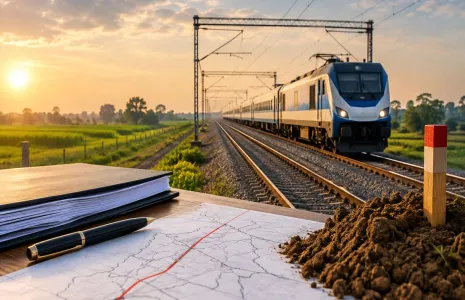
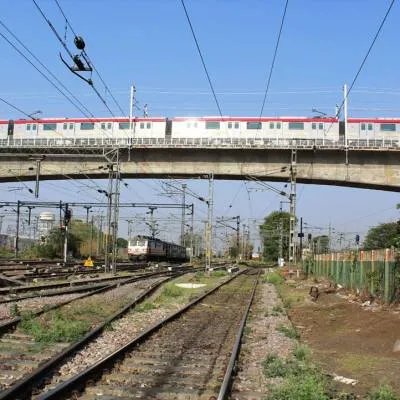
Indian Railways (IR) is formulating a master plan for the integrated development of Varanasi’s three key stations – Kashi, Varanasi Cantt, and Banaras – to enhance operational capacity and passenger convenience. The initiative aims to increase train departure capacity by about 25 per cent, improving connectivity across Uttar Pradesh and beyond.

Railway Minister Ashwini Vaishnaw, who was in the city for Prime Minister Narendra Modi’s flag-off of four new Vande Bharat Express trains, inspected all three stations to review ongoing works and passenger-amenity upgrades. Currently, around 150 trains operate from the three stations daily.

Satish Kumar, Railway Board Chairperson and CEO also reviewed the progress at Varanasi Railway Station, holding discussions with senior officials on construction timelines and integrated planning.

Minister Reviews Banaras Rail Engine Factory

Following the station inspections, Vaishnaw visited the Banaras Rail Engine Factory (BARECA) to assess the Loco Frame, Assembly, and Test Shops, gathering technical details on locomotive production.

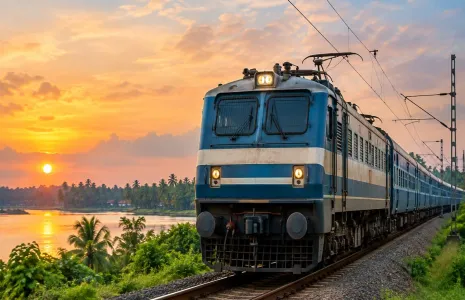
Earlier in the day, the Prime Minister launched four Vande Bharat Express trains – Banaras–Khajuraho, Lucknow–Saharanpur, Firozpur–Delhi, and Ernakulam–Bengaluru – marking another milestone in India’s modern-rail expansion. With these additions, the country now operates 164 Vande Bharat services, designed to reduce travel time, enhance regional mobility, and boost tourism and economic growth.


Indian Railways (IR) is formulating a master plan for the integrated development of Varanasi’s three key stations – Kashi, Varanasi Cantt, and Banaras – to enhance operational capacity and passenger convenience. The initiative aims to increase train departure capacity by about 25 per cent, improving connectivity across Uttar Pradesh and beyond.Railway Minister Ashwini Vaishnaw, who was in the city for Prime Minister Narendra Modi’s flag-off of four new Vande Bharat Express trains, inspected all three stations to review ongoing works and passenger-amenity upgrades. Currently, around 150 trains operate from the three stations daily.Satish Kumar, Railway Board Chairperson and CEO also reviewed the progress at Varanasi Railway Station, holding discussions with senior officials on construction timelines and integrated planning.Minister Reviews Banaras Rail Engine FactoryFollowing the station inspections, Vaishnaw visited the Banaras Rail Engine Factory (BARECA) to assess the Loco Frame, Assembly, and Test Shops, gathering technical details on locomotive production.Earlier in the day, the Prime Minister launched four Vande Bharat Express trains – Banaras–Khajuraho, Lucknow–Saharanpur, Firozpur–Delhi, and Ernakulam–Bengaluru – marking another milestone in India’s modern-rail expansion. With these additions, the country now operates 164 Vande Bharat services, designed to reduce travel time, enhance regional mobility, and boost tourism and economic growth.                                                                                                                                              

Next Story
Infrastructure Transport

MMRDA advances 250 m on Orange Gate–Marine Drive tunnel

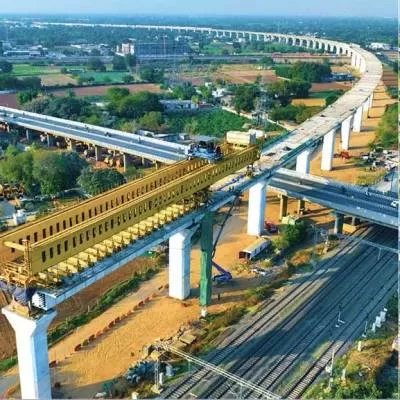
The Mumbai Metropolitan Region Development Authority (MMRDA) has completed 250 m of underground tunnelling for the Orange Gate–Marine Drive Urban Road Tunnel using India’s largest slurry shield tunnel boring machine (TBM) deployed for an urban road project.The project involves twin tunnels extending over 7 km beneath critical transport corridors, including Central Railway, Western Railway and Metro Line 3. The work requires high-precision engineering to navigate densely developed urban infrastructure.Once completed, the tunnel is expected to reduce travel time between Orange Gate and Marin..

Next Story
Infrastructure Urban

Hindustan Zinc Pays Rs 188.46 Billion in FY26

Hindustan Zinc contributed Rs 188.46 billion to the public exchequer in FY 2025-26, according to its 9th Tax Transparency Report. The contribution, equivalent to 46 per cent of the company’s revenue, included direct and indirect taxes, government royalties, dividends to the Government of India, withholding taxes and other statutory levies.The company’s five-year cumulative contribution to the exchequer stood at Rs 915.72 billion. In FY26, Hindustan Zinc reported revenue of Rs 408.44 billion, EBITDA of Rs 221.62 billion and profit after tax of Rs 138.32 billion. It also achieved its highest..

Next Story
Infrastructure Urban

World of Concrete India 2026 Opens in Mumbai

Informa Markets in India will host the 12th edition of World of Concrete India 2026 from 3–5 June 2026 at the Bombay Exhibition Centre, Mumbai. The specialised B2B exhibition will bring together manufacturers, suppliers, contractors, developers, architects, consultants, infrastructure companies, project leaders and government stakeholders.The event is expected to feature over 350 brands and more than 18,000 trade professionals. It will cover concrete and cement, dry mortar, precast technologies, formwork, construction chemicals, industrial and commercial flooring, scaffolding, safety solutio..

Advertisement

Subscribe to Our Newsletter

Get daily newsletters around different themes from Construction world.

STAY CONNECTED

Advertisement

Advertisement

Advertisement