+
Kerala Begins Land Acquisition For Angamali-Sabarimala New Line
RAILWAYS & METRO RAIL

Kerala Begins Land Acquisition For Angamali-Sabarimala New Line

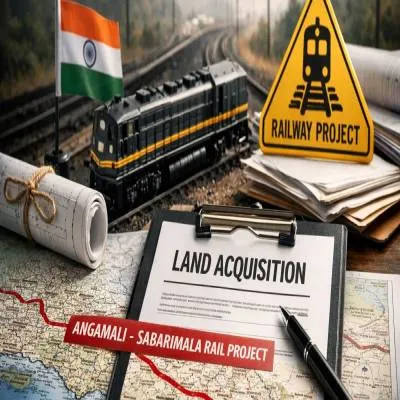
The Ministry of Railways said it is following up land acquisition with the Government of Kerala to progress the Angamali-Sabarimala new line project. The scheme via Erumeli was sanctioned in 1997–98 and initial work addressed the Angamali-Kaladi section covering seven kilometre (km) and long lead works on the Kaladi-Perumbavoor stretch of 10 km. Further construction was halted and the project was kept in abeyance in September 2019 after local protests over land acquisition and alignment, court cases and limited support from the State government.

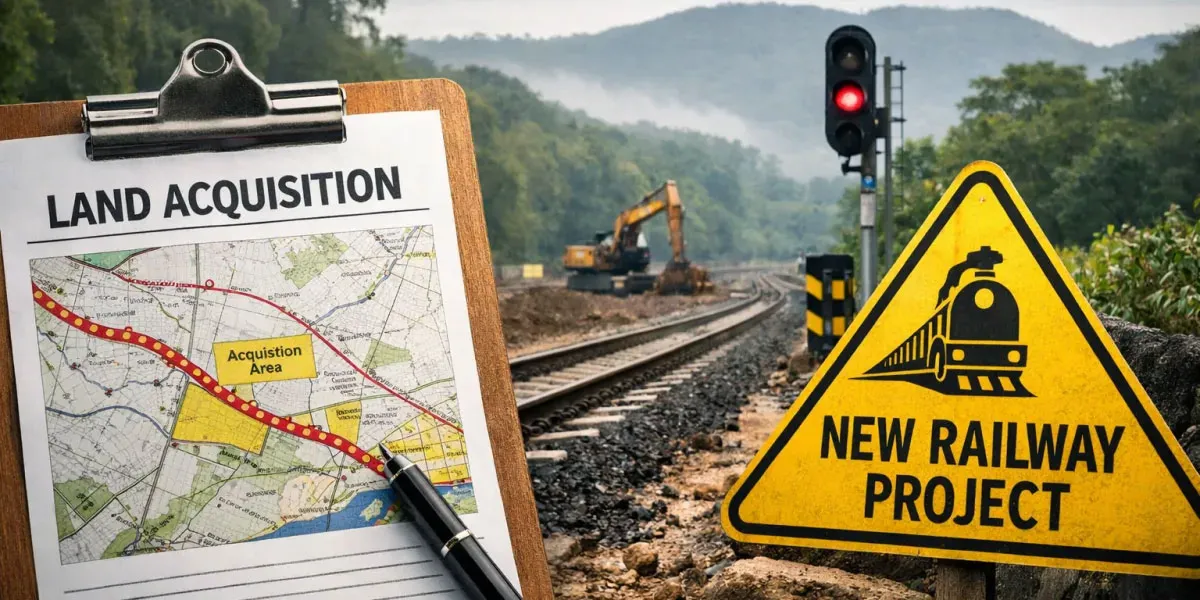
A survey of an alternate Chengannur-Pamba alignment of 75 km was carried out but the route was not found feasible. The estimated cost of the Angamali-Sabarimala project was revised at Rs 3,801 crore, which converts to Rs 38,010 million (mn), and the estimate was submitted to the Government of Kerala for acceptance and willingness to share the cost. Kerala provided conditional consent in August 2024 and the Ministry requested unconditional consent and urged the State to commence land acquisition using its share of 50 per cent so that work can proceed.

Following those exchanges the Government of Kerala has initiated land acquisition proceedings and the Ministry of Railways continues to monitor and follow up the process. Recent budget allocations for infrastructure and safety works that fall fully or partly in Kerala have increased markedly. The annual outlay for the 2009–14 period was Rs 372 crore per year, equivalent to Rs 3,720 million (mn) per year, while the allocation for 2025–26 is Rs 3,042 crore, equivalent to Rs 30,420 million (mn), representing more than eight times the earlier outlay.

Tirur presently receives 90 train services and recent operational changes have included provision of stoppages for express services with effect from January 27 and January 28, 2026 to enhance connectivity. Under the Amrit Bharat Station Scheme 1,337 stations have been identified for development and work at 172 stations has been completed to date, covering stations across multiple States. The information was provided by the Union Minister for Railways in a written reply to questions in the Rajya Sabha.

The Ministry of Railways said it is following up land acquisition with the Government of Kerala to progress the Angamali-Sabarimala new line project. The scheme via Erumeli was sanctioned in 1997–98 and initial work addressed the Angamali-Kaladi section covering seven kilometre (km) and long lead works on the Kaladi-Perumbavoor stretch of 10 km. Further construction was halted and the project was kept in abeyance in September 2019 after local protests over land acquisition and alignment, court cases and limited support from the State government. A survey of an alternate Chengannur-Pamba alignment of 75 km was carried out but the route was not found feasible. The estimated cost of the Angamali-Sabarimala project was revised at Rs 3,801 crore, which converts to Rs 38,010 million (mn), and the estimate was submitted to the Government of Kerala for acceptance and willingness to share the cost. Kerala provided conditional consent in August 2024 and the Ministry requested unconditional consent and urged the State to commence land acquisition using its share of 50 per cent so that work can proceed. Following those exchanges the Government of Kerala has initiated land acquisition proceedings and the Ministry of Railways continues to monitor and follow up the process. Recent budget allocations for infrastructure and safety works that fall fully or partly in Kerala have increased markedly. The annual outlay for the 2009–14 period was Rs 372 crore per year, equivalent to Rs 3,720 million (mn) per year, while the allocation for 2025–26 is Rs 3,042 crore, equivalent to Rs 30,420 million (mn), representing more than eight times the earlier outlay. Tirur presently receives 90 train services and recent operational changes have included provision of stoppages for express services with effect from January 27 and January 28, 2026 to enhance connectivity. Under the Amrit Bharat Station Scheme 1,337 stations have been identified for development and work at 172 stations has been completed to date, covering stations across multiple States. The information was provided by the Union Minister for Railways in a written reply to questions in the Rajya Sabha.

Related Stories

Gold Stories

Next Story
Infrastructure Urban

KONE Opens India's First Digital Experience Centre in Pune

KONE, a global elevator and escalator manufacturer, has inaugurated its first Digital Experience Centre (DEC) in India, located in Pune. The facility aims to showcase how artificial intelligence (AI), connectivity and data-driven technologies can enhance customer experiences and improve building operations.The centre was inaugurated by Jussi Herlin, Executive Vice Chair, KONE Corporation; Philippe Delorme, President and CEO, KONE; and Nandan Nilekani, Co-founder and Chairman of the Board, Infosys.Designed as an interactive customer environment, the facility demonstrates digital solutions cover..

Next Story
Infrastructure Urban

CII GreenCo Launches Circularity Guidelines for Indian Industry

The Confederation of Indian Industry (CII) GreenCo Council has launched the CII GreenCo Circularity Guidelines – Pilot Version at the 17th CII GreenCo Waste & Resource Management Summit 2026 in Chennai. The initiative aims to strengthen resource efficiency, waste reduction and circular economy practices across Indian manufacturing and process industries.The guidelines introduce a structured framework with circularity indices covering raw materials, consumables, packaging and other resource inputs. These indicators will help industries assess existing practices, identify opportunities to ..

Next Story
Infrastructure Energy

Global Electronics Association Launches IPC-1783-CO2E Standard

The Global Electronics Association has introduced IPC-1783-CO2E, a new international standard aimed at improving consistency, transparency and comparability in product carbon footprint reporting across the electronics manufacturing industry.The standard, titled International Standard for Data Collection and Reporting of CO2 Equivalent (CO2e) Emissions for the Electronics Manufacturing Supply Chain, provides industry-specific guidance for collecting, estimating and reporting carbon emissions data.With increasing regulatory requirements and customer expectations, electronics manufacturers face c..

Advertisement

Subscribe to Our Newsletter

Get daily newsletters around different themes from Construction world.

STAY CONNECTED

Advertisement

SPECIAL OFFER
QR Code