Konkan Railway to Launch Mumbai–Goa Car Ferry Train Soon
RAILWAYS & METRO RAIL

Konkan Railway to Launch Mumbai–Goa Car Ferry Train Soon

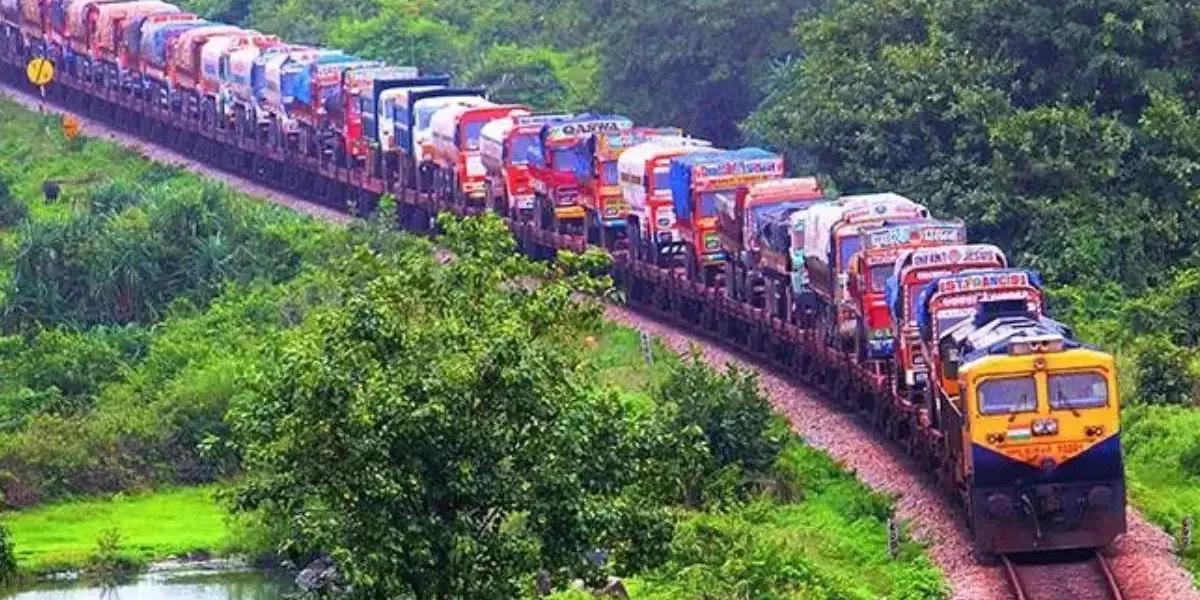
Konkan Railway is all set to launch a car ferry train service connecting Mumbai and Goa, starting 23 August, just ahead of the Ganeshotsav festival. The new offering will enable passengers to transport their private cars along with themselves by train, significantly cutting down travel time and fatigue.
The route will operate between Kolad in Maharashtra and Verna in Goa, completing the journey in around 12 hours—almost halving the typical 20–22-hour drive by road. Officials said each train will be capable of carrying up to 40 cars. The freight charge per car is set at Rs 7,875 one way. Vehicles will be secured with belts and brakes during the journey, with no one allowed inside the car during transit.
Passengers travelling with their vehicles will be accommodated in attached coaches. A maximum of three passengers per car is allowed—two in air-conditioned 3AC coaches (fare Rs 935) and one in a 2nd class SLR coach (fare Rs 190).
Trains will depart from Kolad in the evening and reach Verna the next morning. Passengers are required to report by 2 pm, three hours before departure. The train will feature 20 specially designed wagons, each carrying two cars. The service will only run if a minimum of 16 cars are booked.
Authorities believe this initiative will offer a safer, faster, and more convenient travel experience, especially during festive and peak seasons.

Konkan Railway is all set to launch a car ferry train service connecting Mumbai and Goa, starting 23 August, just ahead of the Ganeshotsav festival. The new offering will enable passengers to transport their private cars along with themselves by train, significantly cutting down travel time and fatigue.The route will operate between Kolad in Maharashtra and Verna in Goa, completing the journey in around 12 hours—almost halving the typical 20–22-hour drive by road. Officials said each train will be capable of carrying up to 40 cars. The freight charge per car is set at Rs 7,875 one way. Vehicles will be secured with belts and brakes during the journey, with no one allowed inside the car during transit.Passengers travelling with their vehicles will be accommodated in attached coaches. A maximum of three passengers per car is allowed—two in air-conditioned 3AC coaches (fare Rs 935) and one in a 2nd class SLR coach (fare Rs 190).Trains will depart from Kolad in the evening and reach Verna the next morning. Passengers are required to report by 2 pm, three hours before departure. The train will feature 20 specially designed wagons, each carrying two cars. The service will only run if a minimum of 16 cars are booked.Authorities believe this initiative will offer a safer, faster, and more convenient travel experience, especially during festive and peak seasons.

Related Stories

Gold Stories

Next Story
Infrastructure Urban

KONE Opens India's First Digital Experience Centre in Pune

KONE, a global elevator and escalator manufacturer, has inaugurated its first Digital Experience Centre (DEC) in India, located in Pune. The facility aims to showcase how artificial intelligence (AI), connectivity and data-driven technologies can enhance customer experiences and improve building operations.The centre was inaugurated by Jussi Herlin, Executive Vice Chair, KONE Corporation; Philippe Delorme, President and CEO, KONE; and Nandan Nilekani, Co-founder and Chairman of the Board, Infosys.Designed as an interactive customer environment, the facility demonstrates digital solutions cover..

Next Story
Infrastructure Urban

CII GreenCo Launches Circularity Guidelines for Indian Industry

The Confederation of Indian Industry (CII) GreenCo Council has launched the CII GreenCo Circularity Guidelines – Pilot Version at the 17th CII GreenCo Waste & Resource Management Summit 2026 in Chennai. The initiative aims to strengthen resource efficiency, waste reduction and circular economy practices across Indian manufacturing and process industries.The guidelines introduce a structured framework with circularity indices covering raw materials, consumables, packaging and other resource inputs. These indicators will help industries assess existing practices, identify opportunities to ..

Next Story
Infrastructure Energy

Global Electronics Association Launches IPC-1783-CO2E Standard

The Global Electronics Association has introduced IPC-1783-CO2E, a new international standard aimed at improving consistency, transparency and comparability in product carbon footprint reporting across the electronics manufacturing industry.The standard, titled International Standard for Data Collection and Reporting of CO2 Equivalent (CO2e) Emissions for the Electronics Manufacturing Supply Chain, provides industry-specific guidance for collecting, estimating and reporting carbon emissions data.With increasing regulatory requirements and customer expectations, electronics manufacturers face c..

Advertisement

Subscribe to Our Newsletter

Get daily newsletters around different themes from Construction world.

STAY CONNECTED

Advertisement

SPECIAL OFFER
QR Code