Mumbai-Ahmedabad Bullet Train Project on Track with Land acquisition
RAILWAYS & METRO RAIL

Mumbai-Ahmedabad Bullet Train Project on Track with Land acquisition

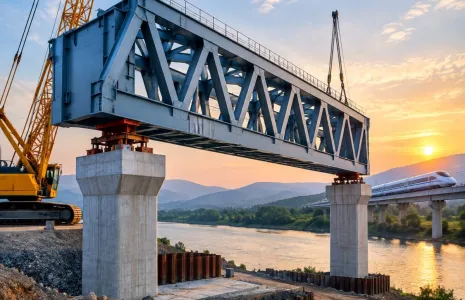
The National High Speed Rail Corporation (NHSRCL) announced the successful completion of land acquisition for the Mumbai-Ahmedabad bullet train project in Gujarat. The corporation confirmed that the last piece of land required for the project was acquired in Kathore village, Surat district, in September. A total of 951.14 hectares of land across eight districts in Gujarat were needed for the project, and this goal has been achieved.

With this recent acquisition, 99.95% of the land necessary for the project in Gujarat, Maharashtra, and the Union Territory of Dadra and Nagar Haveli, Daman and Diu has been secured. In Maharashtra, 429.71 hectares were designated for the project, out of which 99.83% of the process has been completed. Additionally, 7.90 hectares were acquired in the Union Territory.

The land acquisition details for Gujarat are as follows: 133.29 hectares in Ahmedabad, 110.25 hectares in Kheda, 52.59 hectares in Anand, 142.30 hectares in Vadodara, 140.32 hectares in Bharuch, 160.52 hectares in Surat, and 88.93 hectares in Valsad.

The operational control centre for the bullet train will be situated in Sabarmati, Ahmedabad. There will be three depots, two in Gujarat (Surat and Sabarmati) and one in Maharashtra at Thane, according to the release.

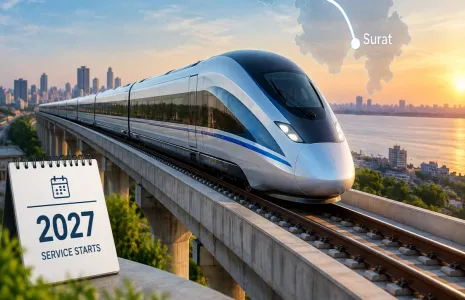
The government's objective is to commence the first phase of the bullet train service between Surat and Bilimora in south Gujarat by 2026. Prime Minister Narendra Modi and Japanese Prime Minister Shinzo Abe launched the project in Ahmedabad on September 14, 2017. The completed 508-km route is expected to be covered in 3-3.5 hours.

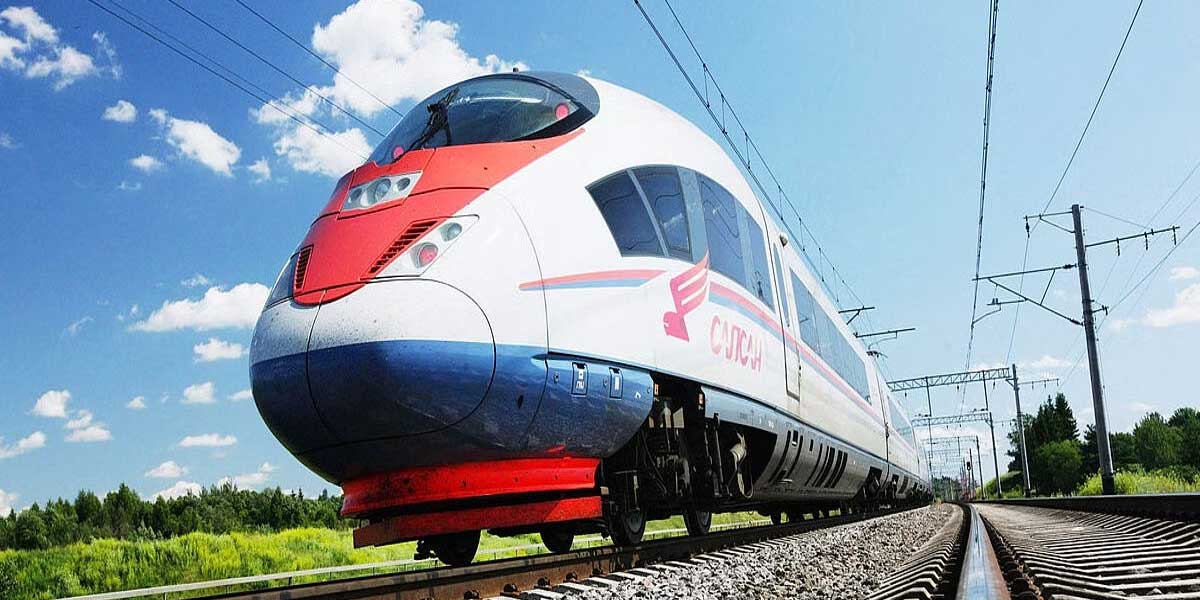
This high-speed rail line, utilising Japan's Shinkansen technology, aims to establish a high-frequency mass transportation system between Mumbai and Ahmedabad. The project has been financially supported by the Japan International Cooperation Agency (JICA) through a soft loan of Rs 880 billion from Japan. Originally slated for completion by 2022, the project faced delays due to challenges in land acquisition.

The National High Speed Rail Corporation (NHSRCL) announced the successful completion of land acquisition for the Mumbai-Ahmedabad bullet train project in Gujarat. The corporation confirmed that the last piece of land required for the project was acquired in Kathore village, Surat district, in September. A total of 951.14 hectares of land across eight districts in Gujarat were needed for the project, and this goal has been achieved.With this recent acquisition, 99.95% of the land necessary for the project in Gujarat, Maharashtra, and the Union Territory of Dadra and Nagar Haveli, Daman and Diu has been secured. In Maharashtra, 429.71 hectares were designated for the project, out of which 99.83% of the process has been completed. Additionally, 7.90 hectares were acquired in the Union Territory.The land acquisition details for Gujarat are as follows: 133.29 hectares in Ahmedabad, 110.25 hectares in Kheda, 52.59 hectares in Anand, 142.30 hectares in Vadodara, 140.32 hectares in Bharuch, 160.52 hectares in Surat, and 88.93 hectares in Valsad.The operational control centre for the bullet train will be situated in Sabarmati, Ahmedabad. There will be three depots, two in Gujarat (Surat and Sabarmati) and one in Maharashtra at Thane, according to the release.The government's objective is to commence the first phase of the bullet train service between Surat and Bilimora in south Gujarat by 2026. Prime Minister Narendra Modi and Japanese Prime Minister Shinzo Abe launched the project in Ahmedabad on September 14, 2017. The completed 508-km route is expected to be covered in 3-3.5 hours.This high-speed rail line, utilising Japan's Shinkansen technology, aims to establish a high-frequency mass transportation system between Mumbai and Ahmedabad. The project has been financially supported by the Japan International Cooperation Agency (JICA) through a soft loan of Rs 880 billion from Japan. Originally slated for completion by 2022, the project faced delays due to challenges in land acquisition.

Next Story
Equipment

Schwing Stetter India Unveils New Innovations at Excon 2025

Schwing Stetter India unveiled more than 20 new machines at Excon 2025, marking one of its most significant showcases and introducing several India-first technologies to the construction equipment sector. The company launched the country’s first 56-metre boom pump designed and manufactured in India, the first fully electric truck mixer, the first CNG mixer variant and the first hybrid boom pump. Executives said the launch portfolio was engineered to support India’s move toward faster, greener and more vertically oriented infrastructure through advanced engineering, clean-energy solutions a..

Next Story
Infrastructure Energy

SEPC Resolves Hindustan Copper Dispute, Wins Rs 725 Mn Order

Engineering, procurement and construction firm SEPC Ltd has recently settled a dispute with Hindustan Copper Ltd (HCL) and secured a mining infrastructure order valued at Rs 725 million from the state-owned company. SEPC informed the stock exchanges that it has executed a settlement deed with HCL, bringing closure to all inter-se claims and counterclaims arising from arbitration proceedings. As part of the settlement, SEPC will receive Rs 304.5 million as full and final payment, marking the resolution of all pending disputes between the two entities. The company also stated that Hindustan Co..

Next Story
Infrastructure Energy

20% Ethanol Blending Cuts India’s CO2 Emissions by 73.6 Mn Tonnes

Union Road Transport and Highways Minister Nitin Gadkari recently said that India has reduced carbon dioxide emissions by 73.6 million metric tonnes due to the adoption of 20 per cent ethanol blending in petrol. He made the statement while replying to supplementary questions during the Question Hour in the Lok Sabha. Describing ethanol as a green fuel, the minister said it plays a key role in reducing pollution while also supporting higher incomes for farmers. He underlined that ethanol blending contributes both to environmental sustainability and rural economic growth. Nitin Gadkari also po..

Advertisement

Subscribe to Our Newsletter

Get daily newsletters around different themes from Construction world.

STAY CONNECTED

Advertisement

Advertisement

Advertisement

Advertisement

Open In App