Mumbai-Ahmedabad bullet train: Tunnel in Mumbai speeds work
RAILWAYS & METRO RAIL

Mumbai-Ahmedabad bullet train: Tunnel in Mumbai speeds work

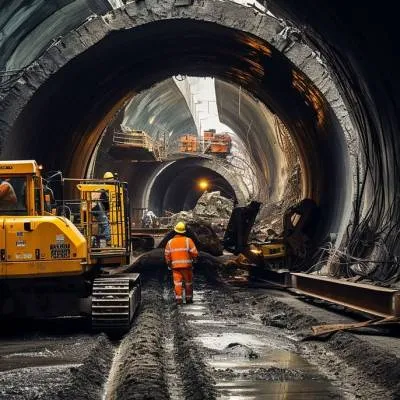
The National High Speed Rail Corporation (NHSRCL) has announced that in order to accelerate progress on the ambitious Mumbai-Ahmedabad bullet train project, an additional 394-meter intermediate tunnel has been constructed at Ghansoli in Mumbai. It has been stated by the NHSRCL, the special purpose company overseeing the bullet train project, that the new tunnel will expedite the 21-kilometer main tunneling work between BKC and Shilphata, which is adjacent to the Thane creek.

According to the release, the new 26-meter-deep terminal, which is 3.3 kilometres long, will facilitate simultaneous access to create approximately 1.6-metre tunnels on each side for the main 21-kilometer tunnel. It has been further mentioned that for the main 21-kilometer tunnel, 16 kilometres will be excavated using tunnel boring machines, while the remaining 5 kilometres will be constructed using the New Austrian Tunnelling Method.

It has been reported that excavation for the intermediate tunnel began on December 6, 2023, and the full 394 meters were completed in six months. This process involved 214 controlled blasts using 27,515 kg of explosives under expert supervision. It has been informed that the intermediate tunnel is designed to provide direct vehicular access to the main tunnel during construction and operation and can also serve as an evacuation route in emergencies.

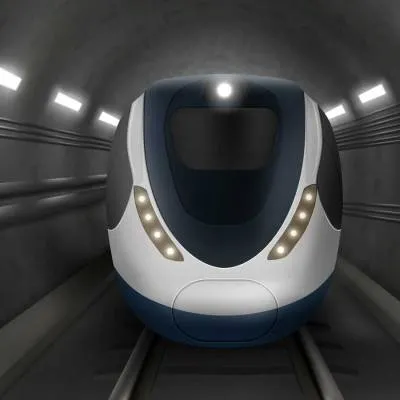
Construction is rapidly progressing on the 21-kilometer section from the Mumbai Bullet Train Station to Shilphata in Maharashtra. It has been highlighted that approximately seven kilometers of this tunnel will pass under the Thane creek, an intertidal zone, marking the first of its kind in India. It has been specified that this single-tube tunnel will house two tracks for the bullet train, which will travel at speeds of up to 320 km/hr within the tunnel. Currently, 16 kilometers of the tunnel are under construction at BKC, Vikhroli, and Savli, using tunnel boring machines.

"Join industry leaders at RAHSTA Expo, India's premier platform for roads, highways and traffic infrastructure. Register now to explore innovations, network with experts and shape the future of mobility."

The National High Speed Rail Corporation (NHSRCL) has announced that in order to accelerate progress on the ambitious Mumbai-Ahmedabad bullet train project, an additional 394-meter intermediate tunnel has been constructed at Ghansoli in Mumbai. It has been stated by the NHSRCL, the special purpose company overseeing the bullet train project, that the new tunnel will expedite the 21-kilometer main tunneling work between BKC and Shilphata, which is adjacent to the Thane creek. According to the release, the new 26-meter-deep terminal, which is 3.3 kilometres long, will facilitate simultaneous access to create approximately 1.6-metre tunnels on each side for the main 21-kilometer tunnel. It has been further mentioned that for the main 21-kilometer tunnel, 16 kilometres will be excavated using tunnel boring machines, while the remaining 5 kilometres will be constructed using the New Austrian Tunnelling Method. It has been reported that excavation for the intermediate tunnel began on December 6, 2023, and the full 394 meters were completed in six months. This process involved 214 controlled blasts using 27,515 kg of explosives under expert supervision. It has been informed that the intermediate tunnel is designed to provide direct vehicular access to the main tunnel during construction and operation and can also serve as an evacuation route in emergencies. Construction is rapidly progressing on the 21-kilometer section from the Mumbai Bullet Train Station to Shilphata in Maharashtra. It has been highlighted that approximately seven kilometers of this tunnel will pass under the Thane creek, an intertidal zone, marking the first of its kind in India. It has been specified that this single-tube tunnel will house two tracks for the bullet train, which will travel at speeds of up to 320 km/hr within the tunnel. Currently, 16 kilometers of the tunnel are under construction at BKC, Vikhroli, and Savli, using tunnel boring machines.

Next Story
Real Estate

The Workplace Reset

If the past few years have seen sustainability emerge as a buzzword in the design of commercial spaces, the next few years will see the focus shift to ‘experience’. Workplaces that prioritise superior employee experiences consistently report stronger talent attraction and higher retention rates and productivity, while using resources sustainably.First things first; what sort of experiences are expected from a workplace?As Vandana Dhawan Saxena, Founder and Design Principal, Studio IV Designs, explains, “Offices have grown into environments that need to support various kinds of experience..

Next Story
Infrastructure Urban

Designing Human-Centric High-Rises

The Institution of Engineers (India) (IEI), Navi Mumbai Local Centre, under the aegis of the Architectural Engineering Division Board, organised a one-day national seminar, ‘Reaching New Heights – Overcoming High-Rise Construction Challenges’, at CBD Belapur, Navi Mumbai.The seminar brought together architects, engineers, planners, developers, academicians and industry professionals to deliberate on the design, construction, operation and sustainability of tall buildings in rapidly urbanising cities...To read the full article Click Here ..

Next Story
Infrastructure Urban

Carbon-negative and ultra-low carbon are not just claims!

In an interaction with Construction World, Tarun Jami, Founder, GreenJams, explains how the company is cutting cement’s carbon footprint by 80 per cent through Binder, while scaling innovations such as Agrocrete® and Novastone to make buildings lighter, faster and carbon-negative.Agrocrete® is positioned as a carbon-negative material. What does this mean for developers?For developers, Agrocrete® offers a practical way to reduce embodied carbon at the material level. Since walling forms a significant part of a building’s material footprint, using carbon-negative blocks can bring the net ..

Advertisement

Subscribe to Our Newsletter

Get daily newsletters around different themes from Construction world.

STAY CONNECTED

Advertisement

Advertisement

Advertisement