NHSRCL Plans Surat Rolling Stock Depot For Bullet Train Commissioning
RAILWAYS & METRO RAIL

NHSRCL Plans Surat Rolling Stock Depot For Bullet Train Commissioning

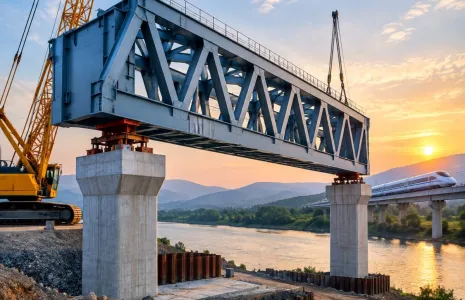
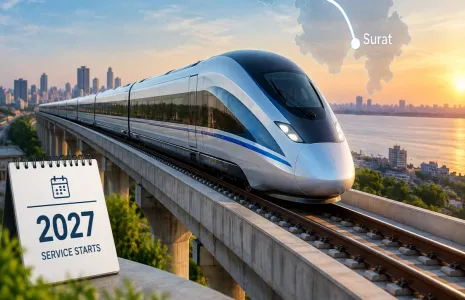
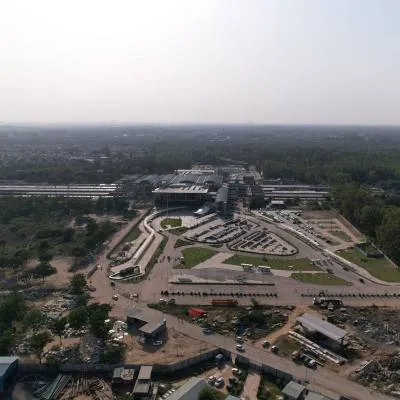
The National High Speed Rail Corporation Limited (NHSRCL) has planned a rolling stock depot in Surat to support commissioning and maintenance for the Mumbai-Ahmedabad high speed rail corridor. The depot is being developed over an area of 27 hectares and will form part of a network of depots that will also include Sabarmati in Gujarat and Thane in Maharashtra. The project is intended to ensure operational readiness ahead of passenger services. Work on related civil structures is proceeding alongside systems installation to align timelines.

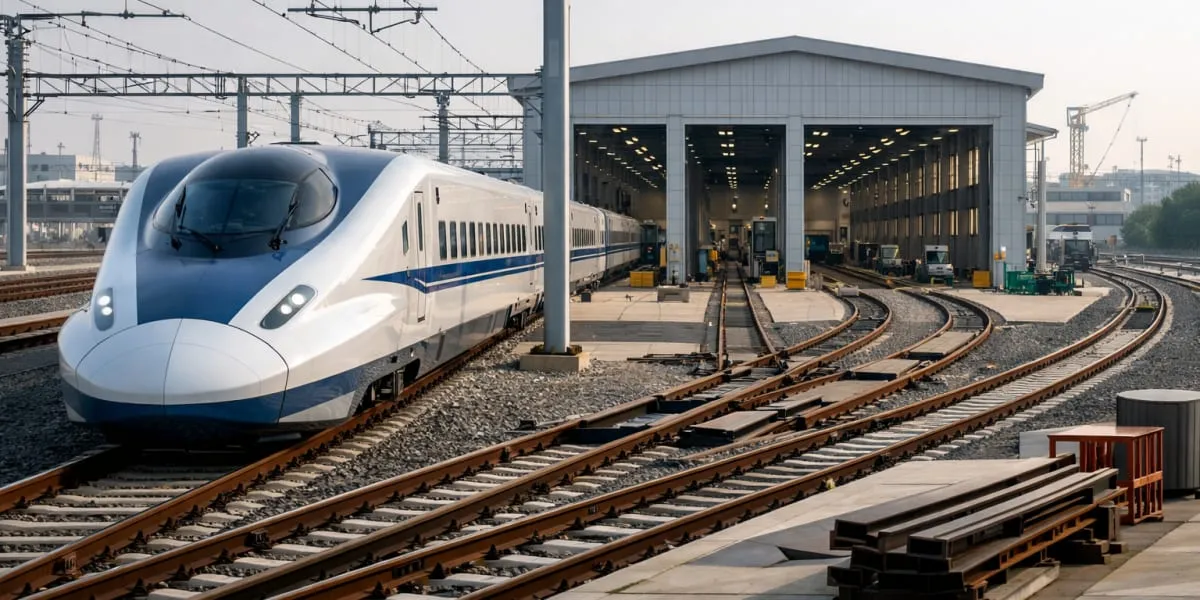
The depot will be equipped for light maintenance of trainsets with inspection bays, a washing plant and stabling lines to facilitate routine care. Facilities for wheel re-profiling and unscheduled repairs are planned to be incorporated to maintain fleet reliability. NHSRCL has indicated that the layout will allow efficient movement of trainsets within the depot. The depot design is expected to accommodate future technological upgrades and adaptation to evolving maintenance standards.

Daily and regular inspection of rolling stock is expected to be carried out within the depot premises to support safe operations. Two inspection-cum-stabling lines are being provided at present with a provision for four stabling lines in future to match demand growth. Staff training and procedural protocols are being planned in parallel to ensure timely commissioning. Coordination with local authorities is being planned to manage logistics and access for heavy maintenance equipment.

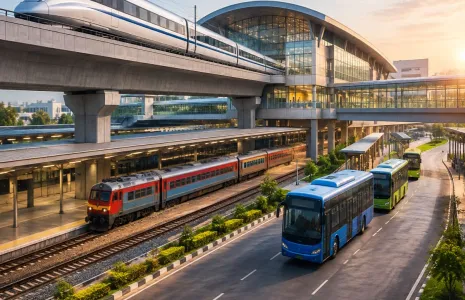
The NHSRCL said that Multi-Modal Integration (MMI) facilities and station plazas will be developed to provide seamless connections between the bullet train stations and local transport modes. The areas surrounding stations will be integrated with buses, taxis, private vehicles and intermediate public transport to enhance last-mile connectivity and passenger convenience. The aim of the initiative is to create a well organised transit environment that supports smooth transfers and efficient access for commuters.

The National High Speed Rail Corporation Limited (NHSRCL) has planned a rolling stock depot in Surat to support commissioning and maintenance for the Mumbai-Ahmedabad high speed rail corridor. The depot is being developed over an area of 27 hectares and will form part of a network of depots that will also include Sabarmati in Gujarat and Thane in Maharashtra. The project is intended to ensure operational readiness ahead of passenger services. Work on related civil structures is proceeding alongside systems installation to align timelines. The depot will be equipped for light maintenance of trainsets with inspection bays, a washing plant and stabling lines to facilitate routine care. Facilities for wheel re-profiling and unscheduled repairs are planned to be incorporated to maintain fleet reliability. NHSRCL has indicated that the layout will allow efficient movement of trainsets within the depot. The depot design is expected to accommodate future technological upgrades and adaptation to evolving maintenance standards. Daily and regular inspection of rolling stock is expected to be carried out within the depot premises to support safe operations. Two inspection-cum-stabling lines are being provided at present with a provision for four stabling lines in future to match demand growth. Staff training and procedural protocols are being planned in parallel to ensure timely commissioning. Coordination with local authorities is being planned to manage logistics and access for heavy maintenance equipment. The NHSRCL said that Multi-Modal Integration (MMI) facilities and station plazas will be developed to provide seamless connections between the bullet train stations and local transport modes. The areas surrounding stations will be integrated with buses, taxis, private vehicles and intermediate public transport to enhance last-mile connectivity and passenger convenience. The aim of the initiative is to create a well organised transit environment that supports smooth transfers and efficient access for commuters.

Next Story
Infrastructure Transport

AFCONS & Navayuga set world records with Missing Link Expressway

Maharashtra’s most ambitious greenfield bypass — a 13.3-km alignment carrying twin record-setting tunnels and India’s tallest cable-stayed road bridge — was thrown open to traffic on Maharashtra Day, finally completing the Mumbai–Pune Expressway after a 23-year wait. CW reports…The 650-m cable-stayed bridge over Tiger Valley at sunset — the package executed by Afcons Infrastructure Ltd carries 182-m pylons, the tallest on any Indian road bridge.On 1 May 2026, Chief Minister Devendra Fadnavis, flanked by Deputy Chief Ministers Eknath Shinde and Sunetra Pawar (representing the late..

Next Story
Infrastructure Transport

Mumbai–Pune Missing Link boosts realty prospects

The recently opened ‘missing link’ on the Mumbai–Pune Expressway is set to significantly transform connectivity between the two cities by reducing travel time and bypassing the challenging ghat section. The new alignment, featuring tunnels and viaducts, is designed to improve safety, ease congestion and ensure a smoother, faster commute for both passenger and commercial traffic.With improved travel efficiency, the corridor is expected to strengthen intercity movement, encouraging more frequent travel for work, leisure and logistics. This enhanced accessibility is likely to benefit real e..

Next Story
Infrastructure Urban

How Hormuz is Hijacking Indian Highways

At the recently held RAHSTA Round Table on 29th April in Pune, and earlier during our webinars for Cement Expo by Indian Cement Review and by FIRST Construction Council on manufacturing construction equipment for the world, one thread lay common: the industry is being subjected to a cost-push chain reaction moving from crude oil → freight/insurance → steel, cement fuel, bitumen, polymers, packaging, logistics and finally project margins. Indeed, the West Asia crisis caused by the war and the Hormuz Strait blockade, which does not directly concern us, has turned around and hit us. If the wa..

Advertisement

Subscribe to Our Newsletter

Get daily newsletters around different themes from Construction world.

STAY CONNECTED

Advertisement

Advertisement

Advertisement