High Level Meeting On Financing For Electric Buses And Trucks
ECONOMY & POLICY

High Level Meeting On Financing For Electric Buses And Trucks

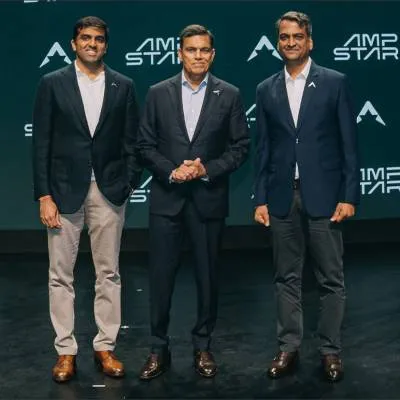
The Ministry of Heavy Industries (MHI) held a high-level meeting in New Delhi on 20 May 2026 under the chairmanship of Union Minister H. D. Kumaraswamy.

Senior representatives from State Bank of India (SBI), Punjab National Bank, Canara Bank, Central Bank of India and Housing Development Finance Corporation (HDFC) attended, together with Small Industries Development Bank of India (SIDBI).

The delegation also included bus and truck operators and associations such as the All India Motor Transport Congress (AIMTC), Kodadaramu Lorry Association, Bus Operators Confederation of India (BOCI), Karnataka Bus Operators Association (KBOA) and South India Motor Transport Association.

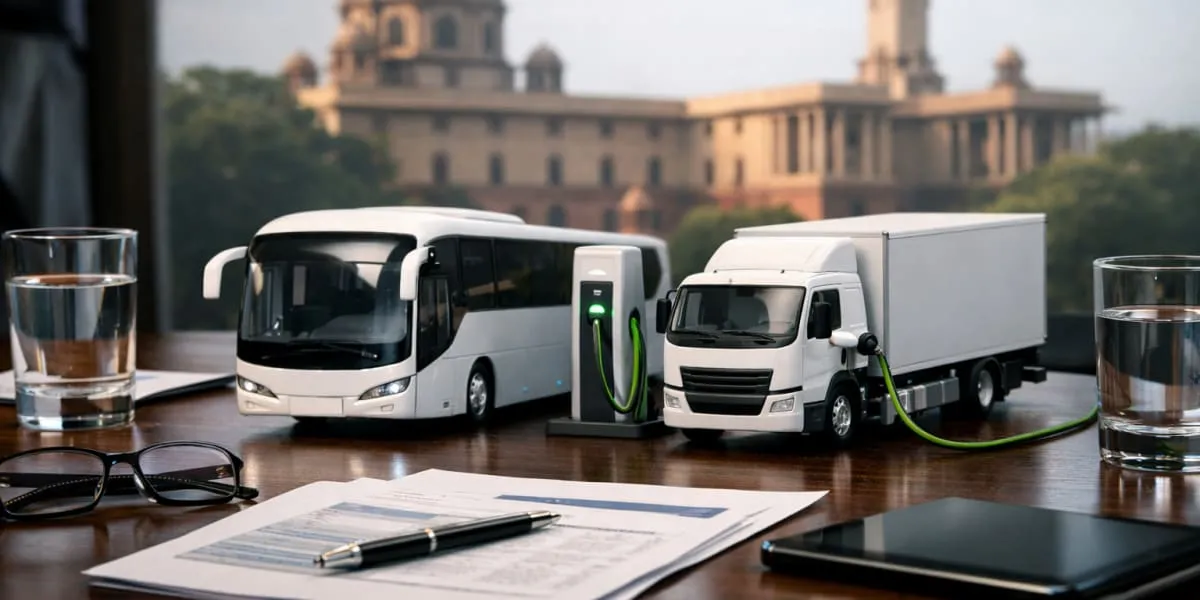
The meeting sought to identify financing challenges for the adoption of electric buses and electric trucks in the private sector, to review the current status of lending and to explore potential solutions and government support.

Participants examined barriers such as asset valuation, residual value risk, upfront capital requirements and the need for tailored loan structures, and the agenda included discussion of models to enable fleet renewals and financing structures that could make total cost of ownership comparable with conventional vehicles.

Deliberations covered proposed support mechanisms including credit guarantee schemes to de risk lending by financial institutions and interest subvention to lower borrowing costs for private buyers, and ministers and stakeholders examined how such measures could accelerate fleet electrification while preserving financial sector prudence.

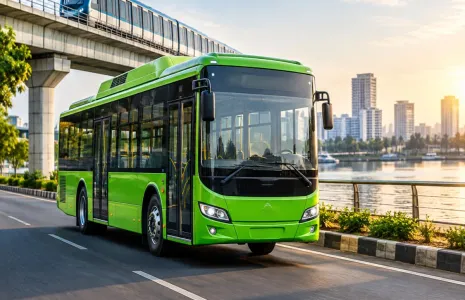
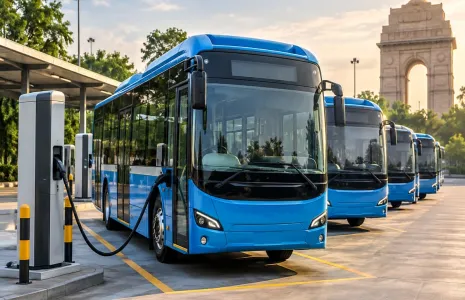
The discussion acknowledged that buses remain the backbone of public mobility and that trucks carry a substantial share of domestic goods, and it was noted that electrification of commercial vehicles is essential to meet India’s decarbonisation objectives and advance the Net Zero by 2070 goal.

The Ministry indicated that bringing together government departments, multilateral institutions, financial entities and industry participants would help design actionable financing solutions, and the initiative was presented as aligned with the vision of Aatmanirbhar Bharat and Viksit Bharat @2047 as a step towards sustainable indigenous manufacturing.

The Ministry of Heavy Industries (MHI) held a high-level meeting in New Delhi on 20 May 2026 under the chairmanship of Union Minister H. D. Kumaraswamy. Senior representatives from State Bank of India (SBI), Punjab National Bank, Canara Bank, Central Bank of India and Housing Development Finance Corporation (HDFC) attended, together with Small Industries Development Bank of India (SIDBI). The delegation also included bus and truck operators and associations such as the All India Motor Transport Congress (AIMTC), Kodadaramu Lorry Association, Bus Operators Confederation of India (BOCI), Karnataka Bus Operators Association (KBOA) and South India Motor Transport Association. The meeting sought to identify financing challenges for the adoption of electric buses and electric trucks in the private sector, to review the current status of lending and to explore potential solutions and government support. Participants examined barriers such as asset valuation, residual value risk, upfront capital requirements and the need for tailored loan structures, and the agenda included discussion of models to enable fleet renewals and financing structures that could make total cost of ownership comparable with conventional vehicles. Deliberations covered proposed support mechanisms including credit guarantee schemes to de risk lending by financial institutions and interest subvention to lower borrowing costs for private buyers, and ministers and stakeholders examined how such measures could accelerate fleet electrification while preserving financial sector prudence. The discussion acknowledged that buses remain the backbone of public mobility and that trucks carry a substantial share of domestic goods, and it was noted that electrification of commercial vehicles is essential to meet India’s decarbonisation objectives and advance the Net Zero by 2070 goal. The Ministry indicated that bringing together government departments, multilateral institutions, financial entities and industry participants would help design actionable financing solutions, and the initiative was presented as aligned with the vision of Aatmanirbhar Bharat and Viksit Bharat @2047 as a step towards sustainable indigenous manufacturing.

Next Story
Infrastructure Energy

Statcon Energiaa Partners with Ram Raja Solar

Statcon Energiaa has signed a Memorandum of Understanding (MoU) with Ram Raja Solar Power Green Energy to strengthen the deployment of large-capacity Battery Energy Storage Systems (BESS) and hybrid inverter solutions across Uttar Pradesh.The partnership brings together Statcon Energiaa's expertise in power electronics and energy storage with Ram Raja Solar's project execution capabilities to improve access to solar-plus-storage solutions in the state.According to the companies, the collaboration will enable faster availability of high-capacity BESS and hybrid inverter systems through reduced ..

Next Story
Infrastructure Urban

Opptra Partners With Unicommerce To Scale Brands

Opptra has partnered with Unicommerce to strengthen and scale its e-commerce operations across India, the GCC and Southeast Asia.Under the partnership, Unicommerce’s flagship Uniware platform will support Opptra’s order, inventory and fulfilment operations as the company expands its portfolio of more than 33 consumer brands across Asian markets.Opptra, founded by Flipkart co-founder Binny Bansal, operates as an AI-native e-commerce distributor. It manages a brand’s end-to-end online operations, including marketplace management, pricing, advertising, content, fulfilment and customer servi..

Next Story
Resources

LIXIL Posts 23 Per Cent Rise in Core Earnings

LIXIL Corporation reported a 22.9 per cent increase in core earnings to ¥38.5 billion for the fiscal year ended 31 March 2026, supported by resilient international operations and strong growth across the India, Middle East and Africa (IMEA) region.The company posted consolidated revenue of ¥1,510.7 billion, up 0.4 per cent year on year, while EBITDA rose by ¥7.1 billion to ¥121.6 billion. Net profit attributable to owners of the parent increased to ¥8.1 billion, aided by improved operating performance and lower corporate income tax expenses.International business revenue grew to ¥520.9 b..

Advertisement

Subscribe to Our Newsletter

Get daily newsletters around different themes from Construction world.

STAY CONNECTED

Advertisement

Advertisement

Advertisement